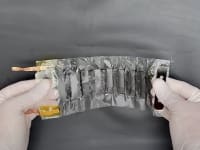
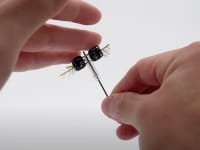
Get an overview of the global medical robots market. Visit this Medical Design Briefs Robotics and Automation Hub to receive news, expert advice, and essential information – from the history of medical robots to the technologies of tomorrow.
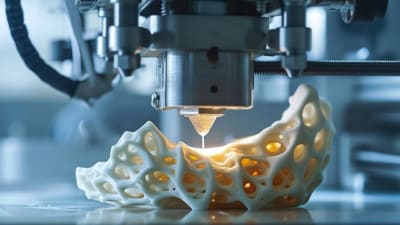
See the videos of the month, including one on 3D printing complex, more durable robots from a variety of high-quality materials in one go; one on a fully digital design-to-manufacturing process that has the potential to revolutionize lower limb socket production; one on commercial and open-source electronic circuit boards that can be embedded into soft robots; and one on scalable methods of developing battery- and solar-powered fibers, making it theoretically possible for electrical energy to be harvested from, and stored in the clothing.
While early haptic devices focused on single-sensory cues like vibration-based notifications, modern advancements have paved the way for multisensory haptic devices that...
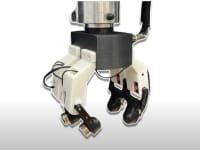
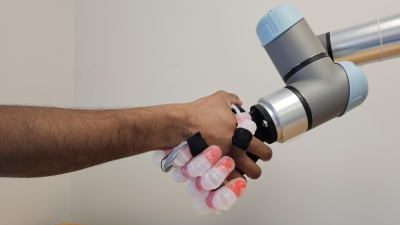
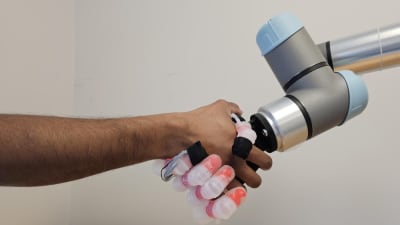
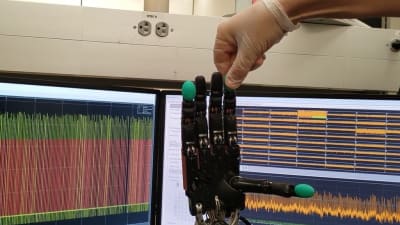
Johns Hopkins University engineers have developed a pioneering prosthetic hand that can grip plush toys, water bottles, and other everyday objects like a human, carefully conforming and adjusting its grasp to avoid damaging or mishandling whatever it holds.
A team recently published papers in Nature Biomedical Engineering and Science documenting major progress on direct, carefully timed electrical stimulation of the brain that can recreate tactile feedback to give nuanced feeling to prosthetic hands. Read on to learn more.
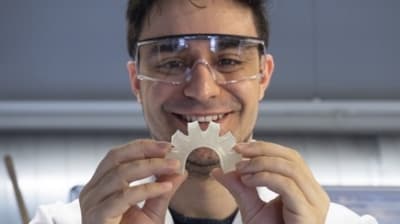
Researchers have significantly improved a new joining technology, interlocking metasurfaces, designed to increase the strength and stability of a structure in comparison to traditional techniques like bolts and adhesives, using shape memory alloys. Read on to learn more.
Engineers have developed a pioneering prosthetic hand that can grip plush toys, water bottles, and other everyday objects like a human, carefully conforming and adjusting its grasp to avoid damaging or mishandling whatever it holds. Read on to learn more.
This white paper presents an overview of mixing technologies implemented across many of today’s highly competitive pharmaceutical and medical industries, as well as new...
A research team from the University of Freiburg and the Medical Center – University of Freiburg has developed a novel biomimetic speaking valve technology that could significantly increase the safety of tracheostomized patients. Read on to learn more.
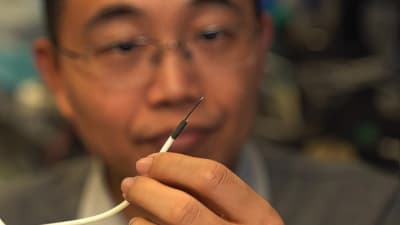
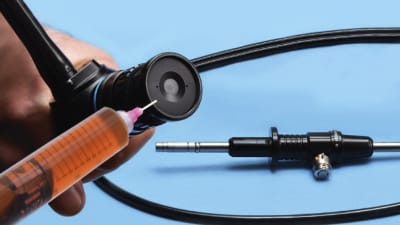
Researchers have successfully developed what they believe is the world’s smallest multifunctional biomedical robots. Capable of imaging, high-precision motion, and multifunctional operations like sampling, drug delivery, and laser ablation, the robot offers competitive imaging performance and a tenfold improvement in obstacle detection. Read on to learn more.
Researchers are developing soft sensor materials based on ceramics. Such sensors can feel temperature, strain, pressure, or humidity, for instance, which makes them interesting for use in medicine, but also in the field of soft robotics. Read on to learn more.
Qosina, a distributor of medical components, has announced a collaboration with B. Braun Medical Inc. (B. Braun), a developer of smart infusion therapy and pain management. B. Braun customers can...
Mohammad Habibur (Habib) Rahman, Director of the BioRobotics Laboratory at the University of Wisconsin-Milwaukee, and his team have been developing a portable, assistive robotic arm that therapists can use to assess and treat patients whether or not they are not in the same location.
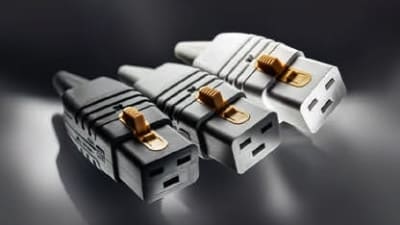
See the new products and services, including an IEC connector from Schurter; Raltron's series of electromagnetic buzzers; Midwest Interventional Systems' extrusion ordering system; SGS' expanded spray drug-delivery testing capabilities; Prima Power's latest addition to its 2D laser technology portfolio; ANCA's peel grinding platform designed to reduce cycle time; and more.
Researchers have made a significant breakthrough in soft robotics. Their study introduces the first toroidal, light-driven microrobot that can move autonomously in viscous liquids, such as mucus. Read on to learn more.
Part 1 of this article, which appeared in the December 2024 issue, focused on the factors and requirements for selecting adhesives for use in medical devices. Part 2 delves more into the material properties of plastics for medical device assembly.
Arrhythmogenic cardiomyopathy is a leading cause of sudden cardiac death among young adults. Sans treatment, a heart transplant remains the only curative option for those living with the inherited condition. Now, a research team has developed a robotic technology that allows scientists to test numerous potential therapeutics, simultaneously, in this condition for the first time.
Researchers have developed a novel biohybrid neuroprosthetic research platform comprised of a dexterous artificial hand electrically interfaced with biological neural networks. Read on to learn more.
Scientists have developed a way to deploy magnetic miniature robots through a 3D matrix resembling a network of blood vessels. This new method could one day enable the simultaneous treatment...
See the new products and services, including an angle sensor from ASM Sensors; Raltron's line of mobile speakers with IP67/68 ratings; laboratory sinks from Hemco; a precision-engineered electronic valve from Clippard; Vision Engineering's optical stereo microscope technology; and much more.
Listen to our medical podcasts, including one on 3D printing in healthcare; one on robotics and cobots in medical device production; one on the challenges of achieving biocompatibility, meeting medical-grade standards, and navigating the regulatory landscape for 3D printed devices; and one taking a look at how printed health is transforming medicine.
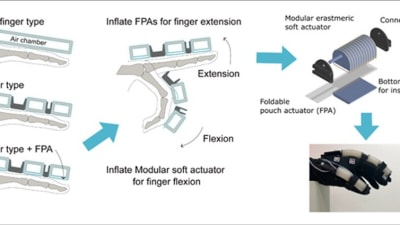
Researchers have succeeded in adding finger straightening or extension to soft rehabilitation gloves through a novel foldable pouch actuator (FPA) without compromising the already existing functionality of finger bending or flexion. Read on to learn more about it.
In 2024, Johnson & Johnson MedTech faced a few challenges but the medtech giant also saw some great successes. Read on to learn more about Johnson & Johnson.
Medical technology plays a crucial role in American football by enhancing player safety, preventing injury, and facilitating recovery through advances and innovations. Take this quiz to learn more about the how medical technology is improving rehabilitation and enhancing player safety.
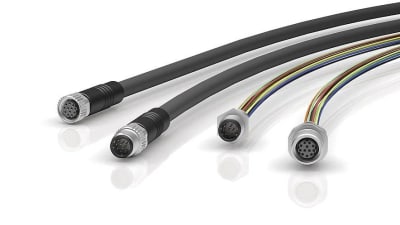
See where the product focus is this month: mechanical components, including Binder's M8 12-pin circular connector; Saint-Gobain Abrasives' abrasive belt designed to provide consistent, fine finishes across a range of industries including medical; a camera module for 3D intraoral dental scanners from Omnivision; and TOSS Machine Components' panel mount impulse heat seal controller.
The global market for robotic surgical systems and their accessories will reach $10 billion in 2024, with a substantial increase expected to $15.8 billion by 2030. Read on to learn what Sherrie Trigg, Editor and Director of Medical Content, has to say about surgical robots.
A wirelessly activated device mimics the wavelike muscular function in the esophagus and small intestine responsible for transporting food and viscous fluids for digestion.
See the new products and services, including Dri-Air Industries' new dryer for plastics, the MicroDryer Series (MD); Thomson Industries' advanced controllability options to its Electrak ® LL line of long-life electric linear actuators; Instron's next-generation Autoinjector Testing System; more than 40 different thermally conductive greases available from EpoxySet; a series of low-profile pull type clapper solenoids from Magnetic Sensor Systems; and more.
Understanding power system components and how to connect them correctly is critical to meeting regulatory requirements and designing successful electrical products for worldwide markets. Interpower’s Ralph Bright defines these requirements and explains how to know which cord to select for your application.
Inside Story: Trends in Packaging and Sterilization
Eurofins Medical Device Testing (MDT) provides a full scope of testing services. In this interview, Eurofins’ experts, Sunny Modi, PhD, Director of Package Testing; and Elizabeth Sydnor, Director of Microbiology; answer common questions on medical device packaging and sterilization.
















 INSIDER: Medical
 Features: Medical
 Features: Materials
 From the Editor: Medical
 INSIDER: Medical
 Features: AR/AI

 Podcasts: Medical
 Podcasts: Medical
 Podcasts: Design
 On-Demand Webinars: Manufacturing & Prototyping
 Podcasts: AR/AI
 Podcasts: Green Design & Manufacturing