
As advanced technologies reshape the medical device landscape, the demands placed on contract manufacturers are evolving. Today’s partners are expected to do more than deliver components — they must anticipate disruptions, adapt quickly, and bring a level of technical and strategic depth that supports faster development without compromising quality.
Manufacturers are navigating growing complexity across automation, compliance, workforce development, and supply-chain resilience. The ability to respond with agility, backed by deep process control and institutional expertise, has become a differentiator in an industry that’s moving faster than ever. In this Q&A, Brian Semcer, president of MICRO, talks to Medical Design Briefs about how the next generation of contract manufacturers is redefining agility, quality, and partnership in the medical device ecosystem.
MDB: How are advancements in areas like robotics, automation, and artificial intelligence (AI) transforming the way medical devices are manufactured and assembled by contract manufacturers?
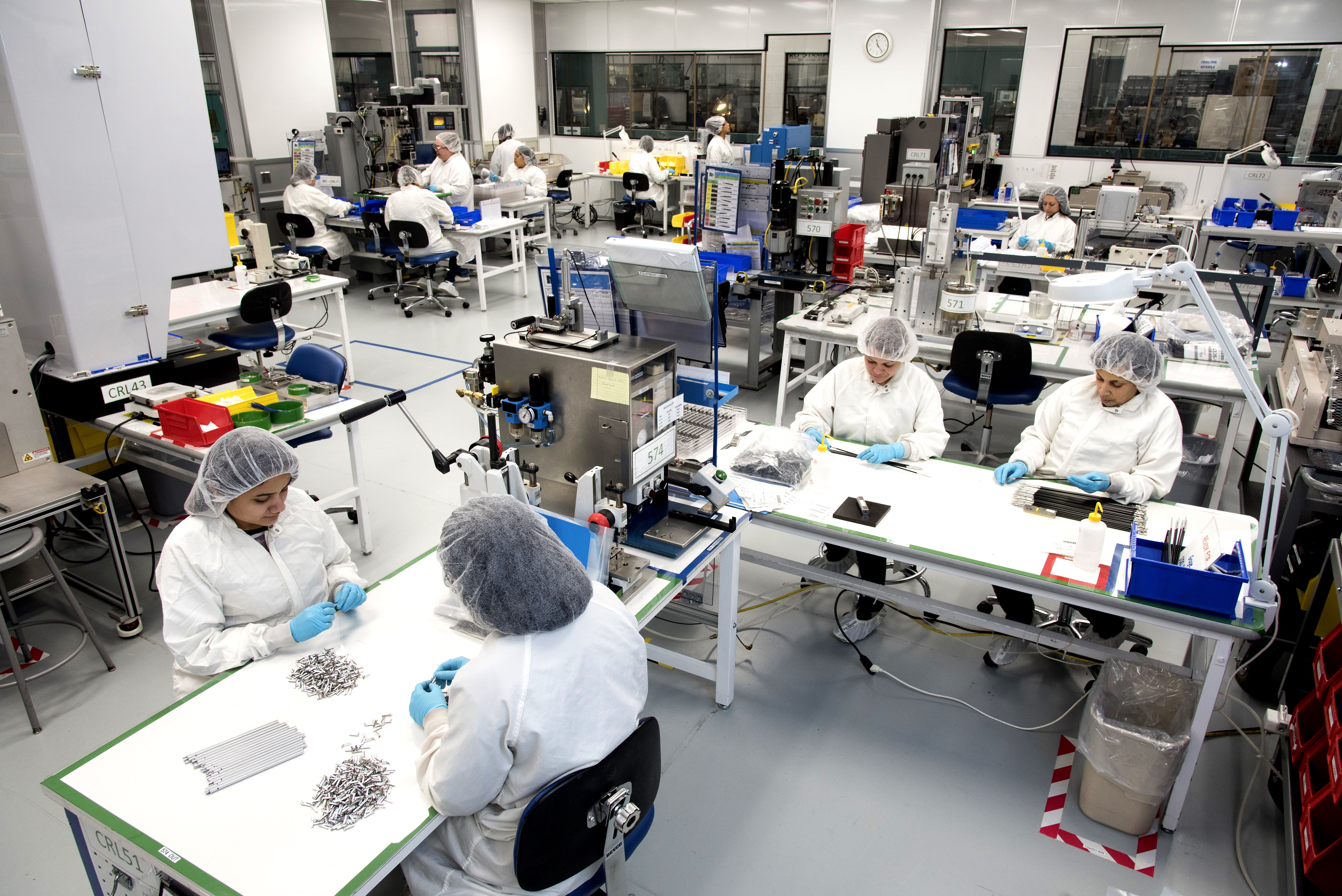
Automation and robotics are opening new possibilities in medical manufacturing, particularly in terms of repeatability, process control, and cost efficiency. A practical approach is to begin with manual assembly to debug and refine the process, then add automation once stability and consistency have been proven. This model supports long-term scalability without compromising early-stage development.
AI is also beginning to find practical applications. One example is using AI to automate document verification, such as supplier material specs. This can reduce manual workload and speed compliance tasks. Although the full impact of AI is still emerging, many manufacturers are evaluating how it can support areas like equipment maintenance, data management, and faster problem-solving on the floor.
MDB: What new approaches or best practices are being adopted to ensure speed to market while still meeting regulatory and quality standards?
While speed to market is largely influenced by the OEM’s schedule, contract manufacturers play a critical role in supporting that pace. One best practice is to assign a dedicated R&D team that owns the project from early development through prototyping. This allows for a deeper focus on process design and co-engineering.
Another key strategy is to “make mistakes on paper.” That means frontloading the project with planning by developing fixtures, tools, and process flows early, and stress-testing the design for manufacturability before production starts. Frequent and open dialogue with the customer is essential. Understanding their intent and surfacing risks early can prevent misalignment and speed up approvals.
MDB: With advanced technologies reshaping the industry, what new skills and training are most critical for the workforce in medical contract manufacturing?

As technology changes, the skills needed to support it must evolve in tandem. Building strong internal training pipelines is a top priority. This often includes formal apprenticeship programs for tool and die work, rotational engineering tracks to promote cross-functional knowledge, and certified product setup programs that raise the technical bar for operators.
Equally important is fostering a culture of curiosity and adaptability. Creating space for employees to explore new areas within the organization, rather than staying locked into one role, can lead to better retention and a more resilient workforce. Pairing experienced employees with early-career talent supports both knowledge transfer and innovation. In many organizations, workforce development is now as central to long-term success as product innovation itself.
MDB: How are medical contract manufacturers rethinking supply-chain strategies to mitigate risks exposed by recent global disruptions?
Supply-chain disruptions have made resilience a top concern. In medical manufacturing, many supplier relationships are long-term and deeply integrated, particularly for components with strict regulatory or material requirements. For example, processes like metal injection molding rely on highly specialized inputs that are not easily substituted especially when using custom feedstocks. Still, flexibility where possible remains important. Manufacturers are increasingly looking to dual-source less custom materials, such as metal strip, and maintain strong relationships with suppliers at the leadership level, not just as order processors. These relationships often span decades and are built on mutual accountability, communication and shared quality expectations. There are also examples where manufacturers have had to engage directly in policy-level discussions. A past trade issue affecting material supply from South Korea prompted some to testify before Congress to maintain access to essential inputs. That level of engagement reflects how strategic and complex supply chains have become.
Brian Semcer is President of MICRO, Somerset, NJ. He has overseen the company’s growth into a global leader in precision medical manufacturing. He brings decades of experience in developing and scaling surgical instruments, with a focus on innovation and customer collaboration. For more information, visit here .