
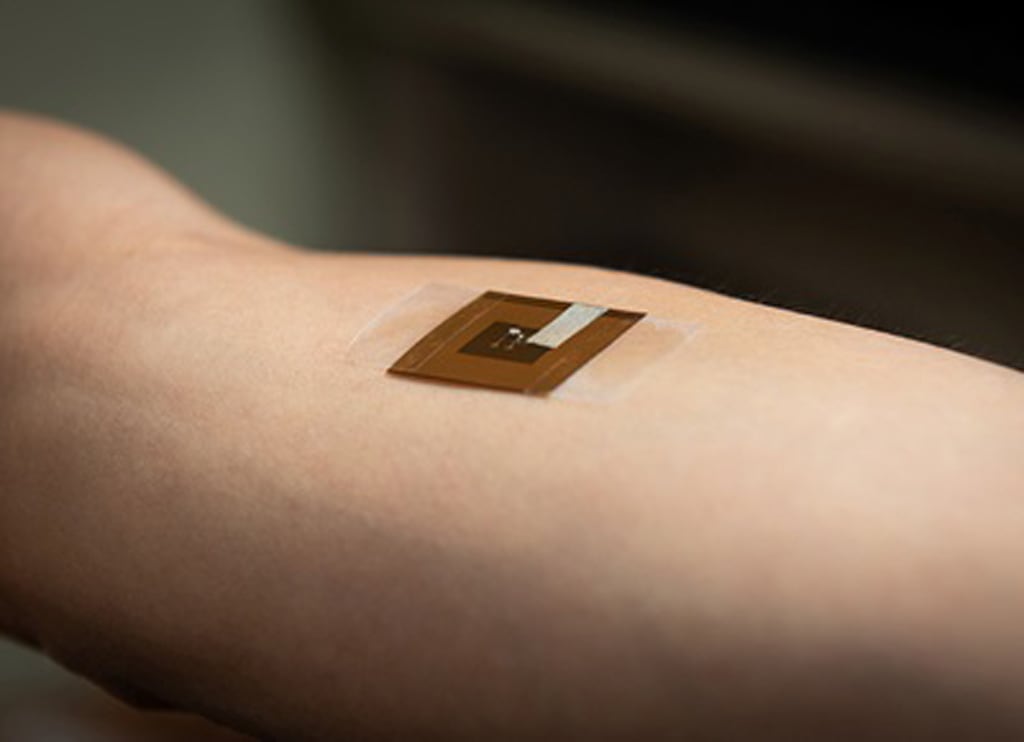
Researchers have developed a groundbreaking, battery-free wearable patch that could help detect skin cancer earlier and more accurately, potentially saving lives by making screening more accessible and less invasive.
The patch measures the electrical properties (bioimpedance) of skin lesions in a simple, non-invasive way. Bioimpedance indicates how easily electrical signals pass through living tissue. Cancerous areas often have different electrical properties than healthy skin. By measuring bioimpedance, the patch can help identify abnormal areas that may require further medical evaluation.
The research team designed a flexible, chip-less, battery-free patch that is placed directly on the skin and works wirelessly with a small reader device. To test its effectiveness, the team recruited 10 volunteers. Each participant had the patch placed on both a pigmented skin lesion (such as a mole) and nearby healthy skin. The patch used safe electrical signals to measure bioimpedance. Standard statistical methods confirmed significant differences between healthy and abnormal skin.
The study showed that the patch could clearly distinguish between healthy skin and spots that might be a concern, picking up unique electrical signals from suspicious moles or lesions regardless of skin tone.
This innovation addresses several challenges in skin cancer detection, including the subjectivity of current visual inspection. The patch provides additional information about lesions that enhances and supports other diagnostic techniques such as imaging-based methods. The patch works equally well across all skin tones and can detect changes in small or visually ambiguous lesions. It also generates nonvisual, numerical data, reducing privacy concerns and making it easier to store and share results.
The research team plans to further improve the patch by integrating conductive hydrogel electrodes for even better performance and comfort. The next phase will involve larger clinical studies to test the patch’s effectiveness in real-world settings and to determine how well it can distinguish between benign and malignant lesions.