
When manufacturers seek to leverage specialized expertise, advanced processing capabilities, or proprietary technologies without assuming the financial burden of acquiring and maintaining dedicated equipment or facilities, they often turn to toll processing.
Toll processing (or toll manufacturing) involves a manufacturer processing customer-supplied materials or parts for a predetermined fee. The customer retains ownership of the materials, while the toll provider applies specialized technologies, equipment, and expertise to deliver the finished components.
From a strategic perspective, toll processing provides the best of both worlds. Manufacturers in high-value, innovation-driven sectors such as medical devices, aerospace, and electronics can significantly enhance the performance, functionality, and market appeal of their products through the integration of specialty materials, precision surface treatments, or other advanced processing features. This can be achieved without the capital expenditure and operational complexities associated with in-house production.
The result is often a meaningful increase in product value, enabling companies to command substantially higher price points in the marketplace. It is also a particularly cost-effective approach, particularly for small or intermittent volumes.
These benefits are further amplified when manufacturers engage in toll processing directly with the OEM of the processing equipment. Although this approach offers significant value, it is relatively uncommon simply because most toll processing is performed by independent third parties that use equipment purchased from OEMs.
However, third-party providers often lack the in-depth knowledge of the equipment’s design, capabilities, and operational limits that only the original equipment manufacturer (OEM) possesses. This specialized expertise allows the OEM to deliver superior customization, optimized process performance, and tighter quality control.
When working directly with the OEM, manufacturers also gain access to engineering resources, equipment modifications, and technical support that third parties simply cannot offer. This is particularly critical in scenarios involving cutting-edge materials or novel surface modifications, where process flexibility and rapid technical responsiveness are essential.
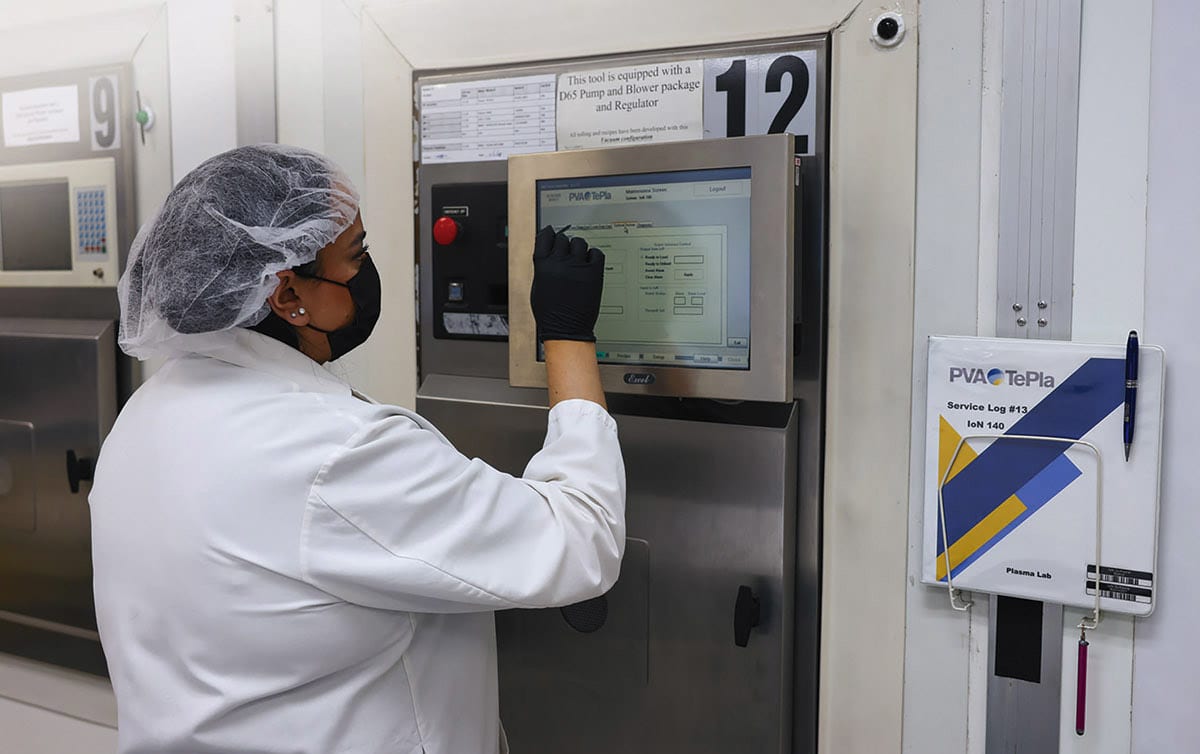
One example that illustrates the value of advanced processing technologies is the plasma treatment systems and diffusion bonding services offered by PVA TePla America, headquartered in Corona, CA. The company serves as both an original equipment manufacturer (OEM) and a toll processor for plasma treatment and diffusion bonding technologies.
While these two processes differ significantly in function and application, both provide substantial performance and quality benefits across a range of high-tech industries. Plasma treatments enhance bonding and adhesion and enable a variety of critical surface modifications. Diffusion bonding, on the other hand, facilitates the joining of similar or dissimilar metals to achieve superior thermal performance, mechanical strength, and structural integrity.
Given the distinct requirements, substrates, and material combinations involved, however, each customer application is inherently unique. As a result, successful outcomes depend on a carefully tailored process development customized to the specific demands of each use case.
A single recipe or standardized process cannot be universally applied. Each application requires a tailored approach to ensure optimal performance and compatibility.
Toll Processing: Plasma Treatments
In manufacturing, plasma treatments are often utilized to solve problems that cannot be resolved by other methods. Whether attempting to improve adhesion of dissimilar materials, depositing coatings, cleaning surfaces, applying a protective coating that repels water for example or biological fluids or enhancing surface wettability or functional coating, plasma treatments often add significant value to products.
One of the most common applications for toll processing includes plasma treatments to improve the bonding of chemical adhesives, coatings, and inks to parts. Adhesion promotion can be achieved by increasing the surface free energy through several mechanisms, including precision cleaning, chemically or physically modifying the surface, increasing surface area by roughening, and primer coatings. Materials that can benefit from this process include metal to plastic, silicon to glass, polymer-to-polymer interfaces, biological content to microtiter plates, and even non-stick materials like PTFE.
The net effect is a tremendous improvement in bonding. In some cases, up to 50 times bond strength improvement can be achieved.
Due to the wide range of materials, chemistries, and application-specific requirements, a significant portion of the company’s toll processing work involves developing customized processes. Even when multiple customers request a hydrophilic surface [one that attracts water, allowing it to spread rather than bead up], the underlying process cannot be assumed to be identical.
A hydrophilic coating that works well on PEEK may not perform the same on PTFE or a polymer due to the distinct surface chemistry of each material. Each material responds differently to plasma, and variations in substrate material, surface energy, and other factors require a customized process to achieve consistent, reliable results.
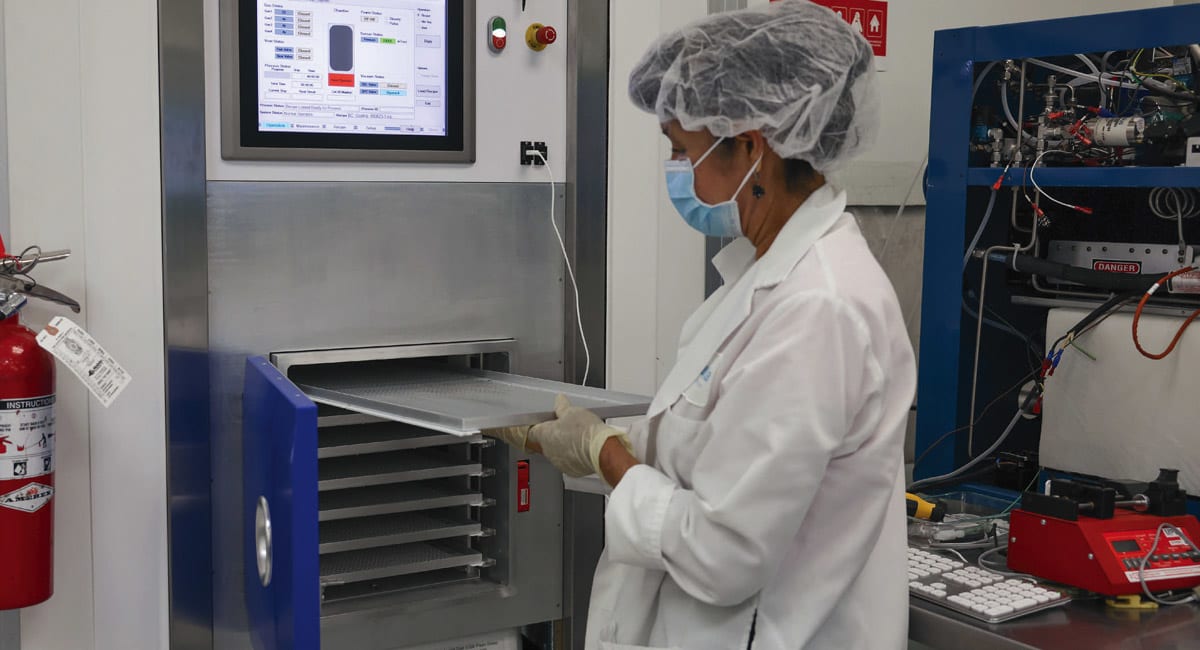
When needed, a company can tailor its equipment to meet specific customer requirements, making custom modifications to tools, hardware, or system configurations to support specialized applications and performance objectives.
Once the process is fully developed, all parameters are standardized and tightly controlled. The recipe is locked, and a formal standard operating procedure (SOP) is established to ensure repeatability and consistency.
While plasma treatment tools may come with a standard recipe, that is treated as a starting point. It is important that the team brings significant expertise in customizing processes to meet the unique needs of each application.
As an example, one project focused on improving the adhesion of silicone to printed circuit boards (PCBs). Silicone is commonly used as an overmolding compound to protect electronics from harsh environmental conditions. However, the complex topography of a PCB means that the silicone must bond to a variety of materials — polymers, metals, alloys, ceramics, and the FR-4 board itself — each with distinct surface chemistries and surface energies.
Without proper adhesion, silicone can begin to delaminate, not only at the edges of the PCB board but also in the form of small air pockets on, or around, components. This can lead to moisture ingress and subsequent corrosion or electrical shorts.
To address this challenge, a specialized process deposits a thin-film coating over the entire board to harmonize the surface energy. The process starts with a detailed cleaning and surface activation step. An inert chemical primer is then applied to establish a consistent bonding surface. This preparation is critical for achieving strong, durable adhesion of the silicone overmolding.
In another application, a specialized process was developed to render polystyrene microtiter and multiwell plates highly hydrophilic to improve liquid coverage and enhance the adhesion of biomolecules. Since polystyrene is naturally hydrophobic, water-based solutions tend to bead on the surface rather than spread. The solution involved molecular-level precision cleaning of the substrate, followed by a surface activation step to significantly increase surface energy.

Toll Processing: Diffusion Bonding
Diffusion bonding is an essential joining method used to achieve a high-purity interface when two similar or dissimilar metals require superior structural integrity. The process involves applying high temperature and pressure to metals mated together in a hot press, which causes the atoms on solid metallic surfaces to intersperse and bond.
Toll processing is often utilized because diffusion bonding equipment is exceptionally large, complex, and costly, ranging from several hundred thousand to several million dollars. These systems can be as tall as one- to two-story structures and demand significant facility space to accommodate their height, footprint, and supporting infrastructure.
Joining Dissimilar Materials. Diffusion bonding is increasingly valuable for joining dissimilar metals, such as aluminum to steel or titanium. This allows engineers to design components and assemblies with the best properties of each metal.
For example, one metal might offer superior corrosion resistance while the other provides greater strength. This ‘packaging’ of dissimilar metals opens new possibilities in design, particularly for overall weight reduction of design and enhancing performance in challenging environments.
Conformal Cooling. Diffusion bonding also has applications for conformal cooling. The concept is to bond layers of sheet metal that contain machined channel/microchannel structures. When combined, the channels provide a path for heat dissipation. Today, much of the innovation involves aluminum as one or more of the layers of metals that are bonded. Aluminum’s compatibility with diffusion bonding allows for the creation of complex cooling channels in high-power electronics, injection molds, and specialized heat exchangers — designs often impossible to achieve through conventional machining. For manufacturers looking to adopt sophisticated technologies without incurring the costs of capital investment, OEMbased toll processing delivers a scalable and technically robust solution that supports both immediate project needs and long-term strategic goals.
This article was written by Suraiya Nafis, Director Research and Development, PVA TePla America, Corona, CA. For more information, contact