Features

R&D

-1
0
30
R&D: Wearables
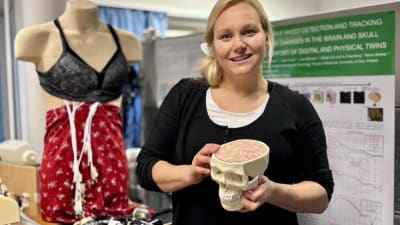
Researchers are exploring new ways to utilize microwave technology in monitoring and assessing health conditions. The results of experiments conducted with realistic models are promising. Bras that detect breast cancer, leg sleeves that identify blood clots, and a helmet that monitors the effects of radiation therapy offer a glimpse into what future healthcare might look like. Read on to learn more.
Feature Image
R&D: Materials
Researchers combined mussel adhesive protein with decellularized extracellular matrix (dECM) to develop a composite hemostatic sponge that offers both strong tissue adhesion and biocompatible biodegradability. Read on to learn more.
Feature Image
R&D: Medical
Researchers have pioneered a 3D printing method that grows metals and ceramics inside a water-based gel, resulting in exceptionally dense, yet intricate constructions for next-generation biomedical technologies. Read on to learn more about it.
Feature Image
R&D: Medical
A low-cost, portable biosensor can quickly identify a protein whose altered levels are associated with psychiatric disorders, such as depression, schizophrenia, and bipolar disorder. When it becomes commercially available in the future, it may contribute to early detection, which is essential for treating and monitoring patients’ clinical conditions. Read on to learn more.
Feature Image
R&D: Medical
A team of scientists has developed a soft polymer hydrogel that can conduct electricity as well as metal can. Read on to learn more.
Feature Image
R&D: Medical
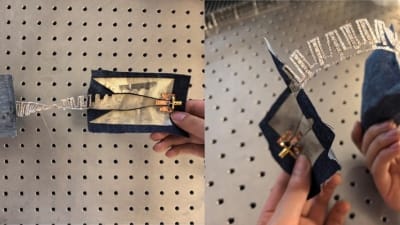
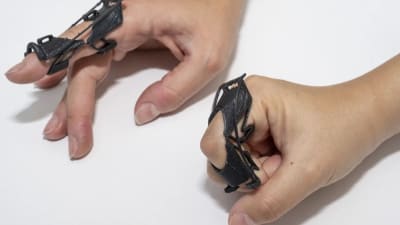
Engineers have developed a next-generation wearable system that enables people to control machines using everyday gestures — even while running, riding in a car, or floating on turbulent ocean waves. Read on to learn more about it.
Feature Image
R&D: AR/AI
During the first two years of life, the motor development of children is monitored closely, as motion is the natural base for their other development and interaction with the environment. Current methods do not allow accurate developmental monitoring throughout early childhood. MAIJU (Motor Assessment of Infants with a Jumpsuit) is designed to solve these problems. Read on to learn more about it.
Feature Image
R&D: Medical
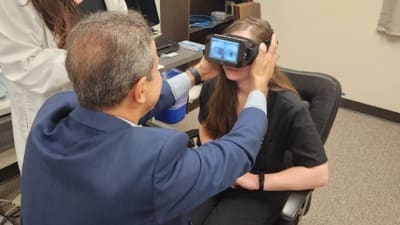
Most current AI models are based on static datasets, limiting their adaptability and real-time diagnostic potential. To address this gap, researchers have developed a novel proof-of-concept deep learning model that leverages real-time data to assist in diagnosing nystagmus — a condition characterized by involuntary, rhythmic eye movements often linked to vestibular or neurological disorders. Read on to learn more.
Feature Image
R&D: Wearables
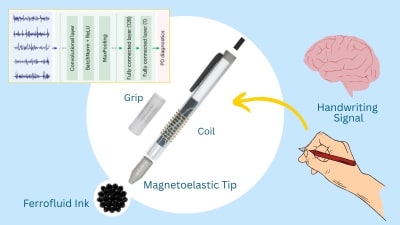
Researchers have developed a smart, self-powered magnetoelastic pen that could help detect early signs of Parkinson’s by analyzing a person’s handwriting. The highly sensitive diagnostic pen features a soft, silicon magnetoelastic tip and ferrofluid ink — a special liquid containing tiny magnetic particles. Read on to learn more about it.
Feature Image
R&D: Medical
A noninvasive imaging system combines two advanced techniques to examine both the structure and chemical composition of skin cancers. This approach could improve how doctors diagnose and classify skin cancer and how they monitor treatment responses. Read on to learn more about it.
Feature Image
R&D: Sensors/Data Acquisition
Researchers have developed novel ISM-based sweat sensors that feature enhanced signal stability and performance and avoid skin contact, while also being reusable, making them practical for daily use. Read on to learn more.
Feature Image
R&D: Materials
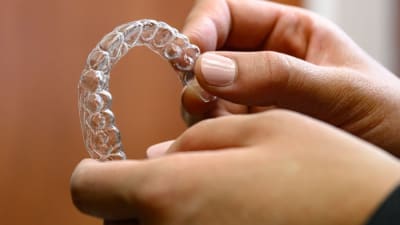
Researchers are testing a new technology that incorporates shape memory material for clear plastic dental aligners, an alternative to traditional metal braces. The clear aligners still need to be improved to the point that there are two materials — clear aligners and metal braces — that are as good as each other. Read on to learn more.
Feature Image
R&D: Medical
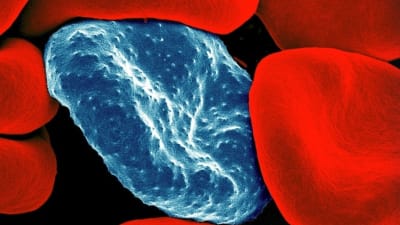
Devices made with cheap strips of paper have outperformed two other testing methods in detecting malaria infection in asymptomatic people in Ghana — a diagnostic advance that could accelerate efforts to eliminate the disease, researchers say. Read on to learn more.
Feature Image
R&D: Imaging
Researchers have developed a prototype imaging system that could significantly improve doctors’ ability to detect cancerous tissue during endoscopic procedures. This approach combines light-emitting diodes (LEDs) with hyperspectral imaging technology to create detailed maps of tissue properties that are invisible to conventional endoscopic cameras. Read on to learn more.
Feature Image
R&D: Wearables
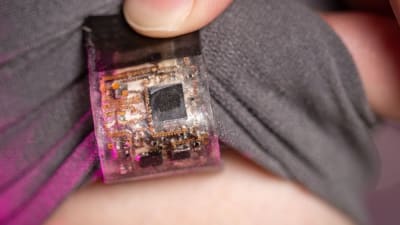
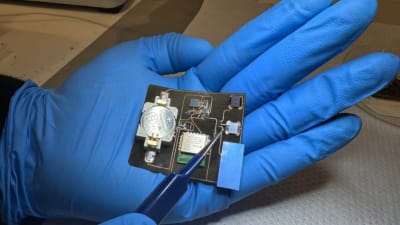
Researchers have developed a wearable wound monitoring device with integrated sensors that could reduce infection risks by minimizing the need for frequent physical contact. The proof-of-concept device is designed for reuse, making it more cost-effective and practical than disposable smart bandages and other emerging wound monitoring technologies. Read on to learn more.
Feature Image
R&D: Medical
Scientists have produced a new, powerful electricity-conducting material that could improve wearable technologies, including medical devices. The new technique uses hyaluronic acid applied directly to a gold-plated surface to create a thinner, more durable film, or polymer, used to conduct electricity in devices like biosensors. Read on to learn more.
Feature Image
R&D: Medical
A new bioimaging device can operate with significantly lower power and in an entirely non-mechanical way. It could one day improve detecting eye and even heart conditions. The device uses a process called electrowetting to change the surface shape of a liquid to perform optical functions. Read on to learn more.
Feature Image
R&D: Medical
Researchers have developed a portable device capable of detecting rare genetic mutations from a single drop of blood. The instrument was shown in lab experiments to quickly and accurately test for a genetic condition called hereditary transthyretin amyloidosis, which can cause heart problems. Read on to learn more.
Feature Image
R&D: Medical
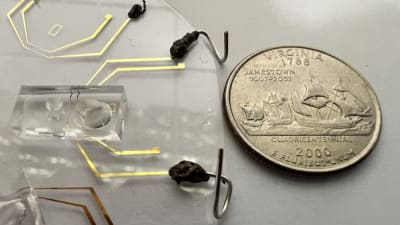
Researchers have created a groundbreaking prototype for a new kind of leadless pacemaker designed for both children and adults. The innovative micropacemaker would be the first fully leadless system to be placed in the pericardial space surrounding the heart. Read on to learn more.
Feature Image
R&D: Medical
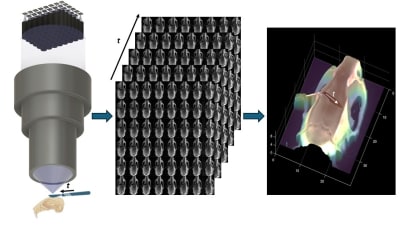
To meet the need for better 3D imaging that works during live surgery, researchers recently developed a new kind of surgical microscope called the Fourier light-field multiview stereoscope, known as FiLM-Scope. Read on to learn more.
Feature Image
R&D: Medical
Engineers have developed a smart capsule called PillTrek that can measure pH, temperature, and a variety of different biomarkers. It incorporates simple, inexpensive sensors into a miniature wireless electrochemical workstation that relies on low-power electronics. Read on to learn more.
Feature Image
R&D: Wearables
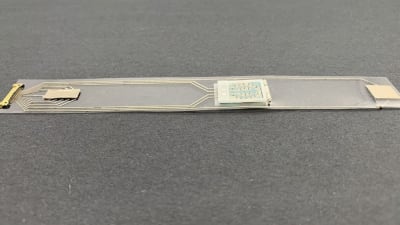
A wearable wristband could significantly improve diabetes management by continuously tracking not only glucose but also other chemical and cardiovascular signals that influence disease progression and overall health. Read on to learn more.
Feature Image
R&D: Medical
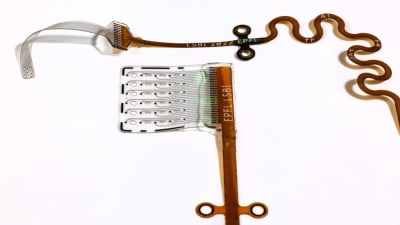
Researchers have developed a soft, thin-film auditory brainstem implant. The device uses micrometer-scale platinum electrodes embedded in silicone, forming a pliable array just a fraction of a millimeter thick. This novel approach enables better tissue contact, potentially preventing off-target nerve activation and reducing side effects. Read on to learn more.
Feature Image
R&D: Medical
A toothbrush-shaped ultrasound transducer can provide a less invasive screening for gum disease. In proof-of-concept demonstrations on animal tissues, the device produced measurements similar to those of a manual probe. Read on to learn more.
Feature Image
R&D: Sensors/Data Acquisition
Engineers have harnessed quantum physics to detect the presence of biomolecules without the need for an external light source, overcoming a significant obstacle to the use of optical biosensors in healthcare. Read on to learn more.
Feature Image
R&D: Design
A paper-based diagnostic device can detect COVID-19 and other infectious diseases in under 10 minutes, without the need for sophisticated lab equipment or trained personnel. Read on to learn more about it.
Feature Image
R&D: Medical
Researchers have developed a new type of pipette that can deliver ions to individual neurons without affecting the sensitive extracellular milieu. Controlling the concentration of different ions can provide important insights into how individual brain cells are affected and how cells work together. Read on to learn more.
Feature Image
R&D: Medical
Mini organs are incomplete without blood vessels. To facilitate systematic studies and ensure meaningful comparisons with living organisms, a network of perfusable blood vessels and capillaries must be created — in a way that is precisely controllable and reproducible. A team has established a method using ultrashort laser pulses to create tiny blood vessels in a rapid and reproducible manner. Read on to learn more about it.
Feature Image
R&D: Manufacturing & Prototyping
A long-lasting, 3D-printed, adhesive-free wearable provides a more comprehensive picture of a user’s physiological state. The device, which measures water vapor and skin emissions of gases, continuously tracks and logs physiological data associated with dehydration, metabolic shifts, and stress levels. Read on to learn more.
Feature Image

Ask the Expert

John Chandler on Achieving Quality Motion Control

Feature Image

FAULHABER MICROMO brings together the highest quality motion technologies and value-added services, together with global engineering, sourcing, and manufacturing, to deliver top quality micro motion solutions. With 34 years’ experience, John Chandler injects a key engineering perspective into all new projects and enjoys working closely with OEM customers to bring exciting new technologies to market.

Inside Story

Inside Story: Trends in Packaging and Sterilization

Feature Image

Eurofins Medical Device Testing (MDT) provides a full scope of testing services. In this interview, Eurofins’ experts, Sunny Modi, PhD, Director of Package Testing; and Elizabeth Sydnor, Director of Microbiology; answer common questions on medical device packaging and sterilization.

Videos