Features

R&D

-1
120
30
R&D: Medical
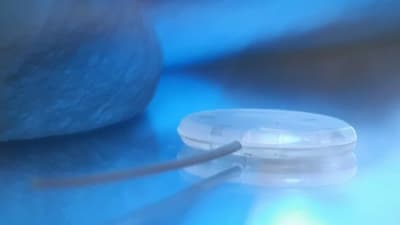
A minimally invasive and smart glaucoma implant has the potential to decrease the incidence of postoperative complications. The biodegradable glaucoma implant is approximately the same size as the world’s smallest medical device known to be implanted in the human body.
Feature Image
R&D: Sensors/Data Acquisition
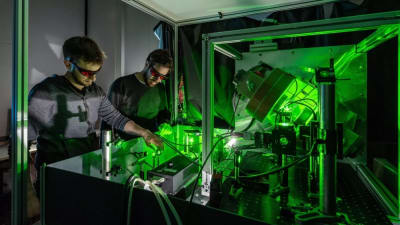
Made with a laser-modified graphene nanocomposite material, a wearable device can detect specific glucose levels in sweat for three weeks while simultaneously monitoring body temperature and pH levels.
Feature Image
R&D: Medical
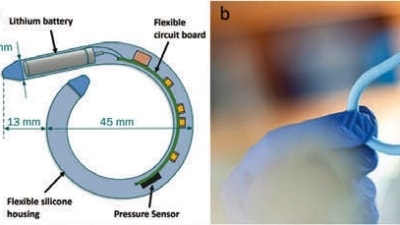
A novel aero-elastic pressure sensor, called eAir can be applied to minimally invasive surgeries and implantable sensors by directly addressing the challenges associated with existing pressure sensors.
Feature Image
R&D: Medical
Research teams have created an entirely new kind of drug-delivery system to give doctors the ability to treat cancer in a more targeted way. The system employs drugs that are activated by ultrasound — and only right where they are needed in the body.
Feature Image
R&D: Sensors/Data Acquisition
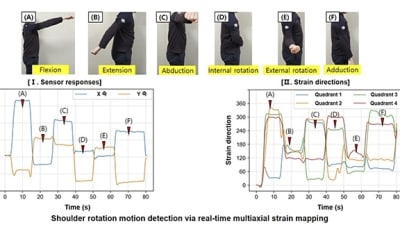
A research team has successfully overcome the limitations of soft strain sensors by integrating computer vision technology into optical sensors. The team developed a sensor technology known as computer vision-based optical strain (CVOS).
Feature Image
R&D: Medical
A low-cost biosensor, called Neosens, will allow doctors to diagnose sepsis in a matter of minutes. Neosens works by detecting interleukin 6, a messenger that’s secreted by newborns’ immune systems in response to a host of biological conditions.
Feature Image
R&D: Medical
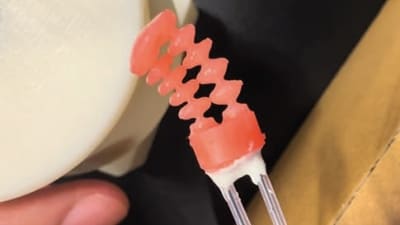
An advanced microscale 3D printing technology used for tissue engineering, cancer research, and biofabrication is now accessible to researchers worldwide. The technology centers around melt electrowriting (MEW), a unique class of additive manufacturing.
Feature Image
R&D: Materials
A multi-faceted device is effective for treating deep, noncompressible, and irregularly shaped wounds. The device provides rapid hemorrhage management, has minimal inflammatory effects, and provides infection control.
Feature Image
R&D: Medical
A wireless device called the UroMonitor enables accurate, noninvasive monitoring of bladder pressure in patients with overactive bladder. It is the first device to enable catheter-free telemetric ambulatory bladder pressure monitoring in humans.
Feature Image
R&D: Medical
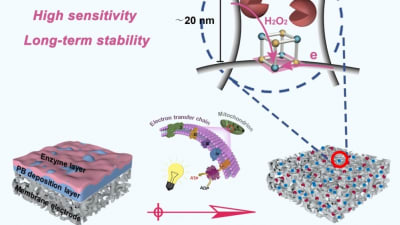
Inspired by the structure of electron-transfer chains in the mitochondria, a research group has developed a 3D mesoporous biosensing-membrane with neighborhood nanostructures that...
Feature Image
R&D: Design
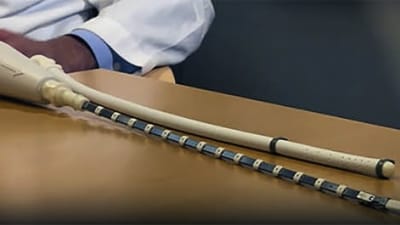
For some with AFib, a catheter ablation is used to burn or freeze the precise area causing the problem to restore a normal heart rhythm.
Feature Image
R&D: Medical
Engineers have developed a biodegradable polymer system to treat rheumatoid arthritis, an autoimmune and inflammatory disease, by working in concert with the power of the human immune system.
Feature Image
R&D: Imaging
An ingestible x-ray dosimeter detects radiation dose in real time. Researchers found that they could provide approximately five times more accurate monitoring of the dose delivered than current standard methods.
Feature Image
R&D: Wearables
Researchers have designed a thin, digital display that can bend in half or stretch to more than twice its original length while still emitting a fluorescent pattern.
Feature Image
R&D: Medical
Researchers have designed wood-derived electronic-skin substrates for electrophysiological monitoring that are functional, sustainable, and comfortable.
Feature Image
R&D: Medical
AI glasses with a silent-speech recognition interface use acoustic-sensing and artificial intelligence to continuously recognize up to 31 unvocalized commands, based on lip and mouth movements.
Feature Image
R&D: Sensors/Data Acquisition
A research team has designed a fall-risk assessment system that enables doctors to create personalized risk-management strategies for patients based on their individual movement patterns at home.
Feature Image
R&D: Robotics, Automation & Control
A team of engineers has designed a new class of tiny, self-propelled robots that can zip through liquid at incredible speeds — and may one day even deliver prescription drugs to hard-to-reach...
Feature Image
R&D: Medical
A research team has developed a 3D imaging sensor that has an extremely high angular resolution, which is the capacity of an optical instrument to distinguish points of an object separated by a...
Feature Image
R&D: Electronics & Computers
Scientists have developed electrode arrays that can be funneled through a small hole in the skull and deployed over a relatively large surface over the brain’s cortex. The technology...
Feature Image
R&D: Medical
There is a high risk of cancer recurrence if even a small number of cancerous cells are left behind after surgical resection. To prevent this, researchers have developed fluorescence-guided surgery...
Feature Image
R&D: Sensors/Data Acquisition
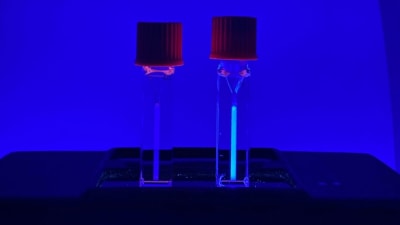
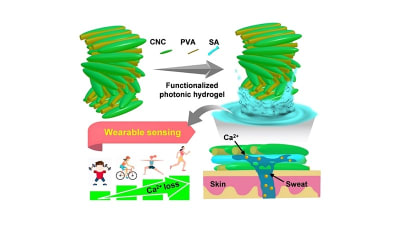
Researchers have reported a sustainable, insoluble, and chiral photonic cellulose nanocrystal patch for calcium ion (Ca2+) sensing in sweat.
Feature Image
R&D: Medical
Engineers have unveiled what they call an intervertebral disc-on-a-chip, a world-first precision engineered toolbox for research into lower back pain, the leading cause of disability worldwide.
Feature Image
R&D: Medical
A new technology that uses bioprinted patches to repair damaged heart tissue has been proven to be safe and cost-effective for patients.
Feature Image
R&D: Sensors/Data Acquisition
Researchers have successfully created omnidirectionally stretchable pressure sensors inspired by crocodile skin. They drew inspiration from the unique sensory organ of crocodile skin and developed pressure sensors with microdomes and wrinkled surfaces.
Feature Image
R&D: Sensors/Data Acquisition
An electrochemical sensor detects Parkinson’s disease at different stages. The device was fabricated using an ordinary 3D printer and proved capable of early diagnosis, also serving as a model for the identification of other diseases.
Feature Image
R&D: Medical
Scientists have developed a nanobiosensor based on gold nanowires. Originally only intended for the detection of COVID-19-associated antigens and antibodies, the biosensor is also transferable to other biomarkers.
Feature Image
R&D: Nanotechnology
Corneal grafts may be more successful by using nanoparticles to encapsulate the medication. The novel approach could also significantly improve patient compliance.
Feature Image
R&D: Medical
A wearable electrical stimulation and vibration therapy system might be just what the doctor ordered for people experiencing foot pain and balance loss due to diabetic neuropathy.
Feature Image

Ask the Expert

Dan Sanchez on How to Improve Extruded Components
Feature Image

Improving extruded components requires careful attention to a number of factors, including dimensional tolerance, material selection, and processing. Trelleborg’s Dan Sanchez provides detailed insights into each of these considerations to help you advance your device innovations while reducing costs and speeding time to market.

Inside Story

Inside Story: Trends in Packaging and Sterilization

Feature Image

Eurofins Medical Device Testing (MDT) provides a full scope of testing services. In this interview, Eurofins’ experts, Sunny Modi, PhD, Director of Package Testing; and Elizabeth Sydnor, Director of Microbiology; answer common questions on medical device packaging and sterilization.


Videos