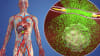


Researchers are exploring new ways to utilize microwave technology in monitoring and assessing health conditions. The results of experiments conducted with realistic models are promising. Bras that detect breast cancer, leg sleeves that identify blood clots, and a helmet that monitors the effects of radiation therapy offer a glimpse into what future healthcare might look like.
Bringing research equipment closer to people lowers the threshold for participating in studies, which in turn means health issues can be detected earlier and addressed more effectively.
For measurement, researchers are developing portable or lightweight wearable devices, in which the radio signal traveling between installed antennas can be analyzed to detect anomalies such as tumors. The low-power microwave signal is safe and effective. For example, a signal sent through brain or breast tissue behaves differently when it encounters different tissues, which provides data for the doctor interpreting it.
The newest application, which has sparked much interest among doctors, relates to monitoring the effects of radiation therapy in treating brain tumors. In certain cases, the tumor is treated primarily with radiation therapy instead of surgery. Researchers are designing a lightweight helmet for head monitoring, which the patient wears during scanning. Analysis of the microwave signal traveling between antennas placed around the helmet reveals whether the treatment has been effective and the tumor has shrunk. Preliminary research results show that microwave technology can detect even small changes in tumor size. (Image credit: University of Oulo)
For more information, visit here .