Features

R&D

-1
60
30
R&D: Medical
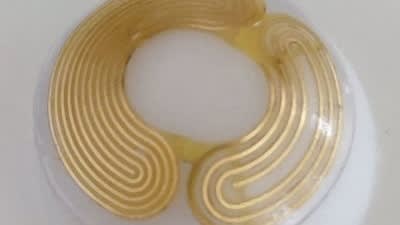
Researchers have now developed the first hydrogel implant designed for use in fallopian tubes. This innovation performs two functions: one is to act as a contraceptive, the other is to prevent the recipient from developing endometriosis in the first place or to halt the spread if they do. Read on to learn more.
Feature Image
R&D: Manufacturing & Prototyping
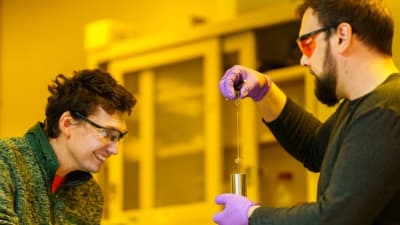
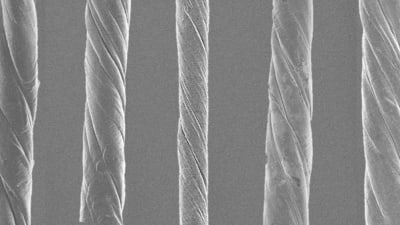
Scientists have developed an innovative wearable fabric that is flexible but can stiffen on demand. Developed through a combination of geometric design, 3D printing, and robotic control, the new technology, RoboFabric, can quickly be made into medical devices or soft robotics. Read on to learn more about it.
Feature Image
R&D: Medical
A new bioink has been designed for engineering human skin constructs using norbornene-pullulan-based hydrogels. The researchers introduced a novel photocrosslinkable bioink designed for engineering human skin constructs, based on thiol-norbornene-pullulan (N-PLN) formulations combined with various crosslinkers. Read on to learn more.
Feature Image
R&D: Medical
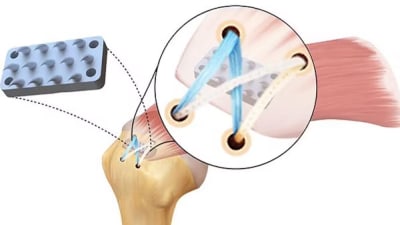
Researchers focused on the development and regeneration of the tendon-to-bone attachment, particularly for advancing tendon-to-bone repair, necessary for rotator cuff repair, and anterior cruciate ligament reconstruction. The researchers have developed a python-tooth-inspired device as a supplement to current rotator cuff suture repair and found that it nearly doubled repair strength. Read on to learn more.
Feature Image
R&D: Robotics, Automation & Control
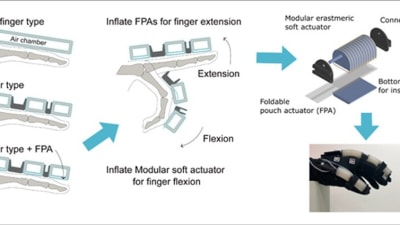
Researchers have succeeded in adding finger straightening or extension to soft rehabilitation gloves through a novel foldable pouch actuator (FPA) without compromising the already existing functionality of finger bending or flexion. Read on to learn more about it.
Feature Image
R&D: Medical
New research unlocks the power of exceptional points (EPs) for advanced optical sensing. Unlike traditional methods that require modifications to the sensor itself, the system features an EP control unit that can plug in to physically separated external sensors. Read on to learn more.
Feature Image
R&D: Green Design & Manufacturing
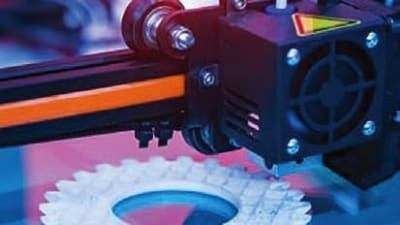
A method for 3D printing called vapor-induced phase-separation 3D printing, or VIPS-3D, can create single-material as well as multi-material objects. Read on to learn more about it.
Feature Image
R&D: Design
An improved technique uses a single microneedle to get enough fluid for a test in about 10 minutes. The microneedles penetrate the outer skin layer, but they don’t reach nerve endings and are hollow. Read on to learn more.
Feature Image
R&D: Design
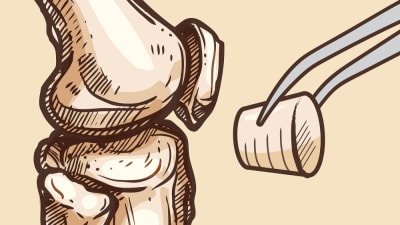
Synthetic cartilage-capped regenerative osteochondral plugs offer a potential off-the-shelf surgical device to treat OCDs and avoid total knee replacement. Read on to learn more about them.
Feature Image
R&D: Medical
Researchers are bringing together multiple areas of technical expertise to improve LVAD performance and outcomes. Read on to learn what this means.
Feature Image
R&D: Materials
Borophene is more conductive, thinner, lighter, stronger, and more flexible than graphene, the 2D version of carbon. Now, researchers have made the material potentially more useful by imparting chirality — or handedness — on it. Read on to learn what this could mean for advanced sensors and implantable medical devices.
Feature Image
R&D: Sensors/Data Acquisition
To advance soft robotics, skin-integrated electronics, and biomedical devices, researchers have developed a 3D-printed material that is soft and stretchable — traits needed for matching the properties of tissues and organs — and that self-assembles. Read on to learn more.
Feature Image
R&D: Medical
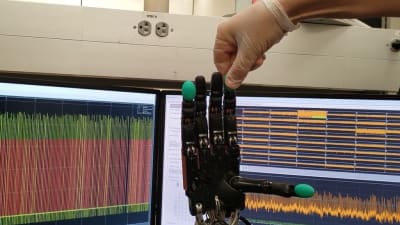
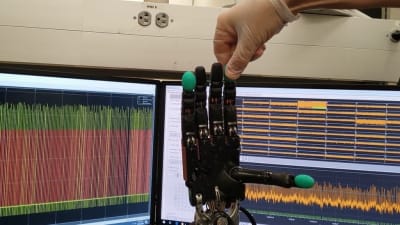
Researchers have developed a novel biohybrid neuroprosthetic research platform comprised of a dexterous artificial hand electrically interfaced with biological neural networks. Read on to learn more about it.
Feature Image
R&D: Medical
A new method leverages AI and computer simulations to train robotic exoskeletons that can help users save energy while walking, running, and climbing stairs. The novel method rapidly develops exoskeleton controllers to assist locomotion without relying on lengthy human-involved experiments. Read on to learn more.
Feature Image
R&D: Materials
A soft, flexible film senses the presence of nearby objects without physically touching them. The study features the new sensor technology to detect eyelash proximity in blink-tracking glasses. Read on to learn more.
Feature Image
R&D: Robotics, Automation & Control
Researchers have developed SPINDLE, a pioneering robotic rehabilitation system. Combining virtual reality (VR) with customized resistance training, SPINDLE offers personalized therapy to enhance strength and dexterity for activities of daily living (ADLs). Read on to learn more about SPINDLE.
Feature Image
R&D: Wearables
A wearable health monitor can reliably measure levels of important biochemicals in sweat during physical exercise. Read on to learn more about the 3D-printed monitor.
Feature Image
R&D: Medical
Drug-delivery researchers have developed a device with the potential to improve gene therapy for patients with inherited lung diseases such as cystic fibrosis. In cell culture and mouse models,...
Feature Image
R&D: Wearables
Researchers have developed a method for detecting malignant melanoma. A new type of patch equipped with microneedles can identify the biomarker tyrosinase directly in the skin.
Feature Image
R&D: Wearables
A unique wristwatch contains multiple modules, including a sensor array, a microfluidic chip, signal processing, and a data display system to monitor chemicals in human sweat. It can...
Feature Image
R&D: Sensors/Data Acquisition
Using electrical impedance tomography (EIT), researchers have developed a system using a flexible tactile sensor for objective evaluation of fine finger movements. Demonstrating high accuracy in classifying diverse...
Feature Image
R&D: Medical
A new device platform allows for smaller wireless light sources to be placed within the human body. Research indicates that such light sources will enable novel, minimally invasive means of treating and...
Feature Image
R&D: Robotics, Automation & Control
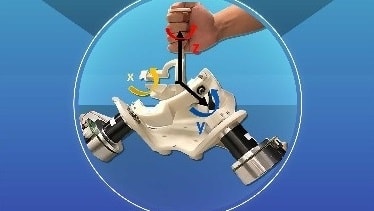
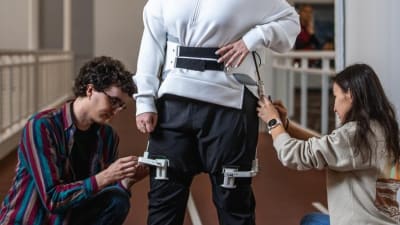
New research pushes forward the bounds of stroke recovery with a unique robotic hip exoskeleton, designed as a training tool to improve walking function. This invites the possibility of new therapies...
Feature Image
R&D: Medical
A team of engineers has invented a soft, thin, stretchy device measuring just over 1 sq in. that can be attached to the skin outside the throat to help people with dysfunctional vocal cords regain their voice function.
Feature Image
R&D: Medical
A new electrical power converter design achieves a much higher efficiency at lower cost and maintenance than before. The direct current voltage boost converter is poised to be a significant contribution to the further development of improved electric and electronic components for healthcare devices.
Feature Image
R&D: Sensors/Data Acquisition
Researchers have created a flexible paper-based sensor that operates like the human brain. They fabricated a photo-electronic artificial synapse device composed of gold electrodes on top of a 10 μm transparent film consisting of zinc oxide nanoparticles and cellulose nanofibers.
Feature Image
R&D: Wearables
A small ultrasound sticker can monitor the stiffness of organs deep inside the body. The sticker, about the size of a postage stamp, can be worn on the skin and is designed to pick up on signs of disease, such as liver and kidney failure and the progression of solid tumors.
Feature Image
R&D: Medical
Researchers have created a new technique to treat Type 1 diabetes: implanting a device inside a pocket under the skin that can secrete insulin while avoiding the immunosuppression that...
Feature Image
R&D: Medical
A team has developed medical adhesives that are not only safe for human use but also customizable for different organs. The researchers used mussel-derived adhesive proteins to develop customized...
Feature Image

Ask the Expert

Dan Sanchez on How to Improve Extruded Components
Feature Image

Improving extruded components requires careful attention to a number of factors, including dimensional tolerance, material selection, and processing. Trelleborg’s Dan Sanchez provides detailed insights into each of these considerations to help you advance your device innovations while reducing costs and speeding time to market.

Inside Story

Inside Story: Trends in Packaging and Sterilization

Feature Image

Eurofins Medical Device Testing (MDT) provides a full scope of testing services. In this interview, Eurofins’ experts, Sunny Modi, PhD, Director of Package Testing; and Elizabeth Sydnor, Director of Microbiology; answer common questions on medical device packaging and sterilization.

Videos