
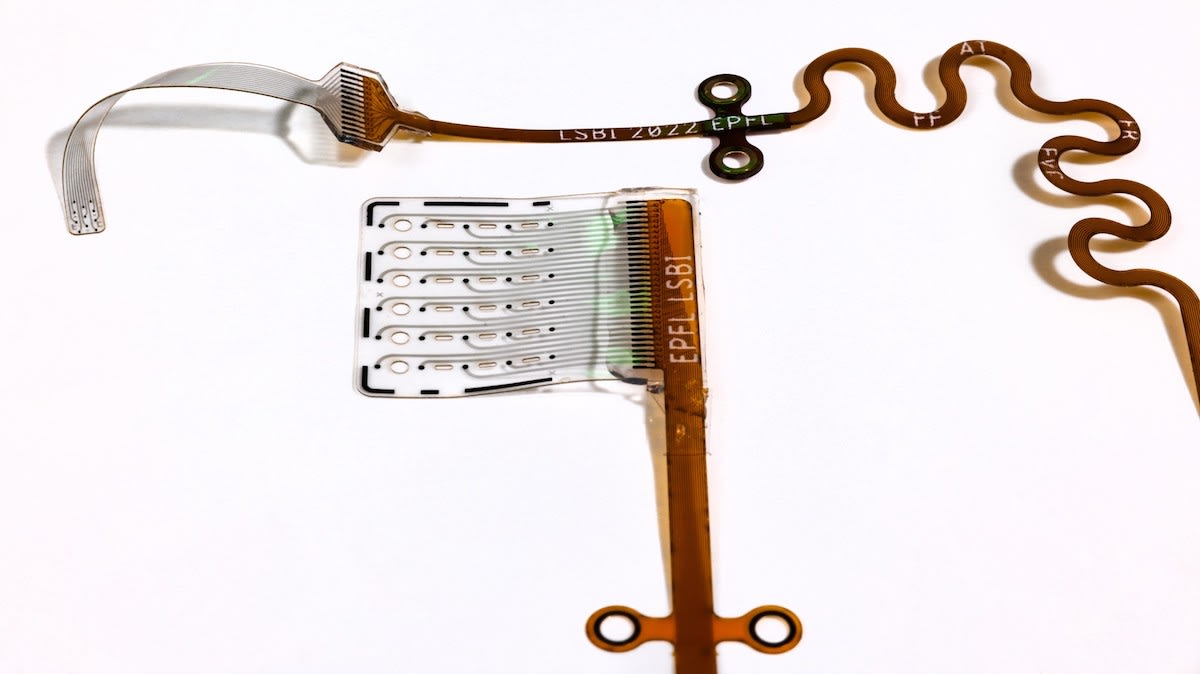
Researchers have developed a soft, thin-film auditory brainstem implant (ABI). The device uses micrometer-scale platinum electrodes embedded in silicone, forming a pliable array just a fraction of a millimeter thick. This novel approach enables better tissue contact, potentially preventing off-target nerve activation and reducing side effects.
Rather than simply relying on surgical tests, the researchers ran extensive behavioral experiments in macaques with normal hearing. This allowed them to measure how well the animals could distinguish electrical stimulation patterns as they would with natural acoustic hearing.
Beyond conformability, the soft array’s flexible microfabrication means it can be reconfigured for different anatomies. A crucial outcome of the macaque study was the absence of noticeable off-target effects. The researchers report that, within the tested range of electrical currents, the animals showed no signs of discomfort or muscle twitches around the face — common complaints from human ABI users. (Image credit: EPFL/Alain Herzog)
For more information, visit here .