
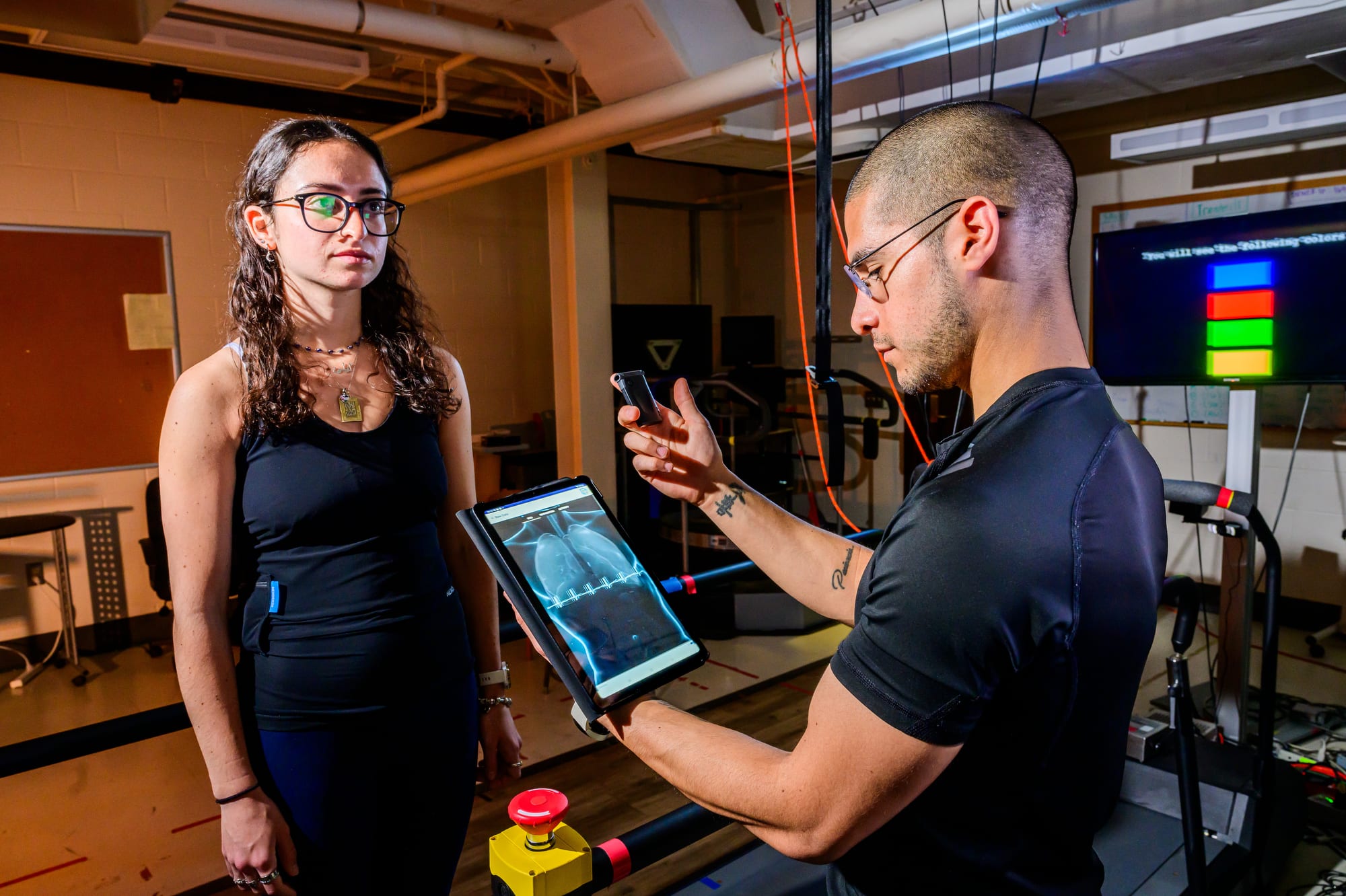
Scientists used a “smart” shirt equipped with an electrocardiogram to track participants’ heart-rate recovery after exercise and developed a tool for analyzing the data to predict those at higher or lower risk of heart-related ailments.
The researchers used a smart shirt developed by the Quebec-based company Carre Technologies. The shirt provides sensors to capture continuous measures of heart performance, including tracking electrical activity and heart-rate variability. In total, 38 participants ranging in age from 20 to 76 walked on a treadmill at varying speeds and inclines while wearing the device.
The team used machine-learning and other techniques to extract the most meaningful signals of cardiac health from the data, designing a system for predicting those at highest risk of cardiovascular maladies.
The study is a first step toward using wearables to help people more readily assess their risk of heart-related problems, perhaps catching worrisome trends before they develop into full-fledged disorders or cause sudden death. Further studies should also focus on integrating the technology into standard healthcare practices. (Image credit: Fred Zwicky/University of Illinois)
For more information, visit here .