
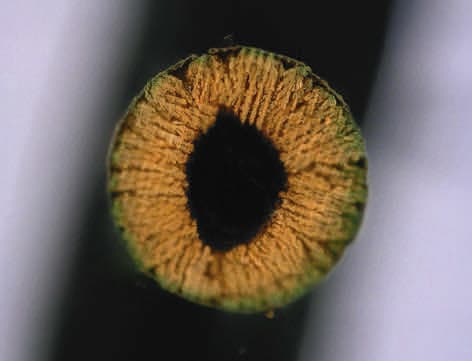
Researchers have pioneered a 3D printing method that grows metals and ceramics inside a water-based gel, resulting in exceptionally dense, yet intricate constructions for next-generation biomedical technologies.
Vat photopolymerization is a 3D printing technique in which a light-sensitive resin is poured into a vat, and then selectively hardened into a desired shape using a laser or UV light. But this process is mostly used only with light-sensitive polymers, which limits its range of useful applications.
The team first creates a 3D scaffold out of a hydrogel. Then, they infuse the blank hydrogel with metal salts, before chemically converting them into metal-containing nanoparticles that permeate the structure. This process can then be repeated to yield composites with very high metal concentrations.
The technique is especially interesting for the fabrication of advanced 3D architectures that must be simultaneously strong, lightweight, and complex, like sensors and biomedical devices. (Image credit: ALCHEMY EPFL)
For more information, visit here .