Features

R&D

-1
30
30
R&D: Wearables
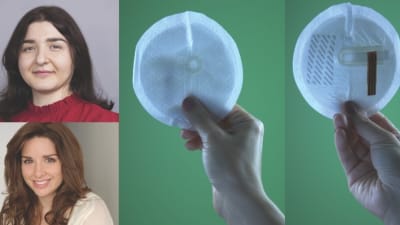
Engineers have developed a smart lactation pad that can quantify a wide range of chemicals in breast milk in real time. Read on to learn more.
Feature Image
R&D: Wearables
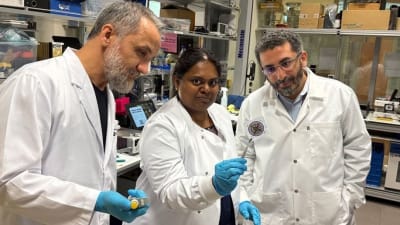
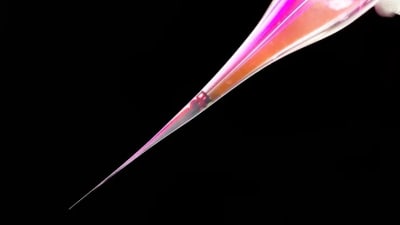
Researchers have developed a pacifier designed to monitor a baby’s electrolyte levels in real time, potentially eliminating the need for repeated invasive blood draws. The team constructed a tiny tunnel, or microfluidic channel, into the body of the pacifier. Read on to learn more.
Feature Image
R&D: Medical
Researchers are leveraging informatics approaches to tackle persistent challenges in data management and sharing, enabling real-world healthcare applications to enhance data security and accessibility. Read on to learn more.
Feature Image
R&D: Medical
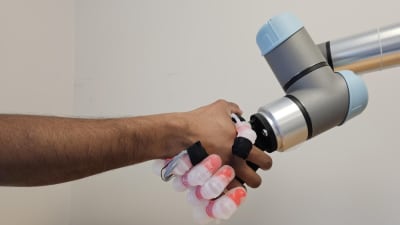
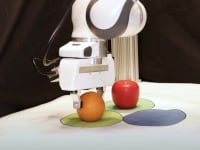
Engineers have developed a pioneering prosthetic hand that can grip plush toys, water bottles, and other everyday objects like a human, carefully conforming and adjusting its grasp to avoid damaging or mishandling whatever it holds. Read on to learn more.
Feature Image
R&D: Medical
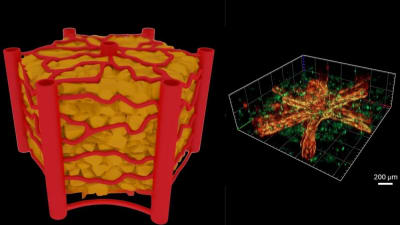
Research engineers are developing smart implants that can both monitor and promote healing in fractured bones. Read on to learn more.
Feature Image
R&D: Manufacturing & Prototyping
Researchers have significantly improved a new joining technology, interlocking metasurfaces, designed to increase the strength and stability of a structure in comparison to traditional techniques like bolts and adhesives, using shape memory alloys. Read on to learn more.
Feature Image
R&D: Medical
Researchers have combined miniaturized hardware and intelligent algorithms to create a cost-effective, compact powerful tool capable of solving real-world problems in areas like healthcare. Read on to learn more.
Feature Image
R&D: Energy
Researchers have developed a new method to pull moisture from the air and turn that water into electricity. The paper-based wearable device provides sustained high-efficiency power output through moisture capture. Read on to learn more about it.
Feature Image
R&D: Medical
A new device aims to detect acute exacerbations of chronic conditions. The wearable monitoring device contains multiple types of sensors, enabling faster and more accurate detection of exacerbations of chronic obstructive pulmonary disease and chronic conditions like asthma, heart disease and other inflammatory disorders. Read on to learn more about it.
Feature Image
R&D: Imaging
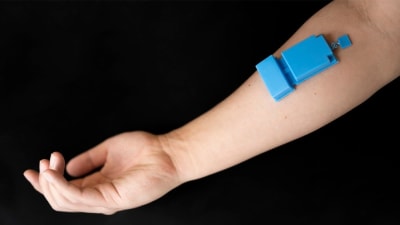
Engineers have developed a wearable ultrasound device that can provide long-term, wireless monitoring of muscle activity with potential applications in healthcare and human-machine interfaces. Designed to stick to the skin with a layer of adhesive and powered by a battery, the device enables high-resolution tracking of muscle function without invasive procedures. Read on to learn more.
Feature Image
R&D: Medical
A conductive ink can be printed directly on the surface of a patient’s head and measure their brainwaves. These e-tattoos serve as the sensors for electroencephalography (EEG), a medical test that measures the brain’s electrical activity. EEG can help diagnose and monitor brain tumors, sleep disorders and other brain issues. Read on to learn more.
Feature Image
R&D: Sensors/Data Acquisition
Researchers have developed an optical biosensor that can rapidly detect monkeypox, the virus that causes mpox. The technology could allow clinicians to diagnose the disease at the point of care rather than wait for lab results. Read on to learn more.
Feature Image
R&D: Materials
Researchers are developing soft sensor materials based on ceramics. Such sensors can feel temperature, strain, pressure, or humidity, for instance, which makes them interesting for use in medicine, but also in the field of soft robotics. Read on to learn more.
Feature Image
R&D: Wearables
Researchers have developed a three-dimensional stretchable piezoelectric energy harvester that can harvest electrical energy using body movements. The device is to be used as a wearable energy harvester as it can be attached to the skin or clothes. Read on to learn more.
Feature Image
R&D: Sensors/Data Acquisition
A team has developed new biosensors with which the ratio of NADPH to NADP+ can be measured in living cells in real time for the first time. The team’s observations provide new insights into the evolution of the most important protective function of cells, cellular detoxification. Read on to learn more.
Feature Image
R&D: Wearables
Researchers have developed a gel polymer-based triboelectric nanogenerator that generates electrical signals from body movement to power electronics like LEDs and functions as a self-powered touch panel for user identification. The device can stretch up to 375 percent of its original size and withstand rigorous mechanical deformations, making it suitable for wearable applications. Read on to learn more.
Feature Image
R&D: Medical
Researchers have helped create a new 3D printing approach for shape-changing materials that are likened to muscles, opening the door for improved applications in robotics as well as biomedical and energy devices. Read on to learn more.
Feature Image
R&D: Nanotechnology
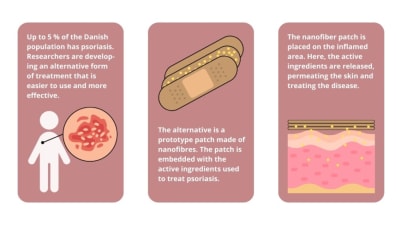
Researchers have developed a patch for easier and more effective treatment of psoriasis. The method may also be used in treatment of other inflammatory skin diseases. The dry patch contains active ingredients for treatment of psoriasis reduces the frequency of use to once a day. Read on to learn more.
Feature Image
R&D: Medical
A new handheld, sound-based diagnostic system can deliver precise results in an hour with a mere finger prick of blood. The researchers used tiny particles they call functional negative acoustic contrast particles (fNACPs) and a custom-built, handheld instrument or acoustic pipette that delivers sound waves to the blood samples inside. Read on to learn more.
Feature Image
R&D: Sensors/Data Acquisition
A team has developed a general, modular strategy for designing sensors that can be easily adapted to various target molecules and concentration ranges. The new modular sensor has the potential to significantly accelerate the development of new diagnostic tools for research. Read on to learn more.
Feature Image
R&D: Sensors/Data Acquisition
Researchers have created a portable device that can detect colorectal and prostate cancer more cheaply and quickly than prevailing methods. The team believes the device may be especially helpful in developing countries, which experience higher cancer mortality rates due in part to barriers to medical diagnosis. Read on to learn more.
Feature Image
R&D: Robotics, Automation & Control
Researchers have made a significant breakthrough in soft robotics. Their study introduces the first toroidal, light-driven microrobot that can move autonomously in viscous liquids, such as mucus. Read on to learn more.
Feature Image
R&D: Medical
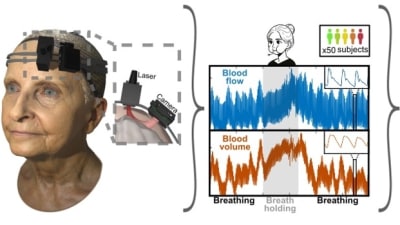
Researchers have developed a laser-based device that can be placed on the head to noninvasively monitor changes in brain blood flow and volume. The new device could one day help save lives by offering a direct and simple way to assess stroke risk based on physiological markers rather than indirect markers like lifestyle factors. Read on to learn more.
Feature Image
R&D: Sensors/Data Acquisition
A recent study combines three-dimensional embroidery techniques with machine learning to create a fabric-based sensor that can control electronic devices through touch. Read on to learn more.
Feature Image
R&D: Medical
A thin film that combines an electrode grid and LEDs can both track and produce a visual representation of the brain’s activity in real time. The device is designed to provide neurosurgeons visual information about a patient’s brain to monitor brain states during surgical interventions to remove brain lesions including tumors and epileptic tissue. Read on to learn more.
Feature Image
R&D: Medical
Researchers have developed a novel biohybrid neuroprosthetic research platform comprised of a dexterous artificial hand electrically interfaced with biological neural networks. Read on to learn more.
Feature Image
R&D: Medical
Researchers have been testing ways to continuously and more comfortably detect these tiny fluctuations in pressure. A prototype smart contact lens measures eye pressure accurately, regardless of temperature. The contact lens wirelessly transmits real-time signals about eye pressure across a wide range of temperatures. Read on to learn more.
Feature Image
R&D: Photonics/Optics
Researchers have designed a six-hole micro-structure antiresonant air-core fiber (AR-HCF) with a large core diameter of 78 μm. The researchers say it is the first time that 2.79 μm high energy pulsed laser has been transmitted with good efficiency at room temperature. Read on to learn more.
Feature Image
R&D: Manufacturing & Prototyping
Researchers have developed a printing process that prints strong nonmetallic materials in record time — five times faster than traditional 3D printing. The process, called SWOMP, which stands for Selective dual-wavelength Olefin metathesis 3D printing, uses dual-wavelength light, unlike the traditional printing process. Read on to learn more.
Feature Image

Ask the Expert

John Chandler on Achieving Quality Motion Control
Feature Image

FAULHABER MICROMO brings together the highest quality motion technologies and value-added services, together with global engineering, sourcing, and manufacturing, to deliver top quality micro motion solutions. With 34 years’ experience, John Chandler injects a key engineering perspective into all new projects and enjoys working closely with OEM customers to bring exciting new technologies to market.

Inside Story

Inside Story: Trends in Packaging and Sterilization

Feature Image

Eurofins Medical Device Testing (MDT) provides a full scope of testing services. In this interview, Eurofins’ experts, Sunny Modi, PhD, Director of Package Testing; and Elizabeth Sydnor, Director of Microbiology; answer common questions on medical device packaging and sterilization.


Videos