Stories

0
120
30
Podcasts: Sensors/Data Acquisition
Wearables detect early signs of health issues, paving the way for transforming preventative healthcare.
Feature Image
INSIDER: Sensors/Data Acquisition
Using an inexpensive electrode coated with DNA, researchers have designed disposable diagnostics that could be adapted to detect a variety of diseases, including cancer or...
Feature Image
On-Demand Webinars: Materials
Feature Image
Today’s cutting-edge medical implants demand solutions that fulfill multifunctional requirements like high packaging density, exceptional reliability, and assured...
Podcasts: Wearables
As we continue to explore the impact of wearables on healthcare, this episode focuses on privacy and data security in the era of medical wearables. Wearables are collecting vast...
Feature Image
News: Test & Measurement
Nelson Labs, a provider of microbiological testing, analytical chemistry testing, and advisory services, has expanded its state-of-the-art laboratory space at its Wiesbaden,...
Feature Image
Products: Regulations/Standards
See the product of the month: MethodSense's Elsa & AI Resource Center at MethodSense.com. Read on to learn more about it.
Feature Image
Videos of the Month: Medical
See the videos of the month, including one on the “Robot Eyes” project; one on how researchers have found an unusual ally in the quest to make cancer diagnosis faster, more accurate, and more accessible worldwide: the Morpho butterfly; one on advances in AI and biocomputational models aiming to revolutionize the drug development process; and more.
Feature Image
Products: Robotics, Automation & Control
Listen to these podcasts to learn how the role of robotics in healthcare has evolved and will continue to evolve.
Feature Image
Global Innovations: Materials
A team from the GIGA (Cardiology Laboratory) and the CESAM (Centre de recherche sur les macromolécules – CERM) at the University of Liège has developed PHOx, a thermoplastic elastomer without isocyanate PU (NIPU), which is therefore less toxic to produce and much better tolerated by the human body. Read on to learn more.
Feature Image
From the Editor: Medical
Artificial intelligence is emerging as a tool to balance challenges and facilitate the goal of bringing new innovations to market faster. And while AI undoubtedly has the potential to play a transformative role in medical device R&D, it must be approached with caution and utilized in a supportive capacity. Read on to learn more.
Feature Image
Products: Medical
See where the product focus is this month: Tubing, including TekniPlex Healthcare's PTA/PTCA balloon catheter tubing solutions; Kent Elastomer Products' biopharmaceutical tubing that can replace thermoplastic elastomers and is designed to reduce emissions related to single-use tubing by as much as 50 percent; cut-to-length and slit peelable heat shrink tubing from Junkosha; and more.
Feature Image
Products: Test & Measurement
See the new products and services, including Dickson's mapping suite designed to streamline the identification of critical hot and cold zones and the analysis of temperature and humidity trends; Littelfuse's series of sealed tactile switches for surface-mount technology; Mahr Inc.'s height gage designed for ease of use and efficiency in production environments; and more.
Feature Image
Briefs: Sensors/Data Acquisition
Researchers have developed a 3D microprinted sensor for highly sensitive on-chip biosensing. The sensor, which is based on a polymer whispering-gallerymode microlaser, opens new opportunities for developing high-performance, cost-effective lab-on-a-chip devices for early disease diagnosis. Read on to learn more.
Feature Image
Briefs: Robotics, Automation & Control
EPFL researchers have developed a customizable soft robotic system that uses compressed air to produce shape changes, vibrations, and other haptic, or tactile, feedback in a variety of configurations. The device holds significant promise for applications in virtual reality, physical therapy, and rehabilitation. Read on to learn more.
Feature Image
Briefs: Sensors/Data Acquisition
A fiber sensor inspired by the shape of DNA, developed by researchers at Shinshu University, introduces a new design for more durable, flexible fiber sensors in wearables. Read on to learn more.
Feature Image
Briefs: Medical
Researchers from the University of Cambridge have developed a handheld device that could potentially replace stethoscopes as a tool for detecting certain types of heart disease. The device can also be used over clothing, making it more comfortable for patients — especially women — during routine check-ups or community heart health screening programs.
Feature Image
Briefs: Medical
Sensors are used everywhere. But traditional sensors often rely on rigid components and batteries, limiting their applications in soft systems. To address this, researchers have developed a smarter alternative. Using a paper-folding technique in combination with a triboelectric nanogenerator, they created a novel energy-harvesting sensor with promising potential for next-gen soft devices. Read on to learn more.
Feature Image
Briefs: Medical
In addressing the complex demands of drug-device integration, medical-grade thermoplastic polyurethanes provide a rare trifecta of tunable mechanics, chemical inertness and proven biocompatibility. While this polymer class is historically underutilized in drug delivery compared to more common materials like ethylene-vinyl acetate, it is increasingly favored in specialty product design for both extended release and implantable combination devices. Read on to learn more.
Feature Image
Briefs: Manufacturing & Prototyping
Engineers at EWI have developed a new laser-based welding technique that enables the clean, reliable joining of clear-to-clear polymer tubing without the need for adhesives, solvents, colorants, or any chemical surface treatment. Read on to learn more.
Feature Image
R&D: Medical
Engineers have harnessed quantum physics to detect the presence of biomolecules without the need for an external light source, overcoming a significant obstacle to the use of optical biosensors in healthcare. Read on to learn more.
Feature Image
R&D: Imaging
A toothbrush-shaped ultrasound transducer can provide a less invasive screening for gum disease. In proof-of-concept demonstrations on animal tissues, the device produced measurements similar to those of a manual probe. Read on to learn more.
Feature Image
R&D: Medical
Researchers have developed a soft, thin-film auditory brainstem implant. The device uses micrometer-scale platinum electrodes embedded in silicone, forming a pliable array just a fraction of a millimeter thick. This novel approach enables better tissue contact, potentially preventing off-target nerve activation and reducing side effects. Read on to learn more.
Feature Image
R&D: Wearables
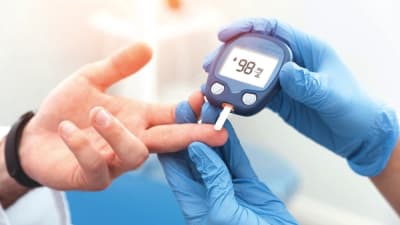
A wearable wristband could significantly improve diabetes management by continuously tracking not only glucose but also other chemical and cardiovascular signals that influence disease progression and overall health. Read on to learn more.
Feature Image
R&D: Medical
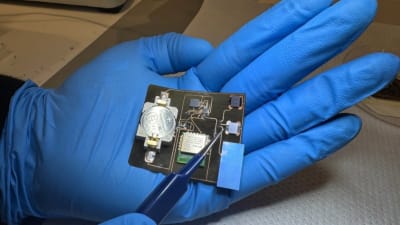
Engineers have developed a smart capsule called PillTrek that can measure pH, temperature, and a variety of different biomarkers. It incorporates simple, inexpensive sensors into a miniature wireless electrochemical workstation that relies on low-power electronics. Read on to learn more.
Feature Image
R&D: Medical
To meet the need for better 3D imaging that works during live surgery, researchers recently developed a new kind of surgical microscope called the Fourier light-field multiview stereoscope, known as FiLM-Scope. Read on to learn more.
Feature Image
R&D: Medical
Researchers have created a groundbreaking prototype for a new kind of leadless pacemaker designed for both children and adults. The innovative micropacemaker would be the first fully leadless system to be placed in the pericardial space surrounding the heart. Read on to learn more.
Feature Image
From the Editor: Medical
Australia is entering the global medical technology arena with a strategic investment package totaling $65.5 million, aimed at accelerating R&D, manufacturing, and commercialization. Backed by the Australian government, the move signals a deepening commitment to innovation-driven self-reliance — and opens the door to new global partnerships, including with U.S. medical device firms. Read on to learn what this means.
Feature Image
Features: Manufacturing & Prototyping
Engineering and manufacturing complex devices requires heterogeneous integration; the process of combining multiple, different parts that together have the functionality required that gather process and communicate the important information. Read on to learn more.
Feature Image
Features: Medical
Across ailments, the burden of self-administered care is growing, and with it, the importance of designing drug-delivery systems designed with the patient experience at their core. Patient-centric design goes beyond usability metrics and checklists. It’s about building trust, reducing friction and enabling people to manage their health with confidence and dignity. Read on to learn more.
Feature Image

Ask the Expert

Eric Dietsch on the Benefits of Nitinol Wire
Feature Image

In collaboration with the Fort Wayne Metals Engineering team, Eric Dietsch focuses on supporting customers with material recommendations, product development, and education. Eric is available to help you and your company with any Nitinol-related questions or needs that you may have.

Inside Story

Inside Story: Trends in Packaging and Sterilization
Feature Image

Eurofins Medical Device Testing (MDT) provides a full scope of testing services. In this interview, Eurofins’ experts, Sunny Modi, PhD, Director of Package Testing; and Elizabeth Sydnor, Director of Microbiology; answer common questions on medical device packaging and sterilization.


Videos