
Although lithium is highly effective to treat bipolar disorder, the chemical has a narrow therapeutic window — too high a dose can be toxic to patients, causing kidney damage, thyroid damage, or even death, while too low a dose renders the treatment ineffective.
The dose of lithium varies between individuals based on body weight, diet, and other physiological factors, and it requires regular measurement of lithium levels in the blood. Currently, this procedure is only available through standard laboratory-based blood draws, which can be time-consuming, inconvenient, and painful. This makes personalized and easily accessible lithium monitoring an important goal in the treatment for bipolar disorder.
“Our goal was to create an easy-to-use sensor that bypasses the need for blood draws entirely,” explains Yasser Khan, a USC Ming Hsieh department of electrical and computer engineering professor who leads the USC Khan Lab, and part of the USC Institute for Technology and Medical Systems (ITEMS), a joint initiative of USC Viterbi School of Engineering and Keck School of Medicine of USC focusing on innovative medical devices.
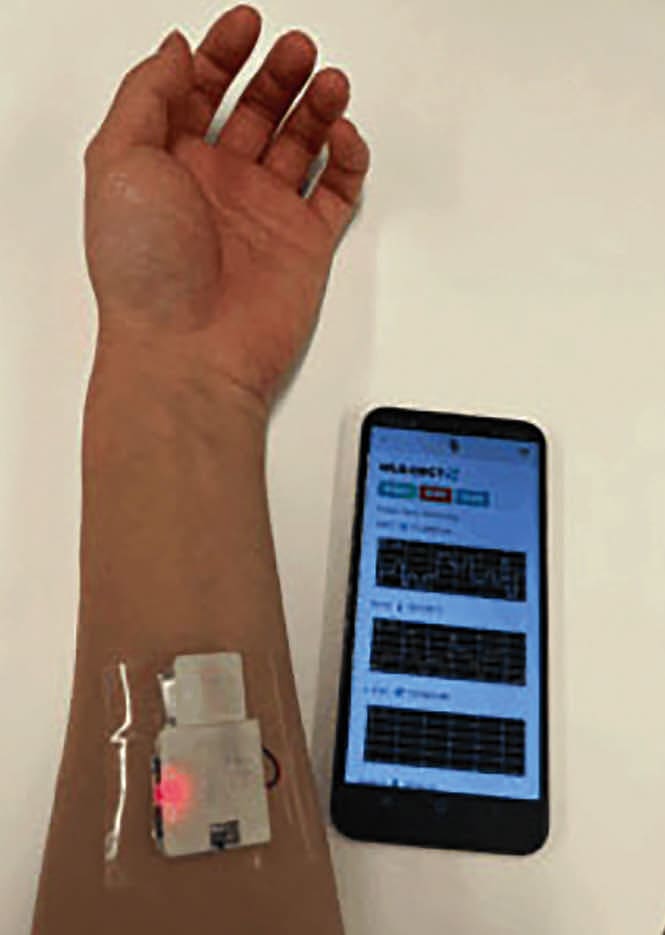
In the paper, “Wearable organic-electrochemical-transistor-based lithium sensor for precision mental health,” Khan’s team first identified sweat as an ideal alternative to blood samples as this fluid can be collected noninvasively and reflects lithium concentrations in real time. To simplify the process even further, the wearable includes a skin-safe, iontophoresis-based system to induce sweat without requiring physical exertion. In just minutes, the device collects data, which is transmitted directly to a smartphone app, allowing patients to track their lithium levels from the comfort of their own homes.
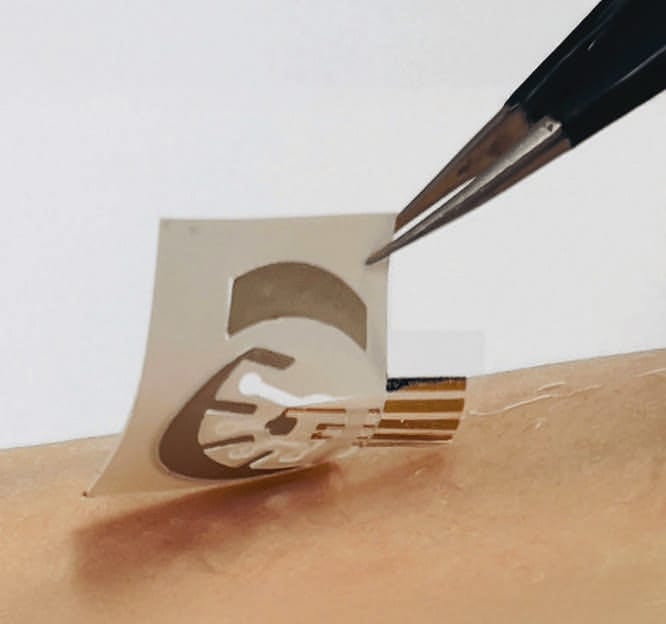
Behind this is a powerful innovation: the use of organic electrochemical transistors (OECTs) specifically designed for lithium detection. OECTs are electronic devices that respond to ionic signals in liquid, converting them into readable electronic data. Unlike conventional OECTs, which rely on complex fabrication steps and are not optimized for lithium, the sensor developed at USC features a fully printed OECT using a novel material formulation tailored to detect lithium ions specifically.
“We developed the entire lithium monitoring system — from the OECT-based sensor patch and on-demand sweat induction to the readout electronics and smartphone app — using a simple, scalable, and cost-effective fabrication process. Our goal was to make lithium tracking as easy and comfortable for patients as checking a daily fitness tracker,” says Mohammad Shafiqul Islam, the first author of the study and a PhD student in the Khan Lab.
This makes it the first OECT-based lithium sensor to be entirely printed — a critical advancement that paves the way for affordable, scalable production.
“This is one of the biggest benefits of being at USC,” says Khan. “We have clinical collaborators right across campus.” During pilot trials, Khan’s team worked directly with Frank and his patients to test the sensors in individuals taking lithium.
Sweat samples were collected using the wearable device, and lithium measurements were successfully matched against values derived from bulky commercial sensors. Participating patients responded positively, expressing relief at the prospect of monitoring their health without repeated hospital visits.
“The ability to noninvasively monitor lithium levels will improve care for patients taking lithium, who typically require regular blood draws to assess lithium levels. Being able to track these levels continuously over time will improve safety by allowing for medication dose adjustments that avoid side effects and potential medication toxicity,” says Frank.
Next, the team plans to develop more advanced wearable systems powered by artificial intelligence to automatically adjust lithium dosage and achieve optimal therapeutic benefits without causing lithium toxicity.
The research is published in the journal Device, a new publication from Cell Press highlighting innovations in electrical engineering, materials science, and bioengineering.
This article was written by Venice Tang, USC. For more information, contact Yasser Khan at