Blog: Sensors/Data Acquisition
In this Q&A with Medical Design Briefs, Michael Klitzke, principal system architect at TE Connectivity, discusses how advances in sensor miniaturization, packaging,...
INSIDER: Wearables
A smart, self-powered magnetoelastic pen could help detect early signs of Parkinson’s by analyzing a person’s handwriting. The highly sensitive diagnostic pen features a soft,...
On-Demand Webinars: Medical
The Medical & Healthcare Robotics Summit, presented by Medical Design Briefs returns for its second year to explore the continued integration of robotics in healthcare and medicine.
News: Medical
Kennesaw State University’s Lei Shi is leading a research project that could alter how GI disorders are diagnosed and treated using virtual replicas of a human stomach.
INSIDER: Medical
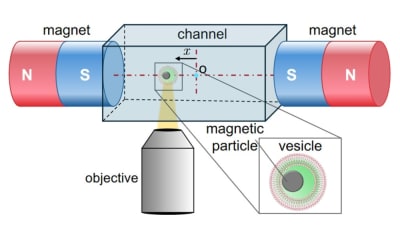
Researchers have demonstrated that microscopic drug-delivery containers can be magnetically steered to their targets, advancing the development of precision medicine...
INSIDER: Robotics, Automation & Control
Fabricated with a gel side for carrying drugs and a magnetic side for steering, researchers have developed microrobots that can navigate complex biological environments like intestines....
INSIDER: Medical
Researchers have found that, in rare cases, zinc from the needle shield can leach into the drug solution to be injected and possibly contribute to syringe clogging. They were asked by the pharmaceutical...
INSIDER: Medical
A wearable technology enables real-time, noninvasive tracking and optimized treatment for diabetic patients. It enables precise drug dosing through continuous, real-time monitoring of disease...
INSIDER: Medical
A new system sends medication directly to the spleen where certain immune cells cause the disease known as lupus, or Systemic Lupus Erythematosus.
Blog: AR/AI
A new AI model is much better than doctors at identifying patients likely to experience cardiac arrest. The linchpin is the system's ability to analyze long-underused heart imaging, alongside a full spectrum of medical records, to reveal previously hidden information about a patient's heart health.
On-Demand Webinars: Medical
When it comes to biomedical textiles, success starts with the science and ends with execution. This 60-minute webinar will walk through real scenarios where...
News: Manufacturing & Prototyping
Trelleborg Medical Solutions has opened 43,055 sq ft (4,000 sq m) of manufacturing space in Hal-Far, Malta, helping medical device and life science customers bring...
Podcasts: Wearables
Wearables detect early signs of health issues, paving the way for transforming preventative healthcare.
INSIDER: Sensors/Data Acquisition
Using an inexpensive electrode coated with DNA, researchers have designed disposable diagnostics that could be adapted to detect a variety of diseases, including cancer or...
On-Demand Webinars: Materials
Today’s cutting-edge medical implants demand solutions that fulfill multifunctional requirements like high packaging density, exceptional reliability, and assured...
Podcasts: Medical
As we continue to explore the impact of wearables on healthcare, this episode focuses on privacy and data security in the era of medical wearables. Wearables are collecting vast...
News: Test & Measurement
Nelson Labs, a provider of microbiological testing, analytical chemistry testing, and advisory services, has expanded its state-of-the-art laboratory space at its Wiesbaden,...
Products: AR/AI
See the product of the month: MethodSense's Elsa & AI Resource Center at MethodSense.com. Read on to learn more about it.
Videos of the Month: Medical
See the videos of the month, including one on the “Robot Eyes” project; one on how researchers have found an unusual ally in the quest to make cancer diagnosis faster, more accurate, and more accessible worldwide: the Morpho butterfly; one on advances in AI and biocomputational models aiming to revolutionize the drug development process; and more.
Products: Robotics, Automation & Control
Listen to these podcasts to learn how the role of robotics in healthcare has evolved and will continue to evolve.
Global Innovations: Medical
A team from the GIGA (Cardiology Laboratory) and the CESAM (Centre de recherche sur les macromolécules – CERM) at the University of Liège has developed PHOx, a thermoplastic elastomer without isocyanate PU (NIPU), which is therefore less toxic to produce and much better tolerated by the human body. Read on to learn more.
From the Editor: Medical
Artificial intelligence is emerging as a tool to balance challenges and facilitate the goal of bringing new innovations to market faster. And while AI undoubtedly has the potential to play a transformative role in medical device R&D, it must be approached with caution and utilized in a supportive capacity. Read on to learn more.
Products: Medical
See where the product focus is this month: Tubing, including TekniPlex Healthcare's PTA/PTCA balloon catheter tubing solutions; Kent Elastomer Products' biopharmaceutical tubing that can replace thermoplastic elastomers and is designed to reduce emissions related to single-use tubing by as much as 50 percent; cut-to-length and slit peelable heat shrink tubing from Junkosha; and more.
Products: Software
See the new products and services, including Dickson's mapping suite designed to streamline the identification of critical hot and cold zones and the analysis of temperature and humidity trends; Littelfuse's series of sealed tactile switches for surface-mount technology; Mahr Inc.'s height gage designed for ease of use and efficiency in production environments; and more.
Briefs: Sensors/Data Acquisition
Researchers have developed a 3D microprinted sensor for highly sensitive on-chip biosensing. The sensor, which is based on a polymer whispering-gallerymode microlaser, opens new opportunities for developing high-performance, cost-effective lab-on-a-chip devices for early disease diagnosis. Read on to learn more.
Briefs: Robotics, Automation & Control
EPFL researchers have developed a customizable soft robotic system that uses compressed air to produce shape changes, vibrations, and other haptic, or tactile, feedback in a variety of configurations. The device holds significant promise for applications in virtual reality, physical therapy, and rehabilitation. Read on to learn more.
Briefs: Sensors/Data Acquisition
A fiber sensor inspired by the shape of DNA, developed by researchers at Shinshu University, introduces a new design for more durable, flexible fiber sensors in wearables. Read on to learn more.
Briefs: Medical
Researchers from the University of Cambridge have developed a handheld device that could potentially replace stethoscopes as a tool for detecting certain types of heart disease. The device can also be used over clothing, making it more comfortable for patients — especially women — during routine check-ups or community heart health screening programs.
Briefs: Wearables
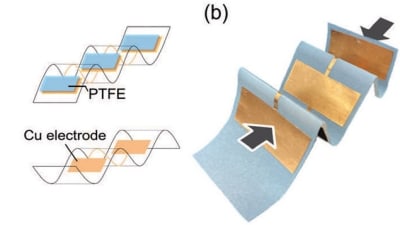
Sensors are used everywhere. But traditional sensors often rely on rigid components and batteries, limiting their applications in soft systems. To address this, researchers have developed a smarter alternative. Using a paper-folding technique in combination with a triboelectric nanogenerator, they created a novel energy-harvesting sensor with promising potential for next-gen soft devices. Read on to learn more.




















 INSIDER: Medical
 INSIDER: Sensors/Data Acquisition
 Features: Electronics & Computers
 Podcasts: Design
 INSIDER: Wearables
 Podcasts: Medical

 Podcasts: Medical
 On-Demand Webinars: Manufacturing & Prototyping
 Podcasts: AR/AI
 Podcasts: Materials