
Few sectors in electronics are scaling as rapidly or facing as many design and compliance hurdles as medical technology. From diagnostic imaging systems to handheld monitors and implantable sensors, today’s medical devices are blending high-performance electronics with software intelligence in ways that redefine patient care.
In 2024, the global medical device market was valued at over $570 billion, and it’s projected to reach $850 billion by 2032, with a CAGR of 5.9 percent, according to Fortune Business Insights. 1 That puts medtech ahead of other key electronics verticals such as aerospace (CAGR ~4 percent) and automotive electronics (CAGR ~5.4 percent), establishing it as a leading growth engine for the next decade of electronic products. 2
But while demand surges, so do design and development challenges. Today’s medical devices are not only expected to be smart and connected, but they must also operate flawlessly in high-stakes environments where safety, reliability, and regulatory compliance are non-negotiable.
Designing for the Human Body
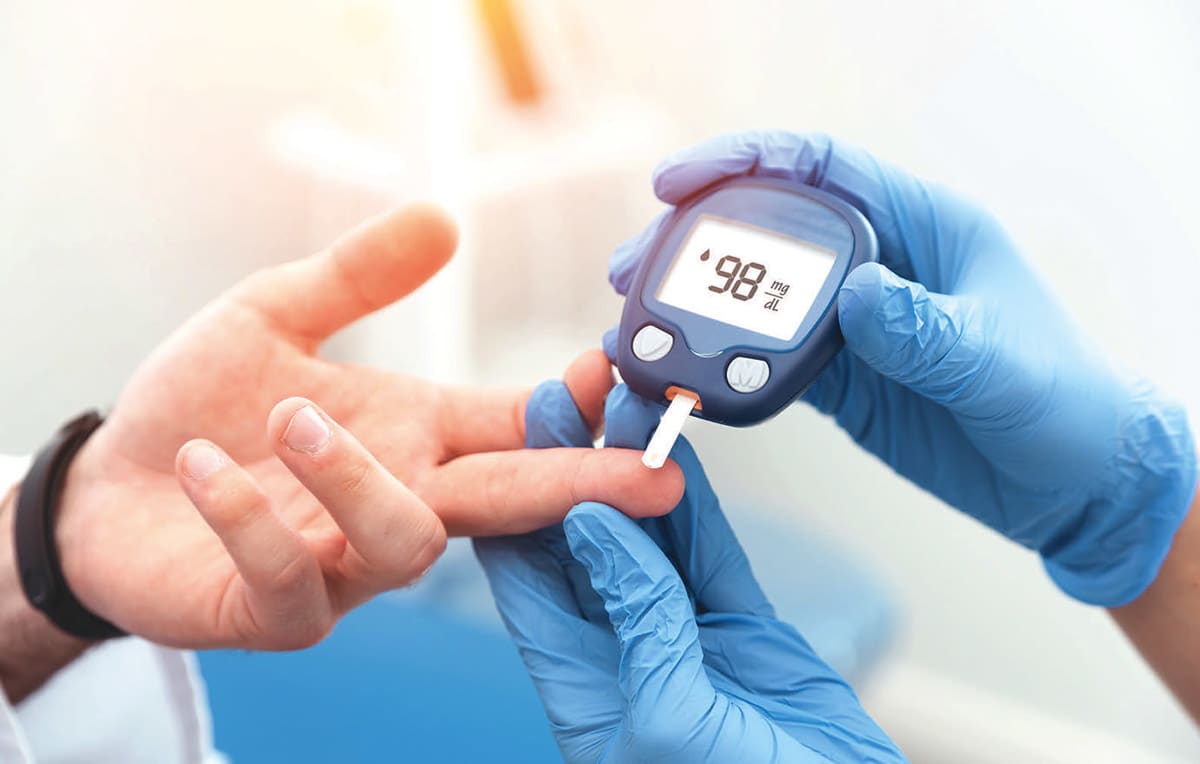
The explosion of innovation in medtech isn’t confined to one form factor. Rigid printed circuit boards (PCBs) in large diagnostic machines, ultra-miniaturized flexible boards in implantables and smart patches, and other requirements are forcing designers to contend with a wide range of mechanical, thermal, and environmental constraints.
Take wearables, for example. The idea that all circuit boards are large, green rectangles no longer holds. In devices like continuous glucose monitors or smart hearing aids, PCBs may measure just a few millimeters and require custom shapes, biocompatible materials, and ultra-low-power designs. And the challenges go beyond size. Engineers must also account for flexibility, skin contact safety, and wireless communication reliability. (For a look at PCB innovation in wearables, watch the video: How Design Makes Medical Wearables Work (Altium)
This level of complexity places enormous demands not just on design tools but also on systems for component selection, supply assurance, and cross-functional validation, especially when patient health is on the line.
Component Sourcing Is Now a Risk Factor
As design complexity increases, medical device companies face supply chain instability, especially for components that are specialized, niche, or sourced at lower volumes.
Medical electronics rely heavily on components like microcontrollers, memory, and precision passives, which are also in high demand across consumer and industrial markets. This creates competition for a limited supply of parts, something the pandemic painfully highlighted.
More concerning is the reliance on long lifecycle or highly specialized parts, such as:
Biocompatible materials for implantables.
Miniature wireless chips for wearables.
Radiation-hardened components for imaging.
Many of these parts are not easily substitutable, and bottlenecks in sourcing can derail development timelines or force expensive redesigns. For smaller medtech firms, the risk is compounded by their limited purchasing power and lack of visibility into upstream availability.
Design teams can no longer treat sourcing as an afterthought; it has become a strategic design constraint that must be considered from the outset.
Compliance and Traceability Are Mandatory
While every industry faces regulatory obligations, medical devices operate in a uniquely high-stakes landscape. A single oversight in design validation, change control, or supplier traceability can have severe consequences, from costly product recalls to patient safety risks.
Regulatory standards require manufacturers to maintain end-to-end traceability across their product lifecycle. Standards that must be accounted for include:
FDA 21 CFR Part 820 (Quality System Regulation).
ISO 13485 (Quality Management System).
EU MDR (Medical Device Regulation).
IEC 60601 (Electrical Safety for Medical Equipment).
These regulations govern everything from component origin to firmware versioning, applied across design decisions and supply chain events. In other words, compliance isn’t just about documentation — it’s about data integrity, meaning that the information captured during the design and sourcing process must remain accurate, consistent, and traceable throughout the product lifecycle. When a regulator reviews a design history file or a supplier audit uncovers a sourcing discrepancy, organizations must be able to show an unbroken, trustworthy record of what decisions were made, by whom, and when.
Supporting this level of traceability requires version-controlled collaboration using systems that not only store static documents but actively manage changes across teams. This means engineering, procurement, and regulatory stakeholders all work within a shared digital environment where every update is tracked, authorized, and aligned with compliance requirements. Without this, it becomes nearly impossible to maintain the transparency and control regulators demand.
Disconnected Teams, Delayed Devices
One of the most persistent bottlenecks in medical device development is the lack of unified collaboration among engineering, procurement, and compliance teams.
These disciplines often work in silos, with problematic results. These include late-stage bill-of-materials (BOM) issues due to unavailable or noncompliant parts; fragmented communication across PLM, ERP, and design platforms; and missed opportunities to de-risk projects earlier in the cycle.
These collaboration challenges are not unique to medtech, but they can be more complex. Unlike consumer or automotive electronics, medtech often involves collaboration among electronics engineers, clinical experts, regulatory affairs teams, and contract manufacturers and OEMs. Each party has a different view of risk and a different set of tools, making collaboration even more difficult.
While some large players have started investing in design-to-supply-chain integration and collaboration tools, many medtech companies — especially start-ups and mid-sized firms — still rely on manual processes and disconnected systems. In a sector where lives are at stake, the inability to collaborate effectively isn’t just inefficient, it’s dangerous.
From Reactive to Proactive: Redefining Risk Planning
In the past, risk management in medical electronics often meant dealing with problems as they arose, whether a delayed component shipment or a last-minute compliance issue. But that reactive mindset is no longer sustainable.
Today, forward-thinking companies are embedding risk planning directly into the design process. Teams are investing in real-time supply chain visibility, early component validation, built-in obsolescence mitigation, and multisource qualification strategies.
The shift to proactive risk planning is as much cultural as procedural. It demands that design engineers start thinking like supply chain managers and that sourcing and regulatory teams gain early insight into design decisions. It also requires systems that support cross-functional decision-making, data transparency, and traceable change control throughout the process, from concept to production.
In a sector where lives are impacted by electronic design decisions, medtech companies must deploy resilient, compliant, and collaborative development ecosystems in order to innovate safely. And the success of the final product will depend on how well teams can work and manage data together. Those who can evolve from reactive to proactive — by bridging silos, embracing integrated platforms, and planning for risk early — will define the future of the booming medical device market.
This editorial was written by Justin Sears, Head of Product Marketing, SaaS, at Altium. In this role, he leads the team positioning cloud solutions for electronics development. He is based in San Francisco, CA. For more information, visit here .
References
- “Medical Devices Market Size, Share & Industry Analysis, By Type (Orthopedic Devices, Cardiovascular Devices, Diagnostic Imaging Devices, Invitro Diagnostics (IVD), Minimally Invasive Surgery Devices, Wound Management, Care Devices, Ophthalmic Devices, Dental Devices, Nephrology Devices, General Surgery, and Others), By End-User (Hospitals & ASCs, Clinics, and Others), and Regional Forecast, 2025-2032,” Fortune Business Insights, August 4, 2025.
- Aerospace-Electronics-Market Reports, Markets and Markets.
Transcript
00:00:00 foot kick finds zeel on the wing did that very nicely zeel pumps a long one ly at the back as a couple of Collingwood players pound each other jeez both of these players will come off for an immediate concussion test I think Murphy's head is hit the ground he looked Daz Jeremy H is definitely days so [Music]
00:00:33 one long deep ball great Mar Tak Murphy sits on his head Murphy outside the boot Murphy his position cing would have got the numbers Murphy again I think I had a competitive nature in me from the moment I came out of my mom's stomach I just love Ling I love
00:01:01 jumping I love running for the football and yeah trying to beat my opponent all I ever wanted to do since I picked up of football was run out on the MCG which is the Melbourne cricket ground which is Australia's biggest sporting Stadium FL How Sweet It Is cing would win the Grand Final we were very fortunate we were lucky to be playing and win the Grand Final but um I
00:01:26 received my 10th concussion Murphy spilt the ball out of his hands and a free kick trouble accidentally I remember running for the ball and then don't remember probably a minute or so after that what happened I just remember getting picked up off the ground and I've had ongoing symptoms since then there's different symptoms every
00:01:52 time that you receive a concussion memory loss I've been vomiting all night sometimes I've had blood noses migraines sensitivity to light and noise bouts of anxiety and panic attacks I'm really lucky that I was in a professional organization that I've had great guidance from them morning um yeah about 3 or 4 months ago now they uh ruled me out um from
00:02:21 contact sport for the rest of my life uh on Saturday um I was medically retired um doctors said there's not too much going on up here anyway but we're just going to keep you out of football but yeah unfortunately that's the end of me um I wouldn't be here today and leaving out my childhood dream without you so thank you Collingwood Premiership Defender
00:02:48 Nathan Murphy has announced his early retirement after a career plagued by concussion he's the second player this season to have the decision taken out of his hands by an AFL medical panel with continuing a concussion occurs when basically brain tissue moves within the skull that movement can cause shearing of the tissue in the in the skull it's an
00:03:11 invisible injury there can be trauma without symptoms the diagnosis of the concussion has typically required subjective reporting of symptoms from an athlete and even subjective opinion of what a doctor might have seen from the sideline tou off theot mph my research is trying to find some objective markers or responses so not just relying on
00:03:40 symptoms the technology and the techniques have really not been there to investigate it well enough until probably fairly recently what's happened over the last couple of years has been there's a big Spotlight put on a disease called chronic traumatic incopy otherwise known as CTE uh and there's been an acknowledgement certainly in Australia
00:04:00 by the chief medical officers of all the major sports um acknowledging the link between repeat head impact exposure and CTE the only way really to measure mitigate and manage CTE objectively is by using an instrumented mouth guard technology instrumented mouth guards are at the moment and to date the most accurate way we have of measuring the the forces the brain is exposed to and
00:04:23 that's simply because the mouth guard is fixed to the skull in the upper jaw whereas other sensors that have been used in the past that s on the helmet on the Jersey are just not as close to the brain and not as fixed to the skull AQ is a company that has a vision to build a product Suite that's going to assist in the surveillance the assessment the management the guidance
00:04:55 and ultimately the rehabilitation of sports related concussions and head impacts hi IQ insed mouth guard is no biger looks feels and functions exactly the same as a normal custom fit mouth guard we've put a circuitry board inside the mouth guard on that circuitry board we have Micro sensors that measure forces
00:05:21 so every time you get a head impact our system is measuring that head impact at 15,000 times per second so we provide a very accurate data measurement our PCB is very small so we had to cramp a lot of sensors Bluetooth module in a very small space we have to make use of every little space that's in there we have a Bluetooth micro we have flash we have an IMU so it's a gyroscope
00:05:50 and a low G accelerometer and a package we have a high G accelerometer which is a 3D 200g accelerometer a couple Optical sensors a power subsystem we have our battery a battery charger couple ldos there were things that we wanted to improve things like uh battery consumption making the board thinner smaller and making it more flexible more user
00:06:15 friendly so we moved to Elm 365 about 1 and a half year ago and that was a game changer for us so from the very beginning of the project we would set up that design rule in antium based on our manufacturer's Advanced capabilities and design based on that so that made us uh streamline the design quite a bit we had to work with lot of different Engineers uh from other fields like mechanical
00:06:41 engineers industrial designers uh firware Engineers Alum helped us to share those projects and giving them a quick overview of what what each part is doing most athletes are not professional so most brain injuries therefore are happening outside the Gaze of professional sport and in particular for children and adolescents you know that's
00:07:07 a really important time for brain development we can use this head impact data to inform policy and to control training loads to ensure that players are always as safe as they possibly can be people are still going to run into each other they're still going to have collisions but it allows you to understand those and then modify or mitigate through various changes you
00:07:29 might employee going forward it's allowing parents to make informed decisions based on data research hopefully like I'm doing and and that new tech like mouth guards instrumented mouth guards I think it's all pushing in the same direction to try and make these Sports safer so that we can enjoy and reap all the benefits that come with these Sports without having
00:07:53 the consequence of brain injuries and brain health problems later on yeah thank you again to this wonderful Club for letting a kid live out um his childhood dream um I've got everything I wanted in football and I'm so fortunate that I've got to do it at such an amazing Club um it's not tough or courageous anymore to get head knocks or play through them we've got to put our
00:08:17 health first as athletes and as individuals of everyday life our health is with us for the rest of our lives and so we need to make um smart and informed decisions based off that [Music]