
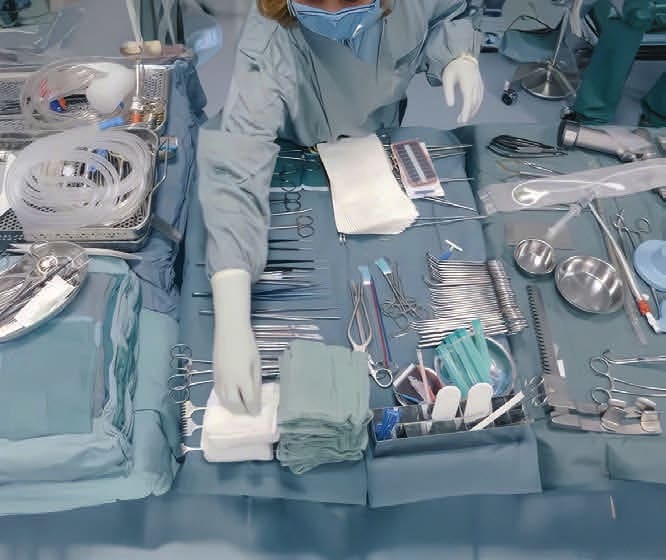
Retained surgical items are not as rare as many believe. While stories of sponges left inside patients occasionally make headlines, few realize the actual frequency: according to a systematic review of 21 studies by the Agency for Healthcare Research and Quality (AHRQ), these and other small items are left behind as often as 1.3 times per 10,000 surgical procedures.
These mistakes are a small but critical piece of the larger challenges of managing the availability and use of a wide range of surgical instruments and other items. Radio frequency identification (RFID) technology has emerged as one of the most effective tools for solving these challenges. It has already had a significant impact on the broader medical device field in applications from asset management to patient tracking. Continued innovations in form factor and enhanced capabilities have enabled RFID solutions to be embedded in a variety of medical devices, instruments and consumables, including the many small items used in surgical procedures. They help ensure that these devices can do their life-critical jobs in the unforgiving world of the operating room.
Benefits of RFID in the Surgical Suite
Enabling original equipment manufacturers (OEMs) to embed RFID technology into surgical instruments, implantables, other medical devices, a variety of consumables and other items addresses and mitigates multiple concerns.
First, these RFID solutions enable surgical teams to track where these items are and know that they have not been left inside a patient. These solutions also improve device authentication and autocalibration, simplify cycle counting for inventory management and regulatory compliance, and help strengthen the security and safety of these critical instruments and other devices.
RFID technology delivers these improvements while also preventing procedure delays, reducing staff time that would otherwise be spent tracking items down, and eliminating human error associated with manual management processes. This results in safer patient outcomes, streamlined workflows and significant cost savings for hospitals and surgical centers.

One study demonstrated an additional benefit of RFID: automating the manual processes that surgical teams have adopted to help eliminate the problem of tracking and “oversupplying” their surgical instrument trays.1 This problem previously led to as many as 78–87 percent of instruments going unused during a typical procedure. RFID technology was proven to achieve roughly the same reduction in tray oversupply as the previously manual best practices, while eliminating these practices’ expense, risk of human error, and lack of scalability. For OEMs, embedding RFID into medical devices unlocks advanced capabilities that allow these products to keep pace with evolving needs and industry standards, regulatory compliance requirements, and a diversity of patient care and operational demands. This adds significant value to surgical products and helps OEMs to focus on a growing variety of use cases. These include:
Authentication and counterfeit prevention. Ensures that only approved consumables and instruments are used. This is particularly important for any instrument or consumable that connects to a generator, console, or surgical robot. RFID also ensures verification of implantable devices — such as reconstructive implants, pacemakers, and artificial joints — which are especially vulnerable to counterfeiting.
Autocalibration and workflow automation. Maintains device accuracy and sets parameters such as torque, speed, RPM, depth of penetration, etc., without manual intervention. Examples include surgical cutting or vessel sealing instruments, robots, syringe pumps, blood oxygenators, and dentist tools like drills and scalers, ensuring that they are always ready for safe and accurate use.
Lifecycle management to meet single-use and end-of-life (EOL) requirements. Prevents unsafe reuse of single-use and multi-use items through a kill-switch capability, while increasing the speed and accuracy of item identification, simplifying cycle counts that determine the EOL timetable.
Traceability. Enables hospital-wide instrument/asset location and implant tracking.
Unique Device Identifier (UDI) and other compliance. Today’s invisible, permanent RFID tags comply with FDA UDI and other global regulatory requirements, lasting as long as the devices they are attached to. They offer a secure, data-rich alternative to laser etching, barcodes, and QR codes.
Enhanced functionality. Enables advanced integration with surgical robotics, a wide range of medical devices, and clinical team workflows, ensuring seamless operation and greater efficiency.
In these use cases, RFID’s capabilities enhance patient safety, safeguard brand integrity, and reduce manufacturer liability.
How RFID Works
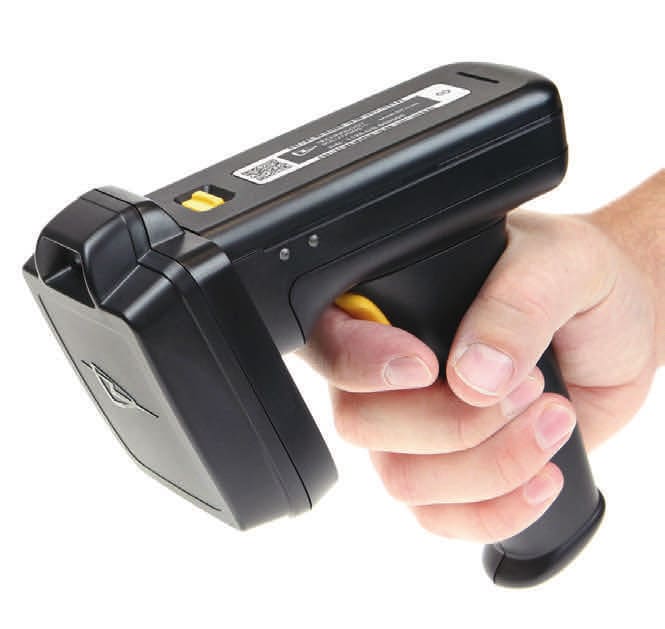
RFID brings broad, accurate, real-time visibility and intelligence to the surgical suite. The tiny, durable RFID tags simultaneously track instruments, sponges and consumables and when combined with sensing technology, can also wirelessly monitor temperature, humidity, shock, pressure and fluid levels.
The real-time data capture capabilities of RFID technology improve operational efficiency, adding an extra layer of insight to surgical workflows. They also enable dynamic updates by storing more data than alternative solutions — such as barcodes and QR codes — can, while protecting data and patient safety through cryptographic security and tamper detection. Multiple tags can be read simultaneously without line of sight, making it easy to track every item in a surgical tray or verify the proper use and authenticity of embedded and implanted devices.
RFID tags are also designed to withstand harsh sterilization conditions — including extreme temperatures and chemical exposure — such as autoclave, STERRAD, ethylene oxide (ETO) gas and gamma radiation. Some RFID tags can endure up to 1,000 autoclave sterilization cycles. They also maintain data integrity and accuracy in these and other challenging environments.
Best Practices for Adopting RFID
Successful RFID implementation starts with clearly defining the problem — whether it’s preventing counterfeiting, enhancing device autocalibration, and authentication, avoiding retained surgical items, improving implant traceability, or closing gaps in workflow efficiency. RFID can address these, as well as a multitude of use cases effectively.
Also important is identifying technical requirements and integrating RFID as early as possible to avoid costly delays and ensure seamless operation. Additionally, organizations should establish measurable goals, such as reducing errors, improving audit readiness or increasing asset utilization and quantifying ROI. They also should provide insight into read range, type of sterilization, space within the device to accommodate an RFID tag, manufacturing processes and environmental conditions to guide design and deployment.
Finally, engage stakeholders early, set realistic timelines and define key milestones to keep the project on track. When partnering with an external vendor, choose one with deep RFID expertise, proven integration capabilities and ongoing support to optimize performance and minimize disruption.
RFID Value and Outcomes
Despite common misconceptions, RFID is accessible, scalable, and delivers rapid ROI when properly implemented:
Quick deployment. Systems can be operational within weeks using standardized components and expert support
Seamless integration. RFID integrates without disrupting existing workflows
Customizable and durable. Tags withstand extreme temperatures, humidity, and shock and remain accurate around metals and liquids
Automated tracking. Reduces human error, optimizes inventory management, and ensures accurate asset tracking
Authentication and control. Support device verification, real-time location monitoring and access control
OEMs who embed rugged, invisible RFID tags into their products are transforming how organizations track and manage their surgical and other medical devices. By combining precise tracking, sensor monitoring and robust durability, these products are delivering reliable, actionable insights that support safe and efficient surgical and other protocols. The technology is proving to be a powerful answer to safer and more secure and efficient procedures and workflow both in the operating room and throughout the healthcare industry.
This article was written by Caryn Mills, Medical Device Sales Director, HID, Austin, TX. For more information, visit here .
Reference
- Ian Hill, et al., “Measuring intraoperative surgical instrument use with radio-frequency identification,” JAMIA Open, 2022 Jan 19; 5 (1).