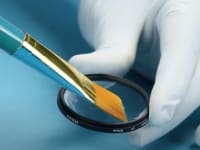
Advances in materials and manufacturing are leading to better implants, prosthetics, and devices. Browse innovative developments in materials and manufacturing that significantly impact medical device design and production.
The life sciences industry is at a pivotal moment, where groundbreaking technologies are redefining how therapeutics and medical devices are discovered, developed, and manufactured. From AI to additive manufacturing, these advancements are accelerating time-to-market, improving efficiency, and enabling more personalized solutions for patients. Read on to learn Editor and Director of Medical Content Sherrie Trigg's thoughts on the matter.
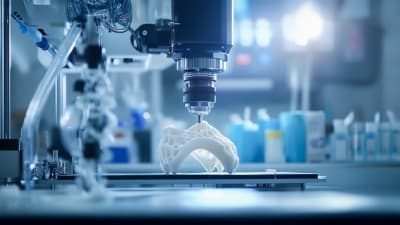
As an industry, AM is experiencing advancements at a rapid pace. Innovation is enabling enhanced capabilities across the entire workflow from software and materials through 3D printing technologies. Additionally, we see 3D printers with much smaller footprints enabling the technology to be used in smaller spaces such as hospitals, ambulatory surgery centers, and dental laboratories and clinics. Read on to learn more.
In the highly regulated medical device industry, success relies on precision, compliance, and efficiency. Manufacturers need more than basic production control – it’s...
In a dramatic shift that could reshape the medical device industry, the U.S. government’s sweeping tariff hikes — particularly a 125 percent levy on Chinese goods — have...
See the product of the month: Plastic Ingenuity's validated thermoformed ready-to-use pharma tubs. The tubs are comparable to traditional injection molded tubs; however, they offer rapid development, a lower cost of entry, and material reductions.
See the new products and services, including precision metering pumps from Circor International; a high-performance gantry robot with an integrated slip roller conveyor system from Dispense Works; XP Power's range of compact, low-profile AC-DC power supplies with flexible cooling options; Festo's updated mass flow controller; and much more.
The field of microfluidics is a key technology for the medicine of the future. Having already revolutionized the world of laboratory medicine by enabling samples to be analyzed much faster, it also plays a major role in the development of new drugs. Read on to learn about Parallel Fluidics, which specializes in rapid manufacturing of microfluidics prototypes for the life sciences sector.
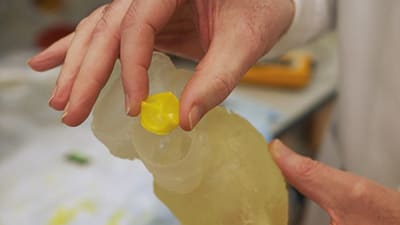
Georgia Tech researchers have created a 3D-printed heart valve made of bioresorbable materials and designed to fit an individual patient’s unique anatomy. Once implanted, the valves will be absorbed by the body and replaced by new tissue that will perform the function that the device once served. Read on to learn more.
Medical equipment designers rely on rupture disk devices for pressure relief and pressure release of gases and liquids for essential diagnostic, life safety, and analytical instrumentation. Read on to learn more about them.
Researchers have combined miniaturized hardware and intelligent algorithms to create a cost-effective, compact powerful tool capable of solving real-world problems in areas like healthcare. Read on to learn more.
Researchers have significantly improved a new joining technology, interlocking metasurfaces, designed to increase the strength and stability of a structure in comparison to traditional techniques like bolts and adhesives, using shape memory alloys. Read on to learn more.
This white paper presents an overview of mixing technologies implemented across many of today’s highly competitive pharmaceutical and medical industries, as well as new...
ASTM International’s medical and surgical devices committee (F04) is developing a proposed standard for a wrought nickel-titanium alloy. The alloy covered by the...
As device designs become increasingly sophisticated, medtech companies are understandably seeking contract design and manufacturing partners that can accompany them on...
The medical device industry constantly evaluates product and packaging materials and designs to meet business objectives, sustainability targets, and changing consumer preferences. Tactics...
Recent successes in cultivating human heart tissue, knee cartilage, and pharmaceutical crystals in space have relied on technology that was initially developed decades ago with support from NASA.
A research team from the University of Freiburg and the Medical Center – University of Freiburg has developed a novel biomimetic speaking valve technology that could significantly increase the safety of tracheostomized patients. Read on to learn more.
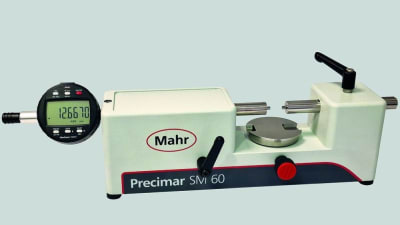
See the new products and services, including a new reciprocating head for medical tubing from Guill Tool; EpoxySet's state-of-the-art UV adhesives, the UV-8675, specifically designed for bonding PVC tubing in medical devices; Mahr Inc.'s expanded length measurement product line; Zeus' latest addition to its StreamLiner series of ultra-thin-walled catheter liners; and more.
Boston Scientific is a market leader in pacemakers, defibrillators, monitoring equipment, spinal and brain stimulation, stents, catheters, and ablation devices. Read on to learn how the company improved upon cardiac monitoring.
Researchers have developed a multifunctional sensor based on semiconductor fibers that emulates the five human senses. The technology developed in the study is expected to be utilized in fields such as wearables, Internet of Things (IoT), electronic devices, and soft robotics. Read on to learn more.
Researchers at University of Galway have developed a way of bioprinting tissues that change shape as a result of cell-generated forces, in the same way that it happens in biological tissues during organ development. The breakthrough science focused on replicating heart tissues, bringing research closer to generating functional, bioprinted organs. Read on to learn more.
Manufacturing engineers tend to focus on new machinery and ways to maximize production lines. Improving communication can also increase efficiency and reduce costly and dangerous mistakes. Good communication becomes more critical as the medical device manufacturing industry grows increasingly complex with the addition of robotics and automation. Read on to learn more.
Researchers are developing soft sensor materials based on ceramics. Such sensors can feel temperature, strain, pressure, or humidity, for instance, which makes them interesting for use in medicine, but also in the field of soft robotics. Read on to learn more.
Auxilium Biotechnologies has successfully deployed its 3D bioprinter aboard the ISS. The platform is the first of its kind, making history by printing eight implantable medical devices simultaneously in just two hours.
Intricon Corporation, developer and manufacturer of some of the world’s smallest, smartest medical devices powered by microelectronics, has announced a significant expansion at its St....
In a time of evolving challenges and uncertainties, understanding the plastics marketplace has never been more critical for company leaders. A clear grasp of the industry’s current...
FAULHABER MICROMO brings together the highest quality motion technologies and value-added services, together with global engineering, sourcing, and manufacturing, to deliver top quality micro motion solutions. With 34 years’ experience, John Chandler injects a key engineering perspective into all new projects and enjoys working closely with OEM customers to bring exciting new technologies to market.
Inside Story: Trends in Packaging and Sterilization
Eurofins Medical Device Testing (MDT) provides a full scope of testing services. In this interview, Eurofins’ experts, Sunny Modi, PhD, Director of Package Testing; and Elizabeth Sydnor, Director of Microbiology; answer common questions on medical device packaging and sterilization.














 INSIDER: AR/AI
 News: Robotics, Automation & Control
 INSIDER: Design
 INSIDER: Manufacturing & Prototyping
 INSIDER: Medical
 INSIDER: Mechanical & Fluid Systems

 Podcasts: Robotics, Automation & Control
 Podcasts: Design
 Podcasts: Medical
 Podcasts: Medical
 On-Demand Webinars: Communications
 Podcasts: AR/AI