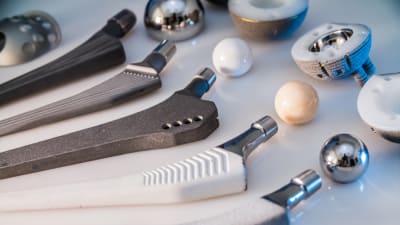
Advances in materials and manufacturing are leading to better implants, prosthetics, and devices. Browse innovative developments in materials and manufacturing that significantly impact medical device design and production.
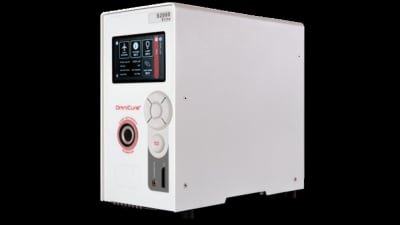
Excelitas (Booth #3009) will showcase its newest OmniCure® and Fusion UV® curing systems for medical device assembly at MD&M Midwest. Experts are on hand demonstrating...
Junkosha (Booth 3717) has chosen this year’s MD&M Midwest event to announce a significant advancement in its medical tubing portfolio: the launch of its thin wall etched...
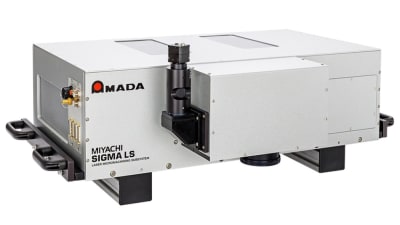
Amada Weld Tech (Booth 2921) is featuring its advanced, application-focused technologies for medical device production at MD&M. The company’s demonstrations will...
BioInteractions (Booth 2906) has launched Surface-Active Systems (SAS), a pioneering new category of high-performance, zero-leaching coating solutions designed...
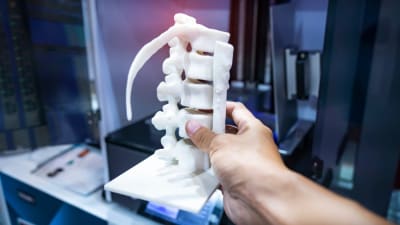
3D printing is transforming the design and production of medical devices. Benefits include creating custom implants, prosthetics, and surgical tools tailored to individual patients, as well as the ability to quickly prototype new devices for testing and development.
SAE Media Group announced the winners of its Rising Star Awards: Women in Engineering program today during a live online event attended by participants across the globe.
See the product of the month: Amada Press System’s WH-2A, a 13-axis CNC dual-point coiling machine designed for ultra-fine wire coil processing for medical guidewire formation.
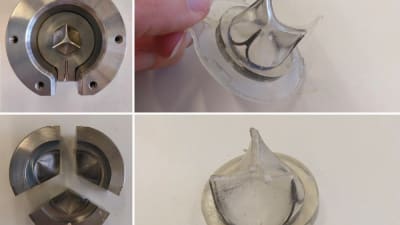
An interdisciplinary research team from ETH Zurich and the University Hospital of Zurich has developed a novel three-dimensional heart patch for intraventricular implantation. Read on to learn more about it.
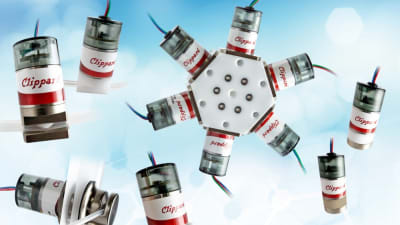
See where the product focus is this month: Fluid handling, pumps, and valves, including Clippard's isolation valves with a hit-and-hold option; Raumedic AG's expanded portfolio of biopharmaceutical transfer tubing; Festo's expanded line of compact grippers; and more.
A research team at RCSI University of Medicine and Health Sciences has developed a 3D printed implant to deliver electrical stimulation to injured areas of the spinal cord offering a potential new route to repair nerve damage. Read on to learn the details of the 3D-printed implant and how it performs in lab experiments.
As devices grow smaller, smarter, and more user-centered, materials like liquid silicone rubber (LSR) play a bigger role in enabling performance, comfort, and compliance. From implantables to connected wearables, LSR is helping engineers meet growing design and usability demands. Read on to learn more.
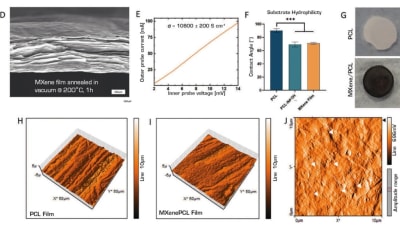
Scientists have produced a new, powerful electricity-conducting material that could improve wearable technologies, including medical devices. The new technique uses hyaluronic acid applied directly to a gold-plated surface to create a thinner, more durable film, or polymer, used to conduct electricity in devices like biosensors. Read on to learn more.
Returning to the Minneapolis Convention Center this October, MD&M Midwest 2025 is where the region’s medtech leaders gather to explore, collaborate, and solve the toughest engineering challenges in medical device development. Read on to learn more about it.
Plasma pens integrated into production lines provide targeted plasma treatments that reduce failure rates by improving adhesion and bonding in various critical applications. Read on to learn more about their powers.
SAE Media Group’s Women in Engineering: Rising Star Awards program shines the spotlight on trailblazers who not only excel in their respective domains but also stroke the flames of inspiration in others. This year’s awards program features six categories: Aerospace/Defense, Automotive/Transportation, Electronics, Manufacturing/Materials, Medical, and Robotics, Automation and AI. In this special section, you’ll meet the winners in all six categories.
This whitepaper delves into developing molecular diagnostics instruments, emphasizing the advantages of collaboration with experienced OEMs using platforms like Cavro® Omni Flex...
SPIROL’s Coiled Spring Pins are engineered for efficient assembly offering easy installation and reliable performance at the lowest total installed cost. Their 2 ¼ coil design and availability in light,...
The Medical & Healthcare Robotics Summit, presented by Medical Design Briefs returns for its second year to explore the continued integration of robotics in healthcare and medicine.
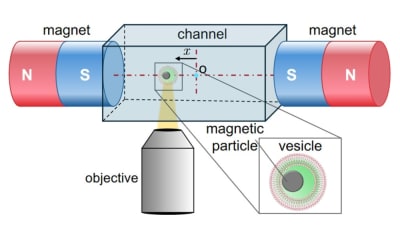
Researchers have demonstrated that microscopic drug-delivery containers can be magnetically steered to their targets, advancing the development of precision medicine...
When it comes to biomedical textiles, success starts with the science and ends with execution. This 60-minute webinar will walk through real scenarios where...
Trelleborg Medical Solutions has opened 43,055 sq ft (4,000 sq m) of manufacturing space in Hal-Far, Malta, helping medical device and life science customers bring...
Today’s cutting-edge medical implants demand solutions that fulfill multifunctional requirements like high packaging density, exceptional reliability, and assured...
A team from the GIGA (Cardiology Laboratory) and the CESAM (Centre de recherche sur les macromolécules – CERM) at the University of Liège has developed PHOx, a thermoplastic elastomer without isocyanate PU (NIPU), which is therefore less toxic to produce and much better tolerated by the human body. Read on to learn more.
See the new products and services, including Dickson's mapping suite designed to streamline the identification of critical hot and cold zones and the analysis of temperature and humidity trends; Littelfuse's series of sealed tactile switches for surface-mount technology; Mahr Inc.'s height gage designed for ease of use and efficiency in production environments; and more.
In addressing the complex demands of drug-device integration, medical-grade thermoplastic polyurethanes provide a rare trifecta of tunable mechanics, chemical inertness and proven biocompatibility. While this polymer class is historically underutilized in drug delivery compared to more common materials like ethylene-vinyl acetate, it is increasingly favored in specialty product design for both extended release and implantable combination devices. Read on to learn more.
Engineers at EWI have developed a new laser-based welding technique that enables the clean, reliable joining of clear-to-clear polymer tubing without the need for adhesives, solvents, colorants, or any chemical surface treatment. Read on to learn more.
Engineering and manufacturing complex devices requires heterogeneous integration; the process of combining multiple, different parts that together have the functionality required that gather process and communicate the important information. Read on to learn more.
Understanding power system components and how to connect them correctly is critical to meeting regulatory requirements and designing successful electrical products for worldwide markets. Interpower’s Ralph Bright defines these requirements and explains how to know which cord to select for your application.
Inside Story: Trends in Packaging and Sterilization
Eurofins Medical Device Testing (MDT) provides a full scope of testing services. In this interview, Eurofins’ experts, Sunny Modi, PhD, Director of Package Testing; and Elizabeth Sydnor, Director of Microbiology; answer common questions on medical device packaging and sterilization.

















 INSIDER: AR/AI
 News: Robotics, Automation & Control
 INSIDER: Design
 INSIDER: Manufacturing & Prototyping
 INSIDER: Medical
 INSIDER: Mechanical & Fluid Systems

 Podcasts: Robotics, Automation & Control
 Podcasts: Design
 Podcasts: Medical
 Podcasts: Medical
 On-Demand Webinars: Communications
 Podcasts: AR/AI