
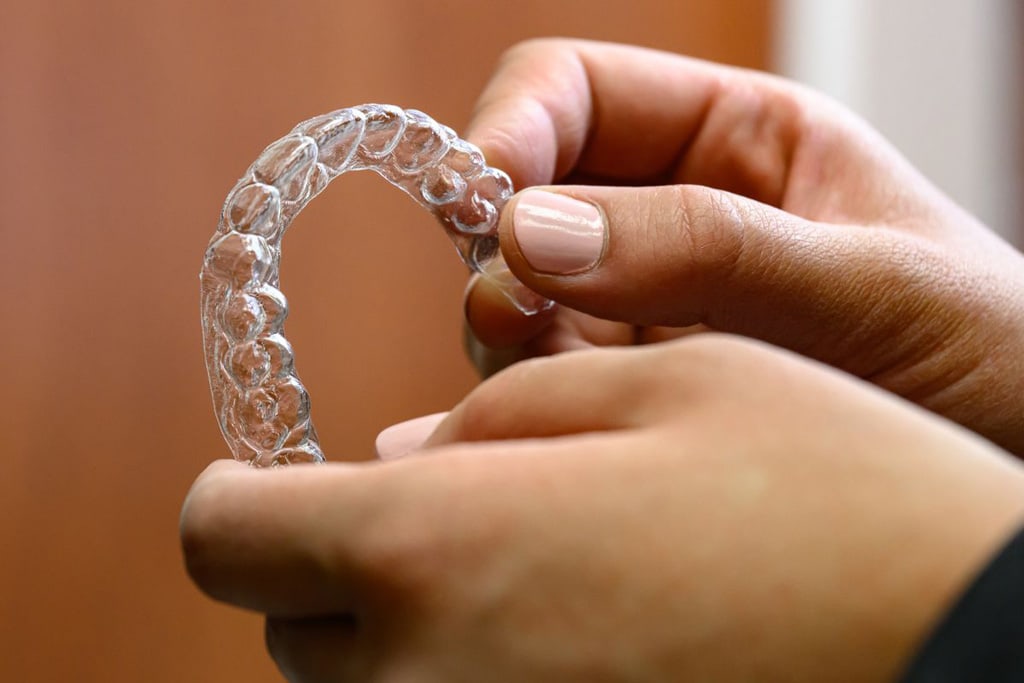
A new technology incorporates a shape memory material for clear plastic dental aligners, an alternative to traditional metal braces.
With funds from endowments created by orthodontic alumni and other friends of the School of Dentistry, researchers purchased 3D printers from Graphy Inc. The Korean-based company developed the technology that uses thermoplastic to make the aligners.
Thermoplastic’s softness makes it a better fit than metal for pairing with “tooth attachments,” restorative materials that clinicians glue onto teeth. Thermoplastic also allows for adding layers, varying the thickness of each aligner in order to reposition a patient’s teeth more efficiently.
Unlike their metal counterparts, the aligners can be removed so patients can brush and floss.
To make a thermoplastic aligner, a patient’s mouth is scanned and a dental mold is created, as with other plastic aligners. But instead of sending the scan out to a company that will manufacture the aligner, orthodontists using the Graphy printer can immediately make aligners onsite in their dental practices.
Researchers simulated the biomechanical behavior of the aligners and the stress response of the teeth, periodontal ligaments and surrounding bones. They are studying the shapes and orientations of tooth attachments to show how aligners can be specifically refined for each patient.