Medical sensors are being used in the biomedical electronics industry to measure pressure, flow, liquid-level, and more. See how today's sensors are supporting medical devices like respiratory systems, spirometers, anesthetic devices, videoscopes, dialysis machines, and more.
This bioinspired design marks a significant step toward development of eco-friendly and highly sensitive wearable sensors, with broad potential in sports analytics and biomedical monitoring. Read on to learn more.
Engineers have developed a technique for inkjet printing arrays of special nanoparticles that enables the mass production of long-lasting wearable sweat sensors. These sensors could be...
For the broad array of industrial applications concerned with liquid flow control, extremely accurate, repeatable results are necessary to successful operation. To achieve such...
Researchers have developed an oxygen scavenger that consumes excess oxygen by converting it into water. Crucially, this alcohol oxidase does not react with the actual target substances —...
EPFL researchers have engineered a fiber-based electronic sensor that remains functional even when stretched to over 10 times its original length. The device holds promise for smart textiles, physical rehabilitation devices, and soft robotics. Read on to learn more about it.
University of Texas at Dallas researchers have developed biosensor technology that when combined with artificial intelligence (AI) shows promise for detecting lung cancer through breath analysis. Read on to learn more.
A low-cost, portable biosensor can quickly identify a protein whose altered levels are associated with psychiatric disorders, such as depression, schizophrenia, and bipolar disorder. When it becomes commercially available in the future, it may contribute to early detection, which is essential for treating and monitoring patients’ clinical conditions. Read on to learn more.
Engineers have created the first ingestible bioprinter that can be guided to disease sites to print tissue within the body. Called MEDS (Magnetic Endoluminal Deposition System), the...
Researchers, led by Rice University’s Yong Lin Kong, have developed a soft but strong metamaterial that can be controlled remotely to rapidly transform its size and shape. The invention, published in Science Advances, represents a significant advancement that can potentially transform ingestible and implantable medical devices. Read on to learn more about it.
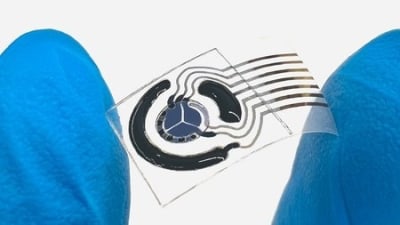
A KAIST research team has developed a smart patch that can precisely observe internal changes through sweat when simply attached to the body. This is expected to greatly contribute to the advancement of chronic disease management and personalized healthcare technologies. Read on to learn more.
Medical pumps are at the heart of modern healthcare delivery. Their success depends on precise, reliable, and safe operation — capabilities enabled by advanced sensor technologies. From occlusion detection to bubble monitoring and temperature control, sensors provide the intelligence that allows pumps to perform with confidence in critical care environments. Read on to learn more.
Researchers have developed novel ISM-based sweat sensors that feature enhanced signal stability and performance and avoid skin contact, while also being reusable, making them practical for daily use. Read on to learn more.
On-body biosensors have crossed the threshold from technological novelty to clinical tool driving medical decisions. The most successful devices share common traits: They provide clinically actionable information, reliably measure rapidly changing biomarkers, account for confounding variables, and utilize established reimbursement pathways. Read on to learn more about them.
See the new products and services, including EPIGAP OSA Photonics GmbH's surface-mount device (SMD) shortwave infrared (SWIR); Moticont's linear voice coil servo motor; Dart Controls' high-performance pulse width modulation (PWM) controller for 12–48-V battery powered equipment; a compact, fullservice RTD sensor from Burns Engineering; and more.
Although lithium is highly effective to treat bipolar disorder, the chemical has a narrow therapeutic window — too high a dose can be toxic to patients, causing kidney damage, thyroid damage, or even death, while too low a dose renders the treatment ineffective. Read on to learn how a wearable sensor may thwart this issue.
In this Q&A with Medical Design Briefs, Michael Klitzke, principal system architect at TE Connectivity, discusses how advances in sensor miniaturization, packaging,...
Using an inexpensive electrode coated with DNA, researchers have designed disposable diagnostics that could be adapted to detect a variety of diseases, including cancer or...
See the new products and services, including Dickson's mapping suite designed to streamline the identification of critical hot and cold zones and the analysis of temperature and humidity trends; Littelfuse's series of sealed tactile switches for surface-mount technology; Mahr Inc.'s height gage designed for ease of use and efficiency in production environments; and more.
Researchers have developed a 3D microprinted sensor for highly sensitive on-chip biosensing. The sensor, which is based on a polymer whispering-gallerymode microlaser, opens new opportunities for developing high-performance, cost-effective lab-on-a-chip devices for early disease diagnosis. Read on to learn more.
A fiber sensor inspired by the shape of DNA, developed by researchers at Shinshu University, introduces a new design for more durable, flexible fiber sensors in wearables. Read on to learn more.
Sensors are used everywhere. But traditional sensors often rely on rigid components and batteries, limiting their applications in soft systems. To address this, researchers have developed a smarter alternative. Using a paper-folding technique in combination with a triboelectric nanogenerator, they created a novel energy-harvesting sensor with promising potential for next-gen soft devices. Read on to learn more.
Engineers have harnessed quantum physics to detect the presence of biomolecules without the need for an external light source, overcoming a significant obstacle to the use of optical biosensors in healthcare. Read on to learn more.
Engineers have developed a smart capsule called PillTrek that can measure pH, temperature, and a variety of different biomarkers. It incorporates simple, inexpensive sensors into a miniature wireless electrochemical workstation that relies on low-power electronics. Read on to learn more.
Could clothing monitor a person’s health in real time, because the clothing itself is a self-powered sensor? A new material created through electrospinning, which is a...
Researchers have developed a first-of-its-kind wearable device capable of continuously scanning the lungs and heart of hospital patients while they rest in bed —...
Researchers have developed a lab-on-a-chip device measures the stress hormone cortisol from a patient’s saliva. Knowing if a patient has elevated stress hormones can provide useful diagnostic...
Understanding power system components and how to connect them correctly is critical to meeting regulatory requirements and designing successful electrical products for worldwide markets. Interpower’s Ralph Bright defines these requirements and explains how to know which cord to select for your application.
Inside Story: Trends in Packaging and Sterilization
Eurofins Medical Device Testing (MDT) provides a full scope of testing services. In this interview, Eurofins’ experts, Sunny Modi, PhD, Director of Package Testing; and Elizabeth Sydnor, Director of Microbiology; answer common questions on medical device packaging and sterilization.













 INSIDER: Manufacturing & Prototyping
 INSIDER: Design
 News: Robotics, Automation & Control
 Features: Electronics & Computers
 INSIDER: Medical
 Podcasts: Medical

 Podcasts: Medical
 Podcasts: Medical
 Podcasts: Design
 On-Demand Webinars: Connectivity
 Podcasts: AR/AI