INSIDER: Medical
An international team has developed an intelligent device capable of monitoring the temperature of the skin continuously and accurately. The device uses a thermoelectric system that works...
INSIDER: Medical
While early haptic devices focused on single-sensory cues like vibration-based notifications, modern advancements have paved the way for multisensory haptic devices that...
R&D: Sensors/Data Acquisition
Researchers have combined miniaturized hardware and intelligent algorithms to create a cost-effective, compact powerful tool capable of solving real-world problems in areas like healthcare. Read on to learn more.
INSIDER: Sensors/Data Acquisition
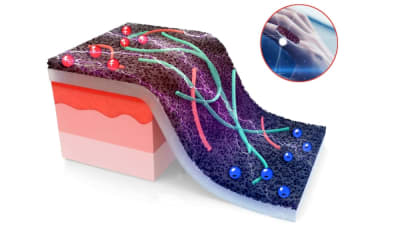
A major challenge in self-powered wearable sensors for healthcare monitoring is distinguishing different signals when they occur at the same time. Researchers have addressed this issue by uncovering...
Products: Sensors/Data Acquisition
See where the product focus is this month: sensors, including a programmable IMU-based sensor system from Bosch Sensortec; tactile force sensors from Tekscan; capacitive sensors from EBE sensors + motion; and Introtek's noninvasive air bubble sensor that incorporates the latest ultrasonic technology.
Briefs: Medical
A major challenge in self-powered wearable sensors for healthcare monitoring is distinguishing different signals when they occur at the same time. Researchers from Penn State and China’s Hebei University of Technology addressed this issue by uncovering a new property of a sensor material. Read on to learn more about it.
Briefs: Sensors/Data Acquisition
Researchers have developed a multifunctional sensor based on semiconductor fibers that emulates the five human senses. The technology developed in the study is expected to be utilized in fields such as wearables, Internet of Things (IoT), electronic devices, and soft robotics. Read on to learn more.
Briefs: Medical
Researchers at the University of California, Irvine and New York’s Columbia University have embedded transistors in a soft, conformable material to create a biocompatible sensor implant that monitors neurological functions through successive phases of a patient’s development. Read on to learn more.
From the Editor: Electronics & Computers
In December, we asked Medical Design Briefs readers to cast their ballot to choose from our eight Products of the Month the technology they felt was the most significant new introduction to the design engineering community in 2024. Here is the winner of the 2024 Medical Design Briefs’ Readers’ Choice Product of the Year. Read on to learn more.
Briefs: Wearables
While smartwatches and fitness trackers have paved the way, upcoming innovations in hearables (earbuds that monitor health), augmented reality glasses, smart patches and smart clothing will push the boundaries of what biosensors can do. As demand for these devices increases, the focus will shift to making them more energy-efficient, secure, and even more embedded in daily life. Read on to learn more.
R&D: Medical
Researchers have developed an optical biosensor that can rapidly detect monkeypox, the virus that causes mpox. The technology could allow clinicians to diagnose the disease at the point of care rather than wait for lab results. Read on to learn more.
R&D: Sensors/Data Acquisition
A new device aims to detect acute exacerbations of chronic conditions. The wearable monitoring device contains multiple types of sensors, enabling faster and more accurate detection of exacerbations of chronic obstructive pulmonary disease and chronic conditions like asthma, heart disease and other inflammatory disorders. Read on to learn more about it.
Features: Sensors/Data Acquisition
The healthcare landscape in 2025 will be reshaped by advancements in data analytics, AI, IoT, and wearable technologies, which together promise predictive, personalized, and accessible care. Read on to learn more about Editor and Director of Medical Content Sherrie Trigg's, as well as other industry professionals', thoughts on the matter.
Products: Wearables
Listen to MDB's medical podcasts, including one on the rise of advanced sensor technologies; one on the advancements that allow for continuous, real-time data collection from within the human body; one on the exploration of devices from fitness trackers to smartwatches; and one on the transformative role of microfabrication and MEMS technology in advancing sensor integration for medical devices. Listen now!
Briefs: Sensors/Data Acquisition
New research from NYU shows it’s possible to develop and build microchips that can not only identify multiple diseases from a single cough or air sample, but can also be produced at scale. Read on to learn more.
R&D: Sensors/Data Acquisition
A team has developed new biosensors with which the ratio of NADPH to NADP+ can be measured in living cells in real time for the first time. The team’s observations provide new insights into the evolution of the most important protective function of cells, cellular detoxification. Read on to learn more.
R&D: Sensors/Data Acquisition
Researchers have developed a three-dimensional stretchable piezoelectric energy harvester that can harvest electrical energy using body movements. The device is to be used as a wearable energy harvester as it can be attached to the skin or clothes. Read on to learn more.
Podcasts: Sensors/Data Acquisition
How advanced sensor technologies driving the development of wearables and health-monitoring devices.
Podcasts: Sensors/Data Acquisition
How microfabrication and MEMS technology are driving sensor-based medical devices.
INSIDER: Medical
Researchers hope to transform diabetes management by eliminating the pain and hassle. The paper-based biosensor system uses Bacillus subtilis bacterial spores that germinate in response to glucose in...
News: Medical
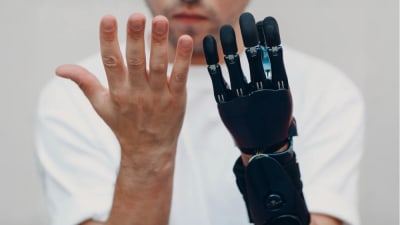
Mohammad Habibur (Habib) Rahman, Director of the BioRobotics Laboratory at the University of Wisconsin-Milwaukee, and his team have been developing a portable, assistive robotic arm that therapists can use to assess and treat patients whether or not they are not in the same location.
Videos of the Month: Design
See the videos of the month, including one on an enzyme that can aid drug design for aggressive cancers; one on a modified pacifier combined with AI algorithms to analyze data; one on Robert Wood discussing results that suggest omalizumab has the potential to be a life-changing medication for patients with food allergy, including those with multiple food allergies; and one on a novel framework to localize skin lesion correspondence.
R&D: Sensors/Data Acquisition
Researchers have created a portable device that can detect colorectal and prostate cancer more cheaply and quickly than prevailing methods. The team believes the device may be especially helpful in developing countries, which experience higher cancer mortality rates due in part to barriers to medical diagnosis. Read on to learn more.
R&D: Sensors/Data Acquisition
A team has developed a general, modular strategy for designing sensors that can be easily adapted to various target molecules and concentration ranges. The new modular sensor has the potential to significantly accelerate the development of new diagnostic tools for research. Read on to learn more.
Features: Medical
In a recent Medical Design Briefs podcast, Rob Batchelor, head of biosensors at Australia-based Nutromics, joined us to talk about continuous monitoring and biosensors for health insights. This article presents excerpts from that podcast.
Podcasts: Medical
The advent of implantable sensor technologies has had a transformative impact on internal health monitoring. This episode looks into the advancements that allow for continuous, real-time data collection from within the human body, revolutionizing patient care and treatment strategies.
Podcasts: Medical
How sensors are reshaping the landscape of medical diagnostics, enabling quicker and more accurate health assessments.
Features: Materials
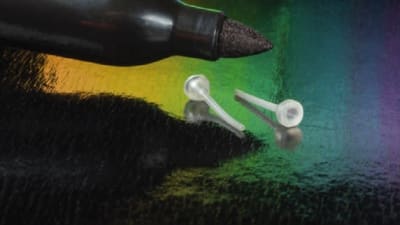
See the product showcase, which includes Accumold All-Plastic Molded Cannula technology; Arnold Magnetic Technologies' thin metals and flexible composite solutions; the OmniCure® S2000 Elite; Omnetics’ Nano-D connectors; the Lee Company’s Full Isolation Dual Seal Precision Dispense Pump; and much more.
R&D: Sensors/Data Acquisition
A recent study combines three-dimensional embroidery techniques with machine learning to create a fabric-based sensor that can control electronic devices through touch. Read on to learn more.


















 INSIDER: Manufacturing & Prototyping
 INSIDER: Design
 News: Robotics, Automation & Control
 Features: Electronics & Computers
 INSIDER: Medical
 Podcasts: Medical

 Podcasts: Medical
 Podcasts: Medical
 Podcasts: Design
 On-Demand Webinars: Connectivity
 Podcasts: AR/AI