Sensors & Wearables

Sensors

Medical sensors are being used in the biomedical electronics industry to measure pressure, flow, liquid-level, and more. See how today's sensors are supporting medical devices like respiratory systems, spirometers, anesthetic devices, videoscopes, dialysis machines, and more.

Stories

41
0
60
30
Briefs: Medical
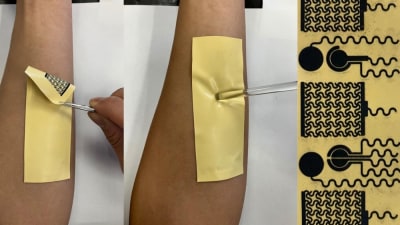
Researchers have developed a novel sensor that enables the continuous, real-time detection of solid-state epidermal bio-markers, a new category of health indicators. Read on to learn more.
Feature Image
R&D: Sensors/Data Acquisition
Borophene is more conductive, thinner, lighter, stronger, and more flexible than graphene, the 2D version of carbon. Now, researchers have made the material potentially more useful by imparting chirality — or handedness — on it. Read on to learn what this could mean for advanced sensors and implantable medical devices.
Feature Image
R&D: Sensors/Data Acquisition
New research unlocks the power of exceptional points (EPs) for advanced optical sensing. Unlike traditional methods that require modifications to the sensor itself, the system features an EP control unit that can plug in to physically separated external sensors. Read on to learn more.
Feature Image
INSIDER: Medical
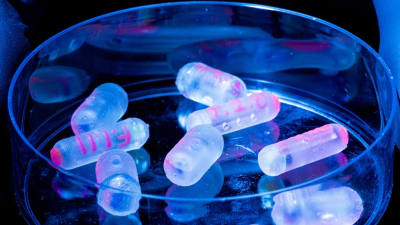
A small device, about the size of a vitamin pill, can be swallowed and passed through the gastrointestinal tract to sample the full inventory of microorganisms in an individual’s gastro-intestinal...
Feature Image
Global Innovations: Nanotechnology
A research team from Shinshu University, Japan, decided to improve flexible piezoelectric sensor design using a well-established manufacturing technique: electrospinning. Read on to learn more about it.
Feature Image
Briefs: Medical
Beyond the use of this device for early detection of peptic ulcers, gastritis, and gastric cancers, there is potential to monitor brain health. How? Read on to find out.
Feature Image
R&D: Medical
To advance soft robotics, skin-integrated electronics, and biomedical devices, researchers have developed a 3D-printed material that is soft and stretchable — traits needed for matching the properties of tissues and organs — and that self-assembles. Read on to learn more.
Feature Image
INSIDER: Sensors/Data Acquisition
A team of researchers is developing a series of cutting-edge technologies to transform wound care, including smart bandages that would automatically sense and respond to changing conditions...
Feature Image
Briefs: Electronics & Computers
While MEMS sensors are revolutionizing various industries with their precision and miniaturization, they can present unique product development challenges and risks during design, development, and manufacturing. Read on to learn more.
Feature Image
Briefs: Medical
In the big picture of medical equipment sustainability, sensors play an important role. That’s right, something so miniature can have quite the impact on maintaining and improving sustainability — from the product design phase to use in equipment in the home. Read on to learn more.
Feature Image
R&D: Medical
Using electrical impedance tomography (EIT), researchers have developed a system using a flexible tactile sensor for objective evaluation of fine finger movements. Demonstrating high accuracy in classifying diverse...
Feature Image
R&D: Medical
A unique wristwatch contains multiple modules, including a sensor array, a microfluidic chip, signal processing, and a data display system to monitor chemicals in human sweat. It can...
Feature Image
Blog: Manufacturing & Prototyping
Researchers have developed a method to make adaptive and eco-friendly sensors that can be directly and imperceptibly printed onto a wide range of biological surfaces.
Feature Image
INSIDER: Imaging
MRI scans are commonly used to diagnose a variety of conditions, anything from liver disease to brain tumors. But, as anyone who has been through one knows, patients must remain completely...
Feature Image
INSIDER: Wearables
Biologists have found a way to piggyback on the glucose monitoring technology used in automated insulin dosing systems and make it universally applicable for the monitoring and...
Feature Image
INSIDER: Wearables
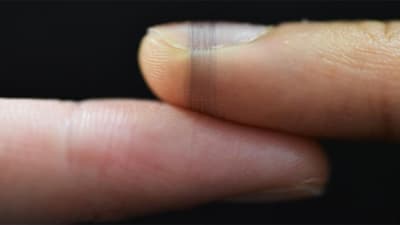
Skin can send certain health-related signals, such as dry skin feeling tighter to indicate the need for moisture. But what if skin could be smarter, capable of monitoring and sharing...
Feature Image
Features: Information Technology
Industry innovation is helping pharmaceutical manufacturers gain key insights into their products and processes by enabling them to effectively interpret data from every test given, even at mass volumes.
Feature Image
Global Innovations: Photonics/Optics
A team has discovered new aspects of glucose’s infrared signature and have used this information to develop a miniaturized optical sensor only 5mm in diameter that could one day be used to provide continuous non-invasive glucose monitoring in diabetes management.
Feature Image
R&D: Sensors/Data Acquisition
Researchers have created a flexible paper-based sensor that operates like the human brain. They fabricated a photo-electronic artificial synapse device composed of gold electrodes on top of a 10 μm transparent film consisting of zinc oxide nanoparticles and cellulose nanofibers.
Feature Image
Podcasts: Wearables
Exploring how innovations in wearables are making treatments more precise, portable, and patient-friendly than ever before.
Feature Image
Podcasts: Medical
Exploring how AI algorithms analyze and interpret the data collected, leading to more accurate diagnostics and predictive insights.
Feature Image
Podcasts: Medical
Exploring advancements in wearable injector technology, examining how these devices are transforming the administration of medications, improving patient adherence, and enhancing the overall effectiveness of treatment plans.
Feature Image
Podcasts: Wearables
DNA-based biosensors offer a highly sensitive and specific approach for detecting a range of target molecules.
Feature Image
Global Innovations: Medical
Researchers have developed a revolutionary biosensor using terahertz (THz) waves that can detect skin cancer with exceptional sensitivity, potentially paving the way for earlier and easier diagnoses.
Feature Image
R&D: Medical
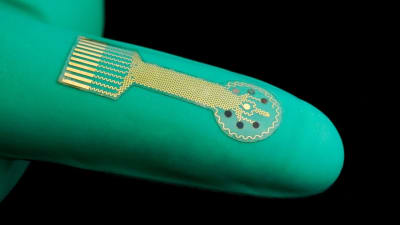
A neural implant provides information about activity deep inside the brain while sitting on its surface. The implant is made up of a thin, transparent, and flexible polymer strip that is packed with a dense array of...
Feature Image
R&D: Medical
Researchers have developed a sensor that utilizes energy from sound waves to control electronic devices. This could one day save millions of batteries.
Feature Image
INSIDER: Nanotechnology
Using a new technology, diagnosing lung cancer could become as easy as inhaling nanoparticle sensors and then taking a urine test that reveals whether a tumor is present. The new...
Feature Image
INSIDER: Sensors/Data Acquisition
Using a simple concept and a patented sensor that detects radioactive materials, a team has developed a patch to stop damage to healthy tissue during proton radiotherapy, one of the best...
Feature Image
INSIDER: Design
A tiny device could be used to improve the safety and effectiveness of cell therapy treatments for patients suffering from spinal cord injuries.
Feature Image

Ask the Expert

John Chandler on Achieving Quality Motion Control

Feature Image

FAULHABER MICROMO brings together the highest quality motion technologies and value-added services, together with global engineering, sourcing, and manufacturing, to deliver top quality micro motion solutions. With 34 years’ experience, John Chandler injects a key engineering perspective into all new projects and enjoys working closely with OEM customers to bring exciting new technologies to market.

Inside Story

Inside Story: Trends in Packaging and Sterilization

Feature Image

Eurofins Medical Device Testing (MDT) provides a full scope of testing services. In this interview, Eurofins’ experts, Sunny Modi, PhD, Director of Package Testing; and Elizabeth Sydnor, Director of Microbiology; answer common questions on medical device packaging and sterilization.

Videos