Tech Briefs

-1
30
30
Briefs: Manufacturing & Prototyping
An industry-academia collaboration to advance sustainable bioprocessing through innovative materials for additive manufacturing, also known as 3D printing, has been announced by Innovate UK (IUK), as part of the “Sustainable Medicines Manufacturing Innovation: Collaborative R&D Fund.” Read on to learn more.
Feature Image
Briefs: Manufacturing & Prototyping
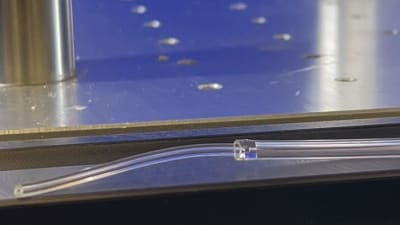
Medical equipment designers rely on rupture disk devices for pressure relief and pressure release of gases and liquids for essential diagnostic, life safety, and analytical instrumentation. Read on to learn more about them.
Feature Image
Briefs: Medical
Advances in artificial intelligence, machine learning, and sensor fusion drive robotics functionality across many applications, including healthcare. Read on to learn what this means.
Feature Image
Briefs: Medical
A team recently published papers in Nature Biomedical Engineering and Science documenting major progress on direct, carefully timed electrical stimulation of the brain that can recreate tactile feedback to give nuanced feeling to prosthetic hands. Read on to learn more.
Feature Image
Briefs: Wearables
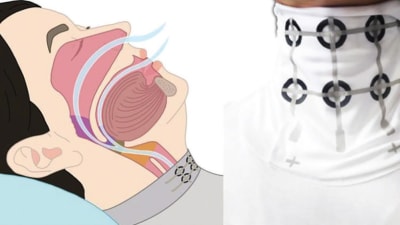
Researchers have developed comfortable, washable smart pajamas that can monitor sleep disorders such as sleep apnea at home, without the need for sticky patches, cumbersome equipment or a visit to a specialist sleep clinic. Read on to learn more.
Feature Image
Briefs: Manufacturing & Prototyping
Georgia Tech researchers have created a 3D-printed heart valve made of bioresorbable materials and designed to fit an individual patient’s unique anatomy. Once implanted, the valves will be absorbed by the body and replaced by new tissue that will perform the function that the device once served. Read on to learn more.
Feature Image
Briefs: Manufacturing & Prototyping
Manufacturing engineers tend to focus on new machinery and ways to maximize production lines. Improving communication can also increase efficiency and reduce costly and dangerous mistakes. Good communication becomes more critical as the medical device manufacturing industry grows increasingly complex with the addition of robotics and automation. Read on to learn more.
Feature Image
Briefs: Medical
FDA Approves Final MDIC Report on MedAccred’s Sterilization Audit and Accreditation Program
MedAccred is an industry-managed, consensus-driven approach to ensuring critical manufacturing process quality throughout the medical device supply chain. The MedAccred program is administered by PRI and governed by the original equipment manufacturer (OEM) subscribers who define program requirements, review audit reports, and accept non-conformance resolutions. Read on to learn more.
Briefs: Sensors/Data Acquisition
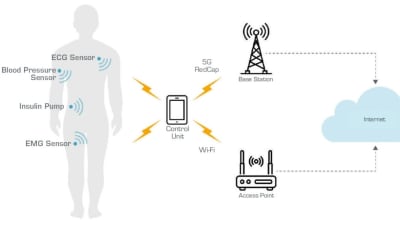
While smartwatches and fitness trackers have paved the way, upcoming innovations in hearables (earbuds that monitor health), augmented reality glasses, smart patches and smart clothing will push the boundaries of what biosensors can do. As demand for these devices increases, the focus will shift to making them more energy-efficient, secure, and even more embedded in daily life. Read on to learn more.
Feature Image
Briefs: Sensors/Data Acquisition
Researchers at the University of California, Irvine and New York’s Columbia University have embedded transistors in a soft, conformable material to create a biocompatible sensor implant that monitors neurological functions through successive phases of a patient’s development. Read on to learn more.
Feature Image
Briefs: Medical
Researchers have successfully developed what they believe is the world’s smallest multifunctional biomedical robots. Capable of imaging, high-precision motion, and multifunctional operations like sampling, drug delivery, and laser ablation, the robot offers competitive imaging performance and a tenfold improvement in obstacle detection. Read on to learn more.
Feature Image
Briefs: Medical
Researchers at University of Galway have developed a way of bioprinting tissues that change shape as a result of cell-generated forces, in the same way that it happens in biological tissues during organ development. The breakthrough science focused on replicating heart tissues, bringing research closer to generating functional, bioprinted organs. Read on to learn more.
Feature Image
Briefs: Photonics/Optics
A research team led by Dr. Youngdo Jeong of the Center for Advanced Biomolecular Recognition the Korea Institute of Science and Technology has developed a urine-based diagnostic kit for bladder cancer that can be conveniently used at home. This kit can accurately detect bladder cancer biomarkers without any preprocessing of urine samples. Read on to learn more.
Feature Image
Briefs: Materials
Researchers have developed a multifunctional sensor based on semiconductor fibers that emulates the five human senses. The technology developed in the study is expected to be utilized in fields such as wearables, Internet of Things (IoT), electronic devices, and soft robotics. Read on to learn more.
Feature Image
Briefs: Sensors/Data Acquisition
A major challenge in self-powered wearable sensors for healthcare monitoring is distinguishing different signals when they occur at the same time. Researchers from Penn State and China’s Hebei University of Technology addressed this issue by uncovering a new property of a sensor material. Read on to learn more about it.
Feature Image
Briefs: Design
Despite its advantages, laparoscopic surgery remains largely inaccessible in low- and middle-income countries (LMICs) due to the high cost of equipment and other logistical challenges. To bridge this gap, researchers recently developed the KeyScope, an affordable laparoscope designed specifically for LMICs. Read on to learn more.
Feature Image
Briefs: Medical
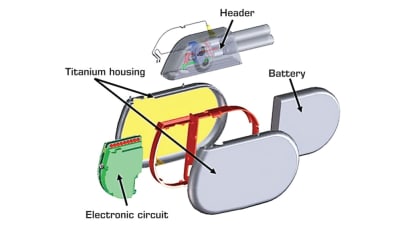
The use of platinum-iridium (PtIr) alloys for pins and electrodes in medical devices is growing substantially in applications such as cardio and neuromodulation devices. This article focuses on PtIr applications. Read on to learn more.
Feature Image
Briefs: Medical
Researchers at The Institute of Metal Research of the Chinese Academy of Sciences have made significant strides in the development and manufacturing of near-void-free titanium alloys using 3D printing. This achievement could lead to the production of titanium alloy materials with exceptional fatigue resistance, paving the way for broader applications of metal 3D printing materials. Read on to learn more.
Feature Image
Briefs: Medical
Published in the journal Scientific Reports, researchers have created realistic, skin-like replicas made of Ecoflex, a type of silicone rubber that can potentially serve as a platform to evaluate risks of bacterial infections from intravenous catheters and test wearable sensors, among other biomedical applications. Read on to learn what the study found.
Feature Image
Briefs: Medical
New research from NYU shows it’s possible to develop and build microchips that can not only identify multiple diseases from a single cough or air sample, but can also be produced at scale. Read on to learn more.
Feature Image
Briefs: Materials
A team has reported that they used a class of widely available polymers called thermoplastic elastomers to create soft 3D printed structures with tunable stiffness. Engineers can design the print path used by the 3D printer to program the plastic’s physical properties so that a device can stretch and flex repeatedly in one direction while remaining rigid in another. Read on to learn more.
Feature Image
Briefs: Medical
A team at the Nanostructured and Novel Materials Laboratory at the University of Tabriz has created organic materials for brain and heart pacemakers that rely on uninterrupted signal delivery to be effective. Read on to learn more.
Feature Image
Briefs: Medical
A new interdisciplinary effort led by Robert Wood, the Harry Lewis and Marlyn McGrath Professor of Engineering and Applied Sciences in the Harvard John A. Paulson School of Engineering and Applied Sciences, and James Weaver, of Harvard’s Wyss Institute, has drawn inspiration from an unexpected source: the world of parasites. Read on to learn more.
Feature Image
Briefs: Design
Wearable devices like smartwatches and fitness trackers interact with parts of our bodies to measure and learn from internal processes, such as our heart rate or sleep stages. Now, MIT researchers have developed wearable devices that may be able to perform similar functions for individual cells inside the body. Read on to learn more.
Feature Image
Briefs: Materials
This article explores the critical role that thermoplastic elastomer biopharmaceutical tubing plays in enabling scalability and rapid deployment — a duo of factors that can make all the difference in the industry. Read on to learn more.
Feature Image
Briefs: Imaging
This article presents how Conavi combined the two standard intravascular imaging modalities into one — the Novasight Hybrid™ System, the first and only intravascular imaging system to combine co-registered IVUS and OCT in a single system. Read on to learn more.
Feature Image
Briefs: Medical
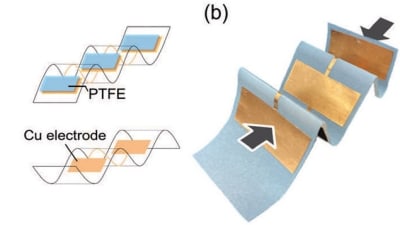
Researchers have taken a step toward safer x-rays by creating a highly sensitive and foldable detector that produces good quality images with smaller dosages of the rays. Read on to learn more about it.
Feature Image
Briefs: Design
A study at Mayo Clinic suggests that an hourglass-shaped stent could improve blood flow and ease severe and reoccurring chest pain in people with microvascular disease. Of 30 participants in a phase 2 clinical trial, 76 percent saw improvement in their day-to-day life. Read on to learn more.
Feature Image
Briefs: Medical
A team of researchers at the University of California – San Diego has developed a new and improved wearable ultrasound patch for continuous and noninvasive blood pressure monitoring. Read on to learn more.
Feature Image

Ask the Expert

John Chandler on Achieving Quality Motion Control
Feature Image

FAULHABER MICROMO brings together the highest quality motion technologies and value-added services, together with global engineering, sourcing, and manufacturing, to deliver top quality micro motion solutions. With 34 years’ experience, John Chandler injects a key engineering perspective into all new projects and enjoys working closely with OEM customers to bring exciting new technologies to market.

Inside Story

Inside Story: Trends in Packaging and Sterilization
Feature Image

Eurofins Medical Device Testing (MDT) provides a full scope of testing services. In this interview, Eurofins’ experts, Sunny Modi, PhD, Director of Package Testing; and Elizabeth Sydnor, Director of Microbiology; answer common questions on medical device packaging and sterilization.


Videos