Tech Briefs

-1
90
30
Briefs: Materials
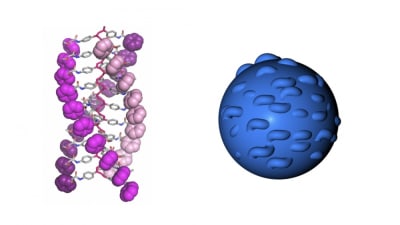
Scientists have taken a significant step toward the development of tailor-made chiral nanocarriers with controllable release properties. These nanocarriers, inspired by nature’s helical molecules like DNA and proteins, hold immense potential for targeted drug delivery and other biomedical applications. Read on to learn more.
Feature Image
Briefs: Medical
In 2015, the Food and Drug Administration approved the first 3D-printed drug, Spritam (levetiracetam), for epilepsy. Several other manufacturers and drug companies are develop.ing their own ones. But the widespread adoption of 3D drug printing will require stringent quality control measures to ensure that people get the right medication and dosage. Read on to learn more about the subject.
Feature Image
Briefs: Electronics & Computers
With the evolution of PCB materials to meet the stringent demands of medical device applications, the challenge lies in effectively removing contaminants without compromising the integrity of delicate components. Read on to learn more about the process.
Feature Image
Briefs: Robotics, Automation & Control
A new report from Clarivate Plc, London, UK, offers a predictive analysis of high-growth medical technology markets poised to generate over $1 billion in value or achieve double-digit growth within the next five years. The report, “Medical Technologies to Watch in 2024” underscores critical areas of significant investment. Read on to learn more.
Feature Image
Briefs: Medical
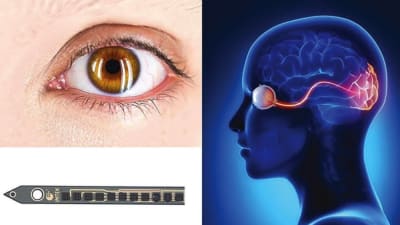
By sending electrical impulses via an implant to the visual cortex of the brain, an image can be created, and each electrode would represent one pixel.
Feature Image
Briefs: Nanotechnology
The proposed novel approach holds promise for enhancing the thermoelectric performance of CNT materials from yarns to films and bulk structures.
Feature Image
Briefs: Medical
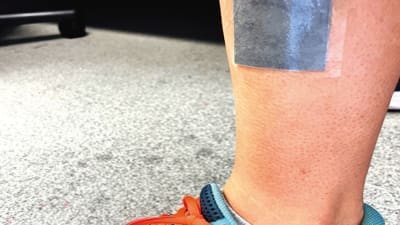
Engineers have developed a wearable ultrasound patch that can offer continuous, noninvasive monitoring of blood flow in the brain. The soft and stretchy patch can be comfortably worn on the temple to provide three-dimensional data on cerebral blood flow — a first in wearable technology.
Feature Image
Briefs: Materials
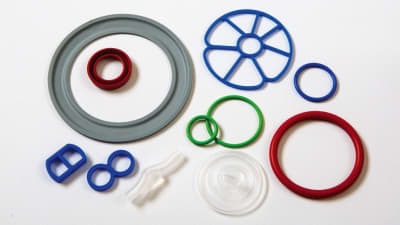
When specifying a high-performance material for a medical device application, temperature, chemical environment and compatibility, hardness, compression set resistance, and certification considerations quickly build stringent material requirements. Expert suppliers consult with OEMs to think creatively, support product development, and collaborate to find solutions that will deliver necessary results.
Feature Image
Briefs: Materials
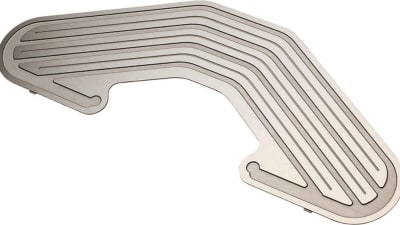
The PCE process efficiently manufactures precise metal parts for thermal management in micro electronic devices, ensuring high accuracy without stress or deformation. It handles diverse metals, creating tailored thermal solutions like heat sinks and TIMs for everything from smartphones to powerful computers.
Feature Image
Briefs: Medical
In a study published in Advanced Materials, researchers have demonstrated that an innovative nanovector (nanogel), which they developed, is able to deliver anti-inflammatory drugs in a targeted manner into glial cells actively involved in the evolution of spinal cord injury, a condition that leads to paraplegia or quadriplegia.
Feature Image
Briefs: Medical
In the coming years, companies will continue to evolve ultrasonic metal welding technologies to answer the needs of an ever-changing field of medical devices and the batteries that power them. Developing new assembly technologies will maximize the performance and precision of ultrasonic metal welding to satisfy the new design, size, and power requirements of advanced-performance medical devices.
Feature Image
Briefs: Materials
Researchers at the University of Illinois Urbana-Champaign and the University of Michigan Ann Arbor have developed a template material that carries almost no heat and therefore stops heat transfer between the template material itself and the solidifying eutectic material.
Feature Image
Briefs: Robotics, Automation & Control
Engineers from Korea and the United States have developed a wearable, stretchy patch that could help to bridge the divide between people and machines — and with benefits for the health of humans around the world.
Feature Image
Briefs: Wearables
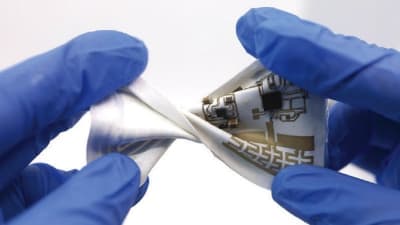
Researchers at the University of Missouri have made a significant breakthrough in their ongoing development of an on-skin wearable bioelectronic device. Zheng Yan’s lab recently added an important component to the team’s existing ultrasoft, breathable and stretchable material. The key feature: wireless charging — without batteries — through a magnetic connection.
Feature Image
Briefs: Robotics, Automation & Control
A team of Rice University researchers has developed an analytical model that can predict the curing time of platinum-catalyzed silicone elastomers as a function of temperature. The model could help reduce energy waste and improve throughput for elastomer-based components manufacturing.
Feature Image
Briefs: Medical
Taking a cue from the structural complexity of trees and bones, Washington State University engineers have created a way to 3D print two types of steel in the same circular layer using two welding machines. The resulting bimetallic material proved 33–42 percent stronger than either metal alone, thanks in part to pressure caused between the metals as they cool together.
Feature Image
Briefs: Manufacturing & Prototyping
A team of researchers from Tohoku University and Okinawa Institute of Science and Technology (OIST) has achieved significant advancement in the field of microfluidics, allowing for precise and efficient manipulation of fluids in three-dimensional microscale environments.
Feature Image
Briefs: Manufacturing & Prototyping
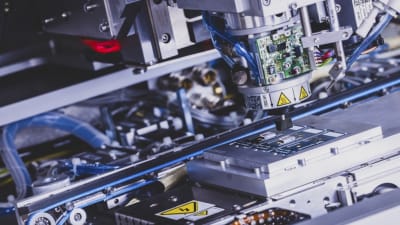
Their device, which is only a few centimeters in size, can be manufactured at scale in batches and then incorporated into a mass spectrometer using efficient, pick-and-place robotic assembly methods.
Feature Image
Briefs: Manufacturing & Prototyping
3D printed microscopic particles — so small that to the naked eye they look like dust — have applications in drug and vaccine delivery, microelectronics, microfluidics, and abrasives for intricate manufacturing. Researchers at Stanford University have introduced a more efficient processing technique that can print up to 1 million highly detailed and customizable microscale particles a day.
Feature Image
Briefs: Medical
This article highlights the steps designers should take when specifying their motor and motion system for use in surgical robot applications.
Feature Image
Briefs: Medical
September 2023 marked the 10-year anniversary of the day the FDA’s Unique Device Identification (UDI) requirement first took effect. In that time, UDI went from an idea to a framework to a law; its GUDID database now uniquely identifies and holds data on more than 4 million medical devices and is the foundation for thousands of daily lookups and transactions.
Feature Image
Briefs: Electronics & Computers
Part 1 of this article , which ran in March 2023, looked at the general structure, design variants, and system design of ultrasonic medical handpieces. Part 2 now reviews driver design, special applications, drive electronics, and failure mechanisms.
Feature Image
Briefs: Medical
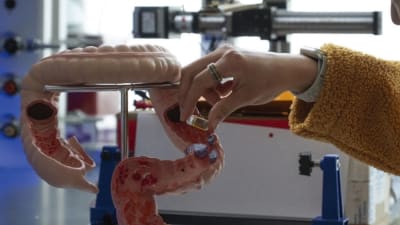
The new contact lenses contain microsensors that monitor changes in IOP over a period of several hours, sending the data collected wirelessly so it can be analyzed by an ophthalmologist and a diagnosis given.
Feature Image
Briefs: Wearables
University of North Carolina at Chapel Hill scientists created a new drug-delivery system, called the Spatiotemporal On-Demand Patch (SOP), which can receive commands wirelessly from a smartphone or computer to schedule and trigger the release of drugs from individual microneedles.
Feature Image
Briefs: Wearables
University of Washington researchers introduced the Thermal Earring, a wireless wearable that continuously monitors a user’s earlobe temperature. In a study of six users, the earring outperformed a smartwatch at sensing skin temperature during periods of rest.
Feature Image
Briefs: Design
Part 1 of this article looks at the general structure, design variants, and system design of ultrasonic medical handpieces. In a future issue, Part 2 will examine driver design, special applications, drive electronics, and failure mechanisms.
Feature Image
Briefs: Medical
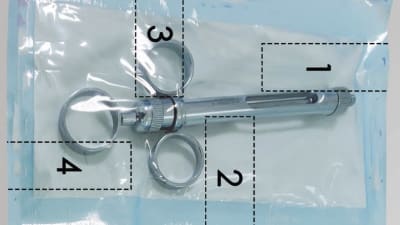
Some people do not go the dentist out of fear, thereby risking a worsening of untreated tooth damage. However, some dental practices offer patients a gentle alternative: The Wand – STA System from Milestone Scientific.
Feature Image
Briefs: Medical
Creating robots from flexible materials allows them to contort in unique ways, handle delicate objects, and explore places that other robots cannot. More rigid robots would be crushed by the deep ocean’s pressure or could damage sensitive tissues in the human body, for example.
Feature Image
Briefs: Robotics, Automation & Control
Researchers have used a soft, wearable robot to help a person living with Parkinson’s walk without freezing. The robotic garment, worn around the hips and thighs, gives a gentle push to the hips as the leg swings, helping the patient achieve a longer stride.
Feature Image

Ask the Expert

Eric Dietsch on the Benefits of Nitinol Wire
Feature Image

In collaboration with the Fort Wayne Metals Engineering team, Eric Dietsch focuses on supporting customers with material recommendations, product development, and education. Eric is available to help you and your company with any Nitinol-related questions or needs that you may have.

Inside Story

Inside Story: Trends in Packaging and Sterilization
Feature Image

Eurofins Medical Device Testing (MDT) provides a full scope of testing services. In this interview, Eurofins’ experts, Sunny Modi, PhD, Director of Package Testing; and Elizabeth Sydnor, Director of Microbiology; answer common questions on medical device packaging and sterilization.


Videos