Features

-1
90
30
R&D: Photonics/Optics
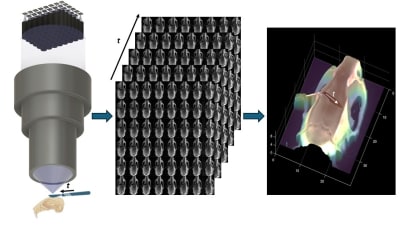
To meet the need for better 3D imaging that works during live surgery, researchers recently developed a new kind of surgical microscope called the Fourier light-field multiview stereoscope, known as FiLM-Scope. Read on to learn more.
Feature Image
R&D: Medical
Engineers have developed a smart capsule called PillTrek that can measure pH, temperature, and a variety of different biomarkers. It incorporates simple, inexpensive sensors into a miniature wireless electrochemical workstation that relies on low-power electronics. Read on to learn more.
Feature Image
R&D: Medical
A wearable wristband could significantly improve diabetes management by continuously tracking not only glucose but also other chemical and cardiovascular signals that influence disease progression and overall health. Read on to learn more.
Feature Image
R&D: Medical
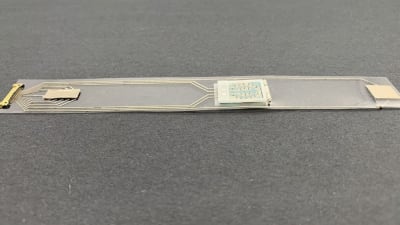
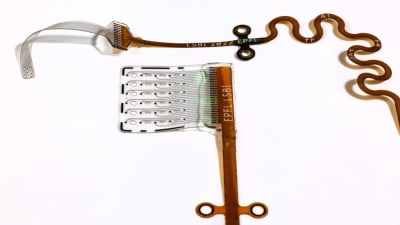
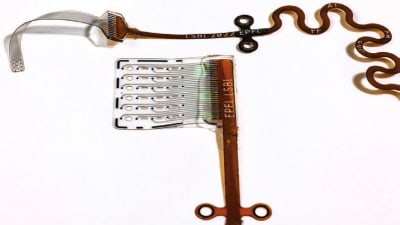
Researchers have developed a soft, thin-film auditory brainstem implant. The device uses micrometer-scale platinum electrodes embedded in silicone, forming a pliable array just a fraction of a millimeter thick. This novel approach enables better tissue contact, potentially preventing off-target nerve activation and reducing side effects. Read on to learn more.
Feature Image
R&D: Imaging
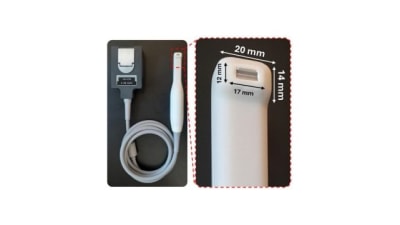
A toothbrush-shaped ultrasound transducer can provide a less invasive screening for gum disease. In proof-of-concept demonstrations on animal tissues, the device produced measurements similar to those of a manual probe. Read on to learn more.
Feature Image
R&D: Medical
Engineers have harnessed quantum physics to detect the presence of biomolecules without the need for an external light source, overcoming a significant obstacle to the use of optical biosensors in healthcare. Read on to learn more.
Feature Image
From the Editor: Medical
Australia is entering the global medical technology arena with a strategic investment package totaling $65.5 million, aimed at accelerating R&D, manufacturing, and commercialization. Backed by the Australian government, the move signals a deepening commitment to innovation-driven self-reliance — and opens the door to new global partnerships, including with U.S. medical device firms. Read on to learn what this means.
Feature Image
Global Innovations: Medical
A team from the GIGA (Cardiology Laboratory) and the CESAM (Centre de recherche sur les macromolécules – CERM) at the University of Liège has developed PHOx, a thermoplastic elastomer without isocyanate PU (NIPU), which is therefore less toxic to produce and much better tolerated by the human body. Read on to learn more.
Feature Image
Features: Tubing & Extrusion
With its unmatched precision and scalability, micromolding is reshaping what is possible in medical device manufacturing. From early prototyping to high-volume production, this technology empowers manufacturers to meet demanding requirements while accelerating innovation. Read on to learn more.
Feature Image
Features: AR/AI
The escalating costs and prevalence of cardiovascular disease demand innovative solutions that can enhance care quality while alleviating financial burden. AI-enabled ECG technology may offer a compelling and actionable response to these challenges. Read on to learn more.
Feature Image
Features: Design
Ablation therapies have become indispensable in modern medicine, and their influence will only grow as innovation drives less-invasive, more-effective solutions. The next wave of advancements is likely to emerge from the convergence of technologies, leveraging engineering, biology, and clinical insights to overcome current limitations. Read on to learn more.
Feature Image
Features: Design
At a time when many medtech firms are grappling with regulatory headwinds, pricing pressures, and geopolitical disruptions, Boston Scientific is focused, aligned, and thriving. Read on to learn about the company’s growth in electrophysiology, strength in LAAC, disciplined margin expansion, and much more.
Feature Image
Products: Regulations/Standards
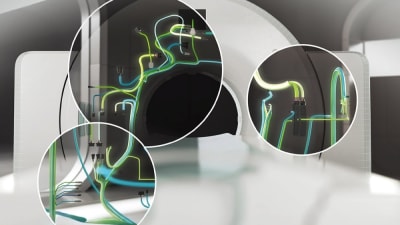
See the product of the month: SGS has received EPA approval as a recognized third-party certification body for testing and certification of magnetic resonance imaging (MRI) machines under the ENERGY STAR® label. The certification allows brands and manufacturers to demonstrate that a device uses less energy in ready to scan mode as well as via an automated power down to an energy saving low power state. Read on to learn more.
Feature Image
Products: Materials
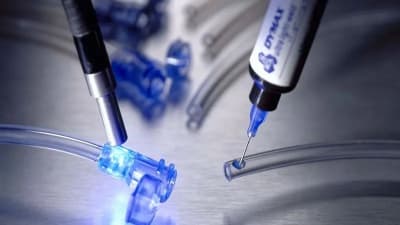
See the new products and services, including Dymax's expanded portfolio of TPO-free light-curable materials; Instron's advanced noncontacting video extensometer; Würth Elektronik's extended RGB LED product series; Arnold Magnetic Technologies' line of high-energy flexible magnets; and more.
Feature Image
Products: Mechanical & Fluid Systems
See where the product focus is this month: On connectors, wires, and cables, including a range of panel-mount connectors from binder; Colder Products Company's smallest aseptic connector available; LEMO's new push-pull connector series; and more.
Feature Image
R&D: Design
A paper-based diagnostic device can detect COVID-19 and other infectious diseases in under 10 minutes, without the need for sophisticated lab equipment or trained personnel. Read on to learn more about it.
Feature Image
R&D: Medical
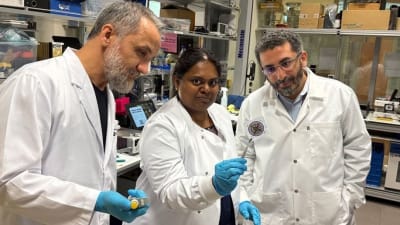
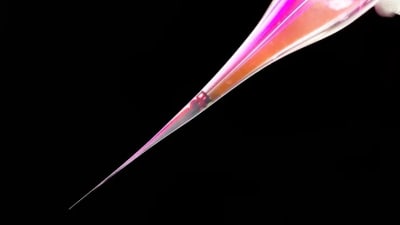
Researchers have developed a new type of pipette that can deliver ions to individual neurons without affecting the sensitive extracellular milieu. Controlling the concentration of different ions can provide important insights into how individual brain cells are affected and how cells work together. Read on to learn more.
Feature Image
R&D: Medical
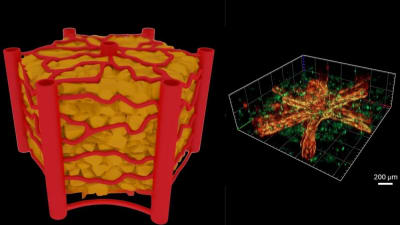
Mini organs are incomplete without blood vessels. To facilitate systematic studies and ensure meaningful comparisons with living organisms, a network of perfusable blood vessels and capillaries must be created — in a way that is precisely controllable and reproducible. A team has established a method using ultrashort laser pulses to create tiny blood vessels in a rapid and reproducible manner. Read on to learn more about it.
Feature Image
R&D: Wearables
A long-lasting, 3D-printed, adhesive-free wearable provides a more comprehensive picture of a user’s physiological state. The device, which measures water vapor and skin emissions of gases, continuously tracks and logs physiological data associated with dehydration, metabolic shifts, and stress levels. Read on to learn more.
Feature Image
R&D: AR/AI
A research team has developed DeepNeo, an AI-powered algorithm that automates the process of analyzing coronary stents after implantation. The tool matches medical expert accuracy while significantly reducing assessment time. Read on to learn more.
Feature Image
R&D: Wearables
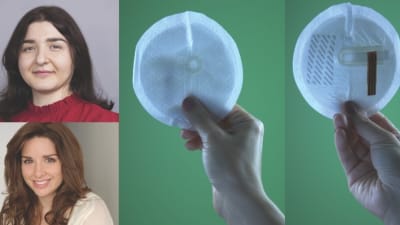
Engineers have developed a smart lactation pad that can quantify a wide range of chemicals in breast milk in real time. Read on to learn more.
Feature Image
From the Editor: Medical
Tariff uncertainty adds another layer of complexity to an already fragmented global regulatory environment. With PFA currently approved in only a handful of markets, the U.S. remains critical to commercial viability. Read on to learn more about what Sherrie Trigg, Editor and Director of Medical Content, has to say about the matter.
Feature Image
Global Innovations: Medical
A team at EPFL’s Laboratory for Soft Bioelectronic Interfaces has developed a soft, thin-film auditory brainstem implant. The device uses micron-scale platinum electrodes embedded in silicone, forming a pliable array just a fraction of a millimeter thick. Read on to learn more.
Feature Image
Features: Connectivity
The lack of compatibility between high electrical and highly dynamic requirements in cable design is not solved but taken to a new level with medical megatrends such as AI, robotics, and miniaturization together with indispensable sustainability and safety demands. Read on to learn more.
Feature Image
Features: Manufacturing & Prototyping
This article explores how the film cast process manufactures micro tubing products from liquid polymer coatings, then defines three important test methods and specifications that are needed to optimize film cast PTFE’s quality and material strength properties. Read on to learn more.
Feature Image
Features: Medical
The global medical device manufacturing industry is undergoing a rapid transformation driven by technological innovation, automation, and increasing demands for customized, high-quality care. This article provides an overview of key technological advancements reshaping the medical device manufacturing landscape, including additive manufacturing, robotics, laser welding, and more.
Feature Image
Features: Manufacturing & Prototyping
Medical device contract manufacturing is poised for robust and sustained growth, with the global market projected to surpass $150 billion by 2030. This expansion is being driven by technological innovations, shifting healthcare demands, and increasing reliance on outsourcing to improve efficiency and cost-effectiveness. Read on to learn more.
Feature Image
Features: Robotics, Automation & Control
As regulatory demands intensify and product complexity grows, automation and robotics provide medtech engineers with a powerful set of tools. From high-speed motion control to cleanroom-certified cobots and predictive maintenance, the technologies now available can transform the entire device manufacturing life cycle. Read on to learn more.
Feature Image
Features: Regulations/Standards
The regulatory and testing landscape for medical devices is shifting in real time. Standards are being revised. Read on to learn what this means.
Feature Image

Ask the Expert

Dan Sanchez on How to Improve Extruded Components

Feature Image

Improving extruded components requires careful attention to a number of factors, including dimensional tolerance, material selection, and processing. Trelleborg’s Dan Sanchez provides detailed insights into each of these considerations to help you advance your device innovations while reducing costs and speeding time to market.

Inside Story

Inside Story: Trends in Packaging and Sterilization

Feature Image

Eurofins Medical Device Testing (MDT) provides a full scope of testing services. In this interview, Eurofins’ experts, Sunny Modi, PhD, Director of Package Testing; and Elizabeth Sydnor, Director of Microbiology; answer common questions on medical device packaging and sterilization.


Videos