
Features

-1
0
30
Features: Design
This article explores the essential ingredients of pharmaceutical success, from research and design to development, production and ultimately, the patient. Read on to learn more.
Feature Image
Features: Medical
Success in 2026 will favor organizations that address these shifts directly: designing for interoperability, validating at the individual level, building security to keep pace with threats, and engineering for real-world clinical use. The innovations that define this year will not only improve device capabilities but reshape how healthcare itself is delivered. Read on to learn more.
Feature Image
Features: Manufacturing & Prototyping
Returning to Anaheim this February, MD&M West 2026 brings the global medical device community together for three days of engineering insight, manufacturing expertise, and technology breakthroughs. As one of the largest gatherings of medtech professionals in North America, the event showcases the full spectrum of product development. Read on to learn all about it.
Feature Image
Features: Medical
When Thierry Piéton stepped into the role of executive vice president and chief financial officer of Medtronic earlier this year, he entered one of the largest and most complex organizations in the medical technology industry. Read on to go inside the OEM.
Feature Image
Products: Motion Control
See where the product focus is this month: On Moticont's miniature linear servo motor; PI's expanded PICMA encapsulated piezo stack actuator series; Teknic's precision planetary gearboxes for stepper and servo motor applications; and more.
Feature Image
Products: Medical
See the product of the month: COMSOL's version 6.4 of its COMSOL Multiphysics simulation platform with expanded NVIDIA GPU acceleration for large, coupled models.
Feature Image
Products: Regulations/Standards
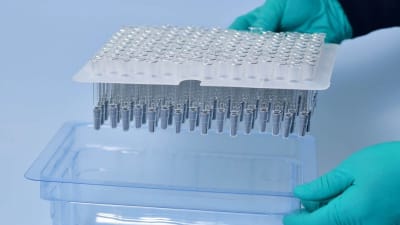
See the new products and services, including Syensqo's medical-grade polyphthalamide; non-PFAS low-retention additives for pipette tips from Avient; Binder's expanded M8 connector portfolio; fiber laser marking systems for UDI and traceability codes from FOBA; and more.
Feature Image
R&D: Wearables
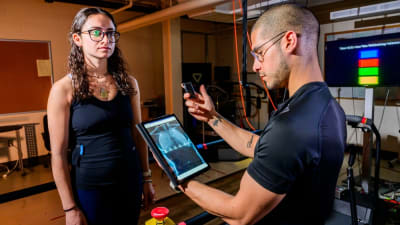
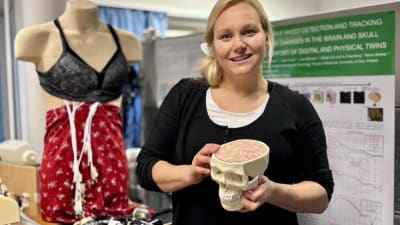
Researchers are exploring new ways to utilize microwave technology in monitoring and assessing health conditions. The results of experiments conducted with realistic models are promising. Bras that detect breast cancer, leg sleeves that identify blood clots, and a helmet that monitors the effects of radiation therapy offer a glimpse into what future healthcare might look like. Read on to learn more.
Feature Image
R&D: Medical
Researchers combined mussel adhesive protein with decellularized extracellular matrix (dECM) to develop a composite hemostatic sponge that offers both strong tissue adhesion and biocompatible biodegradability. Read on to learn more.
Feature Image
R&D: Manufacturing & Prototyping
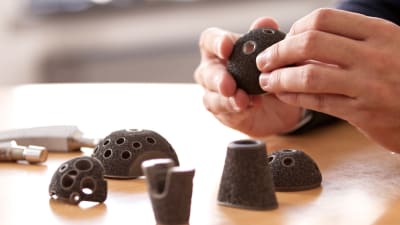
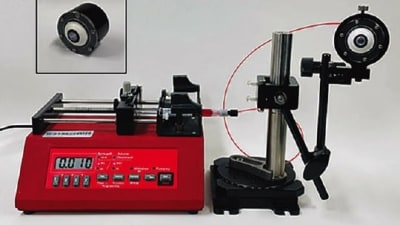
Researchers have pioneered a 3D printing method that grows metals and ceramics inside a water-based gel, resulting in exceptionally dense, yet intricate constructions for next-generation biomedical technologies. Read on to learn more about it.
Feature Image
R&D: Sensors/Data Acquisition
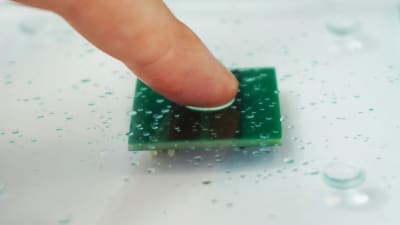
A low-cost, portable biosensor can quickly identify a protein whose altered levels are associated with psychiatric disorders, such as depression, schizophrenia, and bipolar disorder. When it becomes commercially available in the future, it may contribute to early detection, which is essential for treating and monitoring patients’ clinical conditions. Read on to learn more.
Feature Image
R&D: Medical
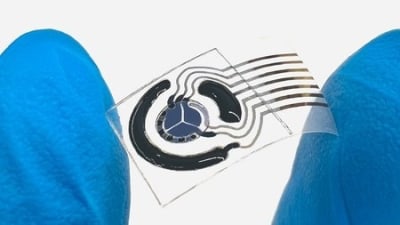
A team of scientists has developed a soft polymer hydrogel that can conduct electricity as well as metal can. Read on to learn more.
Feature Image
R&D: Wearables
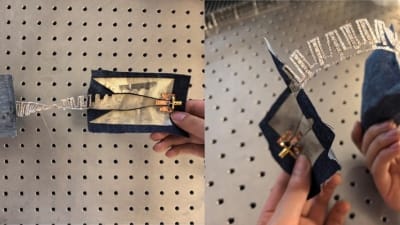
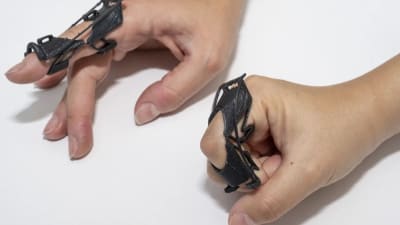
Engineers have developed a next-generation wearable system that enables people to control machines using everyday gestures — even while running, riding in a car, or floating on turbulent ocean waves. Read on to learn more about it.
Feature Image
From the Editor: Medical
"If regulators are accelerating their digital transformation, the medtech community must be ready to meet them there." Read more about Editor and Director of Medical Content Sherrie Trigg's opinion in From the Editor.
Feature Image
Global Innovations: Design
EPFL researchers have invented a remarkably small and ultraflexible neurovascular microcatheter. Powered by blood flow, it can safely navigate the most intricately branched arteries in a matter of seconds. Read on to learn more about it.
Feature Image
Features: Medical
The design of electronic drug-delivery pens requires precise control, compact form factors, and exceptionally low power consumption — requirements that can only be met by thoughtful component selection and close collaboration with experienced suppliers. Read on to learn more.
Feature Image
Features: Medical
For medical-device original equipment manufacturers (OEMs), the intravenous (IV) disposables market continues to present a fast-expanding frontier — driven by clinical necessity, the increasing burden of chronic disease, heightened infection-control awareness and new care-delivery models. Read on to learn more.
Feature Image
Features: Tubing & Extrusion
Minimally invasive and interventional platforms increasingly demand smaller profiles, tighter tolerances, and components that maintain performance under thermal, chemical, and mechanical stress. Polyimide (PI) has emerged as a workhorse within these parameters. Read on to learn why.
Feature Image
Features: Manufacturing & Prototyping
In this Q&A, Brian Semcer, president of MICRO, talks to Medical Design Briefs about how the next generation of contract manufacturers is redefining agility, quality, and partnership in the medical device ecosystem. Read now!
Feature Image
Features: Medical
There are two main product ranges: Surface-active therapeutics and surface-active materials. Read on to learn more about them.
Feature Image
Features: Medical
Toll processing (or toll manufacturing) involves a manufacturer processing customer-supplied materials or parts for a predetermined fee. The customer retains ownership of the materials, while the toll provider applies specialized technologies, equipment, and expertise to deliver the finished components. Read on to learn more about it.
Feature Image
Features: Tubing & Extrusion
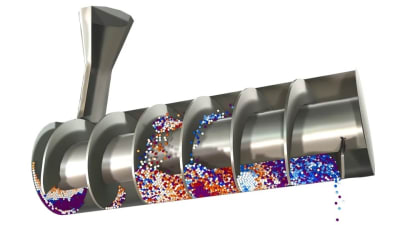
The development of the grinding machine was a complex task, requiring ample hours and engineering trials to complete. Read on to learn more about it and what it can do.
Feature Image
Features: Design
In today’s medical equipment market, reliability is not a luxury — it is a necessity. Every adjustment, every movement, and every interaction with the equipment must be performed flawlessly to ensure patient safety, caregiver efficiency, and long-term service life. Behind this design and precision are highly engineered motion control components. Read on to learn more.
Feature Image
Features: Medical
In this Q&A, Audrey Turley, director of lab operations – biosafety at Nelson Laboratories, spoke with Medical Design Briefs about the critical importance of monitoring and managing material changes in medical devices. Read on!
Feature Image
From the Editor: Medical
As the medtech ecosystem braces for another year of rapid transformation, the need for clarity, adaptability, and technical depth has never been greater. The Winter 2025 Medical Design Briefs Resource Guide continues our mission to provide expert-driven insights into the components, materials, and manufacturing strategies shaping next-generation devices. Read on to hear more from Sherrie Trigg, Editor and Director of Medical Content.
Feature Image
Products: Medical
Throughout the year, the editors of Medical Design Briefs choose a Product of the Month that has exceptional technical merit and practical value for MDB’s design engineering readers.
Feature Image
Features: Medical
To better understand both the historical ebb and flow of electronics availability and the outlook for the years ahead, Medical Design Briefs spoke with Ross Valentine, Anal Dharamshi, and Srinivasan Kandaswamy, experts in supply chain and design engineering at Arrow Electronics and its subsidiary eInfochips. Read on for insights that highlight strategies medical OEMs can adopt to balance cost, resilience, and innovation in an increasingly complex supply environment.
Feature Image
Features: Medical
Researchers at Johns Hopkins University recently demonstrated the Smart Tissue Autonomous Robot (STAR), completing eight consecutive gallbladder removal procedures on ex vivo tissue without human intervention. Medical Design Briefs spoke with Axel Krieger, PhD, associate professor of mechanical engineering at Johns Hopkins and senior author of the study, about the system’s architecture, safeguards, and future applications.
Feature Image
Features: Wearables
On-body biosensors have crossed the threshold from technological novelty to clinical tool driving medical decisions. The most successful devices share common traits: They provide clinically actionable information, reliably measure rapidly changing biomarkers, account for confounding variables, and utilize established reimbursement pathways. Read on to learn more about them.
Feature Image

Ask the Expert

John Chandler on Achieving Quality Motion Control
Feature Image

FAULHABER MICROMO brings together the highest quality motion technologies and value-added services, together with global engineering, sourcing, and manufacturing, to deliver top quality micro motion solutions. With 34 years’ experience, John Chandler injects a key engineering perspective into all new projects and enjoys working closely with OEM customers to bring exciting new technologies to market.

Inside Story

Inside Story: Trends in Packaging and Sterilization

Feature Image

Eurofins Medical Device Testing (MDT) provides a full scope of testing services. In this interview, Eurofins’ experts, Sunny Modi, PhD, Director of Package Testing; and Elizabeth Sydnor, Director of Microbiology; answer common questions on medical device packaging and sterilization.

Videos