
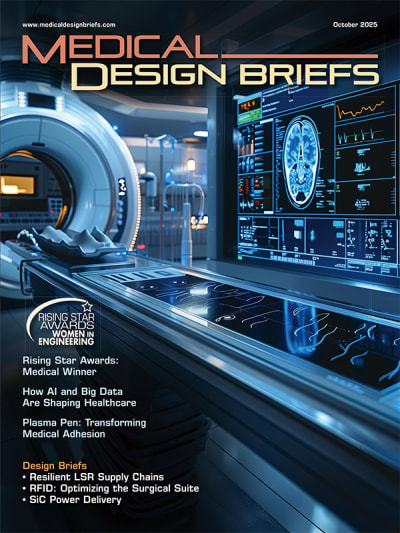
Inside this issue
Overview
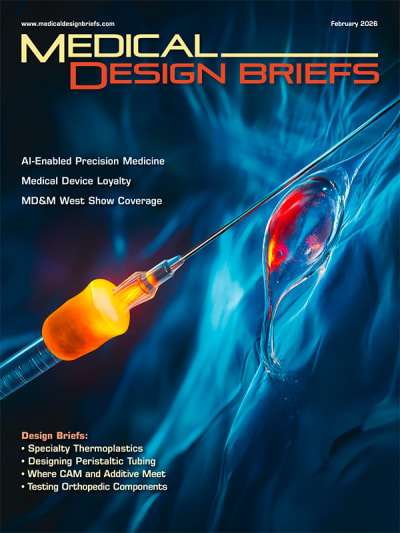
The October 2025 issue of Medical Design Briefs presents a range of innovative advancements in medical technology, focusing on various applications from cardiac repair to wireless charging for implantable devices. This issue highlights the intersection of engineering and medicine, showcasing how interdisciplinary research is paving the way for new solutions to complex health challenges.
One of the key features of this issue is the development of a novel three-dimensional heart patch by an interdisciplinary team from ETH Zurich and the University Hospital of Zurich. Led by Profs. Robert Katzschmann and Omer Dzemali, this heart patch is designed for intraventricular implantation and aims to address the critical issue of heart damage following a heart attack. The patch utilizes bovine pericardial material, known for its stability and permeability, to repair heart defects effectively. This advancement is particularly significant as it offers a new approach to surgical intervention in severe cases where the heart wall may rupture.
In the realm of medical devices, the issue also discusses the latest in fluid handling technology, specifically coiled guidewires for medical catheters. Amada Weld Tech has introduced a 13-axis CNC dual-point coiling machine that allows for the high-speed processing of ultra-fine wire coils. This technology enhances the precision and efficiency of guidewire formation, which is crucial for various medical applications. The integration of advanced welding options, such as arc and laser welding, further improves the manufacturing process, making it more adaptable to the needs of medical device production.
Another significant topic covered is the challenge of antibiotic resistance, a growing concern in healthcare. Dr. Viney Ghai from Chalmers University discusses innovative approaches to combat bacterial infections without relying on traditional antibiotics. The use of graphene and magnet-inspired technologies presents a promising avenue for developing new treatments that could mitigate the risks associated with antibiotic resistance, hinting at a future where alternative therapies could play a crucial role in infection control.
The issue also features groundbreaking research on ultrasound-based wireless charging technology for implantable medical devices. A team led by Prof. Jinho Chang from DGIST in South Korea has developed a system capable of fully charging a commercial battery within two hours, even while inside the human body. This technology addresses a significant limitation in the longevity of implantable devices, such as pacemakers and neural stimulators, which often require surgical battery replacements. By enabling wireless energy transmission, this innovation could reduce the need for repeated surgeries, thereby improving patient outcomes and convenience.
Additionally, the magazine explores the use of microfluidic devices in gene therapy. These devices, which are designed to deliver gene therapy in innovative ways, represent a significant advancement in the field of personalized medicine. The adaptation of chip-making technology to create micro- and nanoscale devices allows for more precise interactions with living systems, potentially revolutionizing how gene therapies are administered and monitored.
The issue also touches on the importance of high switching frequencies in electronic design, which allow for the replacement of large capacitors with smaller, more cost-effective devices. This advancement contributes to the development of compact and lightweight medical devices, enhancing their usability and efficiency in clinical settings.
In summary, the October 2025 issue of Medical Design Briefs encapsulates the dynamic landscape of medical technology, highlighting significant advancements that address critical healthcare challenges. From innovative heart repair solutions and efficient manufacturing processes for medical devices to groundbreaking approaches in wireless charging and antibiotic resistance, this issue underscores the importance of interdisciplinary collaboration in driving medical innovation. As researchers and engineers continue to push the boundaries of what is possible, the future of healthcare looks promising, with new technologies poised to improve patient care and outcomes across various medical fields.
Features
-
Articles
11 The Power of the Plasma Pen
16 Shaping the Future: Honoring the Next Generation of Women Leaders in Medtech - Debbie Teodorescu
-
R & D
35 Paper-Based Devices Diagnose Malaria in Asymptomatic People
35 LED-Based Imaging System Could Transform Cancer Detection
35 Smart Wound Monitor Poised to Improve Chronic Infection Care
35 Conductive Polymer Improves Sensor-Based Devices
36 Bioimaging Device Holds Promise for Eye, Heart Conditions
-
Global Innovations
-
From the Editor
2 From the Editor: Rebuilding Trust in Medical Devices
4 Medical Devices Are Booming — But Can the Supply Chain Keep Up?
Tech Briefs
-
37 Designing Resilient LSR Supply Chains Through Vertical Integration
39 No More Lost Sponges: RFID to Optimize Surgical Suite Efficiency and Safety
42 SiC Power Delivery for ‘Big Iron’ Medical Devices
44 3D Printed Implant Helps Repair Spinal Cord Injuries
45 At-Home Melanoma Testing with Skin Patch Test
47 Researchers Develop Ultrasound-Based Wireless Charging Technology for Implantable Medical Devices
48 Wearable Sensor Could Help Patients with Bipolar Disorder Track Medication Levels Through Sweat