Through universal models of self-evaluation and data analysis, the LSS methodology has proven to be an excellent tool in fostering major improvements within a business. In the medical device industry, it is particularly important that manufacturers maintain a mindset of continuous improvement and are willing to collaborate in the pursuit of common goals. Read on to learn more about it.
The medical industry demands precision, biocompatibility, and reliability — all of which are fundamental strengths of PCE. As manufacturers continue to innovate, PCE will remain at the forefront of high-precision medical manufacturing, ensuring that medical devices perform at the highest level to improve patient outcomes worldwide. Read on to learn more.
The promise of additive manufacturing (AM) in the medical device industry has always been clear, the ability to create intricate geometries, patient-specific implants, and previously impossible structures. The reality, however, is far less inspiring. Read on to learn more.
Contract manufacturing partners play a vital role in the medical device supply chain. Their capability to meet precise design specifications is essential. When they consistently deliver high-quality results on schedule and within budget, they provide substantial value, helping manufacturers reduce risk, accelerate time to market, and maintain regulatory compliance. Read on to learn more.
Successful post-production cleaning in medical device manufacturing requires a comprehensive approach that addresses multiple challenges simultaneously. Read on to learn more about it.
See the videos of the month, including one on 3D printing complex, more durable robots from a variety of high-quality materials in one go; one on a fully digital design-to-manufacturing process that has the potential to revolutionize lower limb socket production; one on commercial and open-source electronic circuit boards that can be embedded into soft robots; and one on scalable methods of developing battery- and solar-powered fibers, making it theoretically possible for electrical energy to be harvested from, and stored in the clothing.
The life sciences industry is at a pivotal moment, where groundbreaking technologies are redefining how therapeutics and medical devices are discovered, developed, and manufactured. From AI to additive manufacturing, these advancements are accelerating time-to-market, improving efficiency, and enabling more personalized solutions for patients. Read on to learn Editor and Director of Medical Content Sherrie Trigg's thoughts on the matter.
As an industry, AM is experiencing advancements at a rapid pace. Innovation is enabling enhanced capabilities across the entire workflow from software and materials through 3D printing technologies. Additionally, we see 3D printers with much smaller footprints enabling the technology to be used in smaller spaces such as hospitals, ambulatory surgery centers, and dental laboratories and clinics. Read on to learn more.
As the integration of connected medical devices into healthcare systems continues to expand, ensuring the security of these devices has become a critical priority. This 60-minute webinar from the...
While early haptic devices focused on single-sensory cues like vibration-based notifications, modern advancements have paved the way for multisensory haptic devices that...
In the highly regulated medical device industry, success relies on precision, compliance, and efficiency. Manufacturers need more than basic production control – it’s...
In a dramatic shift that could reshape the medical device industry, the U.S. government’s sweeping tariff hikes — particularly a 125 percent levy on Chinese goods — have...
Researchers have created a groundbreaking prototype for a new kind of leadless pacemaker designed for both children and adults. The innovative micropacemaker would be the first fully...
Johns Hopkins University engineers have developed a pioneering prosthetic hand that can grip plush toys, water bottles, and other everyday objects like a human, carefully conforming and adjusting its grasp to avoid damaging or mishandling whatever it holds.
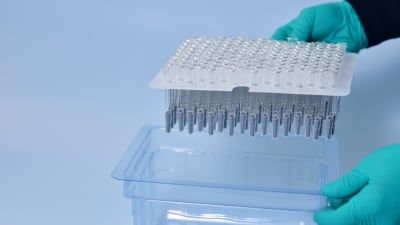
See the product of the month: Plastic Ingenuity's validated thermoformed ready-to-use pharma tubs. The tubs are comparable to traditional injection molded tubs; however, they offer rapid development, a lower cost of entry, and material reductions.
GE Healthcare has undergone a marked transformation in recent years, positioning itself further as a leader in medical technology imaging. This article explores the company’s innovation strategies, margin improvements, and market insights while also addressing key challenges over the past year and looking at future opportunities for the company.
See the videos of the month, including one on monitoring brain blood flow with a wearable ultrasound patch; one on the Air Curtain, an invisible mask to kill viruses and block nearly all aerosols; one on helping amputees walk normally; and one on building a bionic eye using ‘bioinspiration.'
Becton Dickinson’s (BD) decision to separate its biosciences and diagnostic solutions businesses is sending ripples through the in-vitro diagnostic (IVD) sector. BD says the separation was the result of a comprehensive business portfolio evaluation launched in early 2024. Read on to learn more.
Zwitterions sound likes a distant cousin of Twitter (X), but in fact they are a common macromolecule found in human cells. Scientists at the University of Sydney are also now using zwitterions to create materials that could stop blood clots from forming in medical devices and implants. Read on to learn more.
See the new products and services, including precision metering pumps from Circor International; a high-performance gantry robot with an integrated slip roller conveyor system from Dispense Works; XP Power's range of compact, low-profile AC-DC power supplies with flexible cooling options; Festo's updated mass flow controller; and much more.
Technologies from NASA, federal labs, and universities have found commercial applications in the medical industry. Read on, as this article highlights some of those spin-off innovations.
The field of microfluidics is a key technology for the medicine of the future. Having already revolutionized the world of laboratory medicine by enabling samples to be analyzed much faster, it also plays a major role in the development of new drugs. Read on to learn about Parallel Fluidics, which specializes in rapid manufacturing of microfluidics prototypes for the life sciences sector.
Georgia Tech researchers have created a 3D-printed heart valve made of bioresorbable materials and designed to fit an individual patient’s unique anatomy. Once implanted, the valves will be absorbed by the body and replaced by new tissue that will perform the function that the device once served. Read on to learn more.
Understanding power system components and how to connect them correctly is critical to meeting regulatory requirements and designing successful electrical products for worldwide markets. Interpower’s Ralph Bright defines these requirements and explains how to know which cord to select for your application.
Inside Story: Trends in Packaging and Sterilization
Eurofins Medical Device Testing (MDT) provides a full scope of testing services. In this interview, Eurofins’ experts, Sunny Modi, PhD, Director of Package Testing; and Elizabeth Sydnor, Director of Microbiology; answer common questions on medical device packaging and sterilization.




















 INSIDER: Medical
 INSIDER: Sensors/Data Acquisition
 Features: Electronics & Computers
 Podcasts: Design
 INSIDER: Wearables
 Podcasts: Medical

 Podcasts: Medical
 On-Demand Webinars: Manufacturing & Prototyping
 Podcasts: AR/AI
 Podcasts: Materials