July 2016

Stories

0
0
0
Briefs: Medical
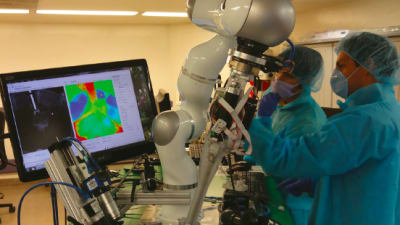
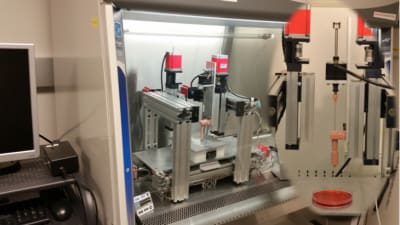
Children’s National Health System, Washington, DC Surgeons and scientists at the Children’s National Health System’s Sheikh Zayed Institute for Pediatric Surgical Innovation have...
Feature Image
Briefs: Medical
Los Alamos National Laboratory, Los Alamos, NM What if there were a way to test how lungs react to toxins without actually putting a subject at risk? That’s what scientists at Los Alamos National Laboratory...
Feature Image
Briefs: Medical
Chemical engineers at Stanford University discovered that a new elastomer synthesized there had too much elasticity for the testing equipment the lab possessed. In fact, the clamping machine typically...
Feature Image
Briefs: Wearables
“Preterm labor is related to high morbidity, high mortality, and significant cost,” said Rubin Pillay, MD, PhD, assistant dean for global health innovation at the UAB School of Medicine. “If we can...
Feature Image
Briefs: Medical
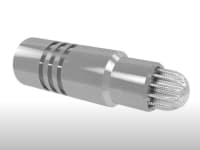
Titanium found its initial use in aircraft because it is strong but light. Today, it’s found everywhere, from eyeglass frames and jewelry to sports gear, tools, surgical and dental implants, and...
Feature Image
From the Editor: Design
Good News/Sad News
For much of our recent Editorial & Sales Meeting, we discussed trends that we are seeing in the marketplace, in the news, and in discussion with contributors to evaluate coverage for this year and to help sharpen our editorial focus for next year. Manufacturing will continue to see greater coverage as we increase the...
Features: Medical
Implementation of IEC 60601-1-2, 4th edition is on the horizon. This collateral standard to the IEC 60601-1 medical safety standard specifies the electromagnetic compatibility (EMC) requirements for medical...
Feature Image
Features: Medical
When science and nature combine in just the right amounts, the results can be astounding. Take transdermal drug delivery, which is expected to grow substantially in...
Feature Image
Technology Leaders: Robotics, Automation & Control
For a long time, the ability of robots to interact with humans in our daily lives was more myth than reality— and the idea of robotics performing exceptionally complex tasks such as...
Feature Image
Technology Leaders: Medical
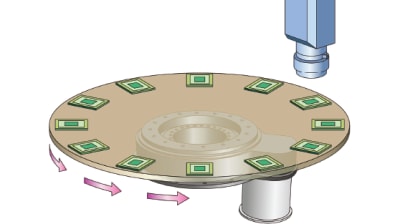
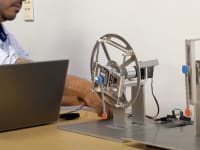
The ability to provide accurate rotary motion is critical in a wide range of applications in the automation equipment, medical device, machine tool, energy, welding, robotics,...
Feature Image
Applications: Medical
Ablation, or the use of high-frequency electromagnetic (EM) energy to destroy soft-tissue tumors, has been in existence for a few decades, but in recent years its underlying technology has...
Feature Image
Applications: Medical
In many instances, thermoforming of heavy-gauge plastics (thicknesses of 1.5 mm/.060 in. or greater) is the technology of choice for manufacturers and...
Feature Image
Products: Medical
Stratasys Ltd., Minneapolis, MN, introduces an industry first with its new 3D printer, the J750. This solution enables customers for the first time to mix and match full color gradients alongside an unprecedented range of...
Feature Image
Global Innovations: Robotics, Automation & Control
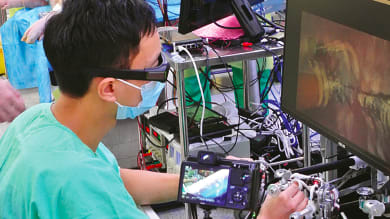
Hong Kong Polytechnic University, Hong Kong, China www.polyu.edu.hk A team of engineers from Hong Kong Polytechnic University and the University of Hong Kong (HKU) have collaborated on an...
Feature Image
Features: Medical
Consider for a moment the modern automobile. A car’s computer can pinpoint for a mechanic exactly what’s going wrong, and provide a thorough history of how things have been working (or not) in...
Feature Image
R&D: Medical
Liquid-Metal Particles Support Heat-Free Soldering
Iowa State engineers have developed micro-sized liquid-metal particles for heat-free soldering and metal processing applications.
R&D: Software
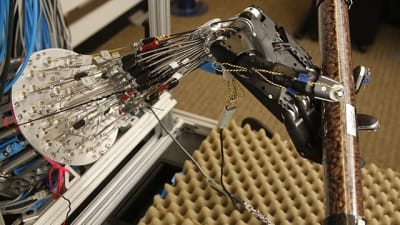
Intricate tasks that require dexterous in-hand manipulation — rolling, pivoting, bending, and sensing friction — are a challenge for today's robots. A University of Washington team of computer scientists and...
Feature Image
R&D: Wearables
Dissolvable Electronics Hold Promise for Brain Monitoring
Dissolvable silicon electronics offer an unprecedented opportunity to implant advanced monitoring systems, according to researchers from the Perelman School of Medicine at the University of Pennsylvania. Implantable brain devices that literally melt away at a pre-determined rate, for...
R&D: Medical
Researchers Blend Materials to 3D-Print Bone Replacements
By blending pulverized natural bone with man-made plastic, researchers at The Johns Hopkins University 3D-printed replacement skeletal structures of the head and face, including the lower jaw of a female patient. The team's composite material combines the strength and printability of plastic...
R&D: Medical
Ingestible Origami Robot Unfolds from Capsule
Researchers at The Massachusetts Institute of Technology (MIT), the University of Sheffield, and the Tokyo Institute of Technology have demonstrated a tiny origami robot that unfolds itself from a swallowed capsule. Steered by external magnetic fields, the bot can crawl across the stomach wall to remove...
R&D: Medical
Engineers Fabricate Flexible Silicon Transistor
University of Wisconsin—Madison engineers fabricated a transistor that operates at a record 38 gigahertz. The team built the high-performance device using huge rolls of flexible plastic.
Features: Test & Measurement
Often, the last thing first-time and even serial entrepreneurs think about is how the result of their...
Feature Image
INSIDER: Imaging
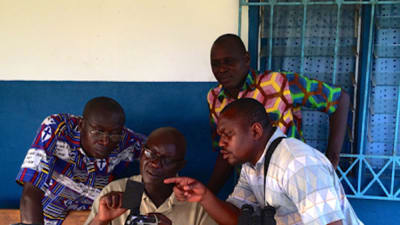
Handheld, mobile phone-based microscopes can be used in developing countries after minimal training of community laboratory technicians to diagnose intestinal parasites quickly and...
Feature Image
INSIDER: Manufacturing & Prototyping
Strands of cow cartilage substitute for ink in a 3D bioprinting process that may one day create cartilage patches for worn out joints. A cartilage strand substitutes for ink in a 3D...
Feature Image
INSIDER: Medical
Scientists from Tomsk Polytechnic University are developing a robotic arm prototype and its control algorithm using myoelectric signals. The mechanical limb will independently recognize the...
Feature Image
INSIDER: Photonics/Optics
Researchers from UNC-Chapel Hill and NC State University developed a new technology that will allow neuroscientists to capture images of the brain almost 10 times larger than previously possible –...
Feature Image
INSIDER: Software
Eye-Tracking System Uses Ordinary Cellphone Camera
Researchers at MIT and the University of Georgia developed software that can turn any smartphone into an eye-tracking device. The eye tracker uses machine learning, a technique in which computers learn to perform tasks by looking for patterns in large sets of training examples. The training set...
INSIDER: Medical
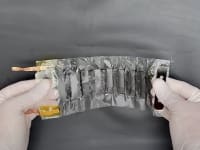
A research team led by investigators at Beth Israel Deaconess Medical Center (BIDMC) and Seoul National University has developed a new electric mesh device that can be wrapped...
Feature Image
R&D: Medical
Smartphones Help Improve Stroke Rehabilitation
Stroke patients must typically undergo arduous and repetitive rehabilitation to relearn the basic skills they lose. A team of students from the NYU Tandon School of Engineering, Brooklyn, NY, is using smartphones to improve the process.

Ask the Expert

Dan Sanchez on How to Improve Extruded Components
Feature Image

Improving extruded components requires careful attention to a number of factors, including dimensional tolerance, material selection, and processing. Trelleborg’s Dan Sanchez provides detailed insights into each of these considerations to help you advance your device innovations while reducing costs and speeding time to market.

Inside Story

Inside Story: Trends in Packaging and Sterilization
Feature Image

Eurofins Medical Device Testing (MDT) provides a full scope of testing services. In this interview, Eurofins’ experts, Sunny Modi, PhD, Director of Package Testing; and Elizabeth Sydnor, Director of Microbiology; answer common questions on medical device packaging and sterilization.


Videos