INSIDER: Sensors/Data Acquisition
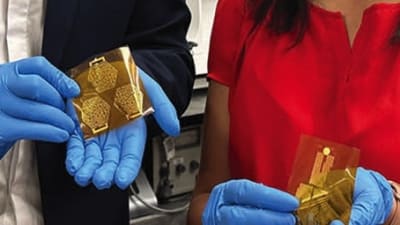
Using a simple concept and a patented sensor that detects radioactive materials, a team has developed a patch to stop damage to healthy tissue during proton radiotherapy, one of the best...
INSIDER: Sensors/Data Acquisition
A tiny device could be used to improve the safety and effectiveness of cell therapy treatments for patients suffering from spinal cord injuries.
Global Innovations: Wearables
A team led by RMIT University has made a wearable ECG device that could be used to prevent heart attacks for people with cardiovascular disease, including in remote healthcare and ambulatory care settings.
Products: Medical
See what the product focus is on this month. Hint: It's sensors.
Briefs: Wearables
Researchers have used a soft, wearable robot to help a person living with Parkinson’s walk without freezing. The robotic garment, worn around the hips and thighs, gives a gentle push to the hips as the leg swings, helping the patient achieve a longer stride.
R&D: Wearables
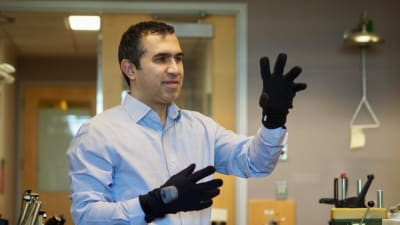
A new washable wireless smart textile technology has potential uses in virtual reality and American Sign Language. The glove incorporates a sophisticated network of highly sensitive sensor yarns and pressure sensors.
Podcasts: Wearables
An at home, non-invasive for urge urinary incontinence and urinary urgency without the need for surgery, implants, or drugs demonstrated to potential of wearable neuromodulation.
Podcasts: Medical
Medical-grade wearables can increase patient engagement and gather robust data for clinical trials.
Podcasts: Sensors/Data Acquisition
Wearable medical devices must balance the need for continuous monitoring with power efficiency.
Podcasts: Sensors/Data Acquisition
Achieving interoperability as medical-grade wearables integrate with diverse healthcare systems.
R&D: Wearables
The tension-activated repair patches (TARPs) provide controlled release of an anti-inflammatory molecule called anakinra from microcapsules over time, which helped discs in a large animal model regain the tension they need to reverse herniation and prevent further degeneration.
R&D: Wearables
Researchers have designed a lightweight helmet with tiny LEGO-size sensors that scan the brain while a person moves. The helmet is the first of its kind to accurately record magnetic fields generated by brain activity while people are in motion.
R&D: Sensors/Data Acquisition
Researchers have developed a sensor that can perceive combinations of bending, stretching, compression, and temperature changes, all using a robust system that boils down to a simple concept: color.
R&D: Sensors/Data Acquisition
A tactile perception system provides human-like multimodal tactile information to objects like robots and wearable devices that require tactile data in real time.
Features: Sensors/Data Acquisition
As industry navigates technological frontiers, the collective goal is to enhance patient experiences, streamline processes, and make healthcare more accessible and equitable. This article explores key emerging trends that are not only improving patient engagement but are also set to redefine the future of healthcare.
Videos of the Month: AR/AI
See the videos of the month, including one on a lightweight, motorized exoskeleton that can restore much of the sensation of walking with two healthy legs; one on a new method of brain stimulation that does not call for an implant; one on a device that combines wearable biosensors with AI software to help recognize what hand gesture a person intends to make; and more.
Briefs: Medical
Parag Chitnis, PhD, of George Mason University led a team that developed a wearable ultrasound system that can produce clinically relevant information about muscle function during dynamic physical activity.
Briefs: Wearables
An international team of researchers has developed a handheld, noninvasive device that can detect biomarkers for Alzheimer’s and Parkinson’s diseases. The biosensor can also transmit the results wirelessly to a laptop or smartphone.
Features: Wearables
MD&M West features products and insights across medical specialties such as medical devices, digital health, hospital equipment and supplies, cardiovascular solutions, pharmaceuticals, and much more. In her keynote, Jennifer Samproni will share her vision for the growing role that human machine interfaces (HMI) will play in the future of medical device innovation.
INSIDER: Medical
Researchers have invented a lab-on-a-chip that can be 3D printed in just 30 minutes. The chip has the potential to make on-the-spot testing widely accessible.
Videos of the Month: Wearables
See the videos of the month, including one on a pair of earbuds that can be turned into a tool to record the electrical activity of the brain as well as levels of lactate in the body, one on a non-invasive cancer treatment that uses ultrasound to break up tumors in the body, and more.
Products: Sensors/Data Acquisition
See the new products and services, including an ultrathin cable module for single-use endoscopes from Omnivision, CUI Inc's dc-dc converter, Vision Engineering's stereo microscopes, Henkel's expanded portfolio for wearables, SupplyOne's packaging solutions, and more.
R&D: Medical
A microprinter can print piezoelectric films 100 times faster for the production of MEMS for sensors, wearable, or implantable medical devices, offering the possibility to lower the mass production costs.
R&D: Wearables
A cutting-edge technology known as acoustic touch helps people see using sound. The technology has the potential to transform the lives of those who are blind or have low vision.
R&D: Sensors/Data Acquisition
Researchers have invented sensor-based noninvasive medical devices to make the monitoring and treatment of certain physiological and psychological conditions timelier and more precise.
Features: Wearables
Multimodal assessment allows healthcare professionals to assess multiple domains of functioning, providing a comprehensive evaluation of the disease's impact on an individual.
Quiz: Tubing & Extrusion
From injury prevention to player performance monitoring, cutting-edge medical technologies such as wearable devices, advanced imaging, and data analytics have become integral components in the realm of hockey. Take this quiz to learn more about the impact of medical technology on the sport and the players.
Videos of the Month: Wearables
See the videos of the month, including one on a wearable, textile-based device that could compensate for deficiencies in visual and auditory inputs by tapping the sense of touch; one on a 3D-printed heart; one on the eradication of advanced-stage mesothelioma in mice; and more.
Features: Medical
Experienced design teams that have the expertise in the regulatory aspect of device design during the R&D process (involving UX/UI design, human factors engineering, user research, prototyping) will be coveted, especially with the growth that is occurring in the home medical equipment market.

















 INSIDER: Sensors/Data Acquisition
 News: Robotics, Automation & Control
 Briefs: Materials
 Podcasts: Design
 Podcasts: Design
 Briefs: Materials

 Podcasts: Design
 Podcasts: Design
 Podcasts: Medical
 On-Demand Webinars: Manufacturing & Prototyping