Briefs: Robotics, Automation & Control
Engineers from Korea and the United States have developed a wearable, stretchy patch that could help to bridge the divide between people and machines — and with benefits for the health of humans around the world.
R&D: Medical
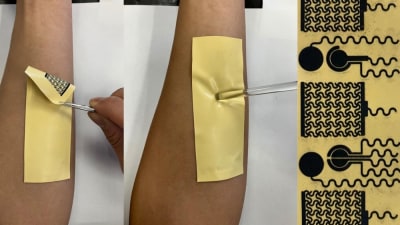
A small ultrasound sticker can monitor the stiffness of organs deep inside the body. The sticker, about the size of a postage stamp, can be worn on the skin and is designed to pick up on signs of disease, such as liver and kidney failure and the progression of solid tumors.
R&D: Sensors/Data Acquisition
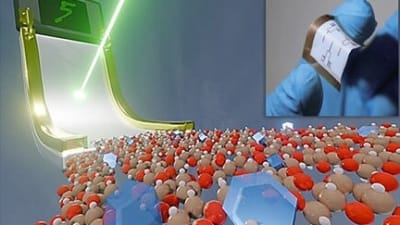
Researchers have created a flexible paper-based sensor that operates like the human brain. They fabricated a photo-electronic artificial synapse device composed of gold electrodes on top of a 10 μm transparent film consisting of zinc oxide nanoparticles and cellulose nanofibers.
R&D: Wearables
A team of engineers has invented a soft, thin, stretchy device measuring just over 1 sq in. that can be attached to the skin outside the throat to help people with dysfunctional vocal cords regain their voice function.
INSIDER: Wearables
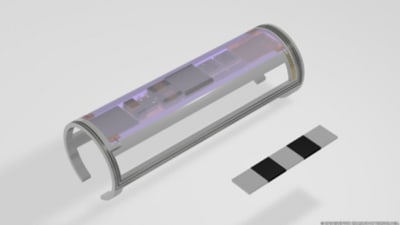
An EU-funded lab is developing a multi-sensing device that can be implanted into blood vessels, such as peripheral veins or arteries, to monitor various body parameters and the overall health status...
INSIDER: Medical
A cross-disciplinary team has developed a new contact lens material that could act as a bandage for corneal wounds while releasing drugs in a controlled manner to help the eye heal faster.
INSIDER: Wearables
Scientists have developed ultra-thin semiconductor fibers that can be woven into fabrics, turning them into smart wearable electronics.
Podcasts: Sensors/Data Acquisition
Exploring how innovations in wearables are making treatments more precise, portable, and patient-friendly than ever before.
Podcasts: Sensors/Data Acquisition
Exploring how AI algorithms analyze and interpret the data collected, leading to more accurate diagnostics and predictive insights.
Podcasts: Sensors/Data Acquisition
Exploring advancements in wearable injector technology, examining how these devices are transforming the administration of medications, improving patient adherence, and enhancing the overall effectiveness of treatment plans.
Podcasts: Sensors/Data Acquisition
DNA-based biosensors offer a highly sensitive and specific approach for detecting a range of target molecules.
Features: Wearables
Zimmer Biomet is making significant investments in innovation across all stages of the ambulatory surgery center process, including before, during, and after surgery. This investment aims to improve efficiency, outcomes, and safety for patients undergoing procedures at ambulatory surgery centers.
Global Innovations: Sensors/Data Acquisition
Researchers have developed a revolutionary biosensor using terahertz (THz) waves that can detect skin cancer with exceptional sensitivity, potentially paving the way for earlier and easier diagnoses.
Briefs: Wearables
University of Washington researchers introduced the Thermal Earring, a wireless wearable that continuously monitors a user’s earlobe temperature. In a study of six users, the earring outperformed a smartwatch at sensing skin temperature during periods of rest.
Briefs: Wearables
University of North Carolina at Chapel Hill scientists created a new drug-delivery system, called the Spatiotemporal On-Demand Patch (SOP), which can receive commands wirelessly from a smartphone or computer to schedule and trigger the release of drugs from individual microneedles.
Briefs: Wearables
The new contact lenses contain microsensors that monitor changes in IOP over a period of several hours, sending the data collected wirelessly so it can be analyzed by an ophthalmologist and a diagnosis given.
R&D: Medical
A wearable ultrasound system can produce clinically relevant information about muscle function during dynamic physical activity. When an individual is performing a specific exercise for...
R&D: Medical
Researchers have developed a biomimetic scaffold that generates electrical signals upon the application of pressure by utilizing the unique osteogenic ability of hydroxyapatite (HAp). HAp is...
R&D: Medical
A neural implant provides information about activity deep inside the brain while sitting on its surface. The implant is made up of a thin, transparent, and flexible polymer strip that is packed with a dense array of...
R&D: Sensors/Data Acquisition
Researchers have developed a sensor that utilizes energy from sound waves to control electronic devices. This could one day save millions of batteries.
Features: Electronics & Computers
With the combined benefit of the unique components and the component manufacturers’ assistance, electronics designers can achieve their objective of developing a well-protected, efficient, wearable medical device. The end result is a much more reliable and robust product for the customers.
INSIDER: AR/AI
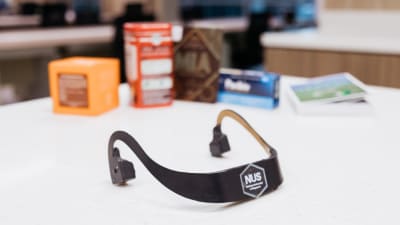
A team of researchers has developed a wearable assistive device that helps people with visual impairment ‘see’ objects around them with the help of artificial intelligence (AI). AiSee...
INSIDER: Nanotechnology
Using a new technology, diagnosing lung cancer could become as easy as inhaling nanoparticle sensors and then taking a urine test that reveals whether a tumor is present. The new...
INSIDER: Imaging
Using a simple concept and a patented sensor that detects radioactive materials, a team has developed a patch to stop damage to healthy tissue during proton radiotherapy, one of the best...
INSIDER: Design
A tiny device could be used to improve the safety and effectiveness of cell therapy treatments for patients suffering from spinal cord injuries.
Global Innovations: Medical
A team led by RMIT University has made a wearable ECG device that could be used to prevent heart attacks for people with cardiovascular disease, including in remote healthcare and ambulatory care settings.
Products: Sensors/Data Acquisition
See what the product focus is on this month. Hint: It's sensors.
Briefs: Robotics, Automation & Control
Researchers have used a soft, wearable robot to help a person living with Parkinson’s walk without freezing. The robotic garment, worn around the hips and thighs, gives a gentle push to the hips as the leg swings, helping the patient achieve a longer stride.