Global Innovations: Nanotechnology
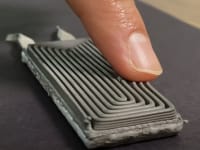
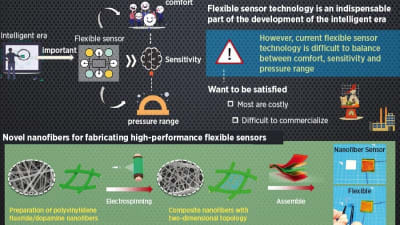
A research team from Shinshu University, Japan, decided to improve flexible piezoelectric sensor design using a well-established manufacturing technique: electrospinning. Read on to learn more about it.
Briefs: AR/AI
Beyond the use of this device for early detection of peptic ulcers, gastritis, and gastric cancers, there is potential to monitor brain health. How? Read on to find out.
Briefs: Medical
An international team of researchers developed the material by embedding clusters of highly dielectric ceramic nanoparticles into an elastic polymer. The material was reverse-engineered to not only mimic skin elasticity and motion types, but also to adjust its dielectric properties to counter the disruptive effects of motion on interfacing electronics, minimize energy loss and dissipate heat.
R&D: Medical
A wearable health monitor can reliably measure levels of important biochemicals in sweat during physical exercise. Read on to learn more about the 3D-printed monitor.
R&D: Wearables
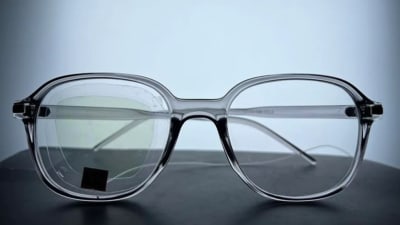
A soft, flexible film senses the presence of nearby objects without physically touching them. The study features the new sensor technology to detect eyelash proximity in blink-tracking glasses. Read on to learn more.
R&D: Sensors/Data Acquisition
To advance soft robotics, skin-integrated electronics, and biomedical devices, researchers have developed a 3D-printed material that is soft and stretchable — traits needed for matching the properties of tissues and organs — and that self-assembles. Read on to learn more.
INSIDER: Medical
Researchers have developed a machine learning model that eliminates hassles in materials design to yield green technologies used in wearable heaters. The model could automate design...
INSIDER: Wearables
A novel treatment approach holds promise for painlessly delivering immune regulators to affected areas of the skin, promoting hair regrowth caused by alopecia areata.
INSIDER: Sensors/Data Acquisition
A team of researchers is developing a series of cutting-edge technologies to transform wound care, including smart bandages that would automatically sense and respond to changing conditions...
Briefs: Electronics & Computers
While MEMS sensors are revolutionizing various industries with their precision and miniaturization, they can present unique product development challenges and risks during design, development, and manufacturing. Read on to learn more.
Briefs: Medical
In the big picture of medical equipment sustainability, sensors play an important role. That’s right, something so miniature can have quite the impact on maintaining and improving sustainability — from the product design phase to use in equipment in the home. Read on to learn more.
Features: Wearables
Innovative reusable drug-delivery devices are transforming the administration of high-dose biologics by enabling self-administration of challenging drug formulations. These devices support high viscosity and larger injection volumes, enhancing patient comfort and adherence. Read on to learn more.
INSIDER: Medical
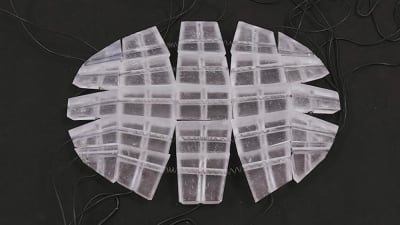
Scientists have developed an innovative wearable fabric that is flexible but can stiffen on demand. Developed through a combination of geometric design, 3D printing, and robotic...
INSIDER: Medical
Scientists have developed a plaster that measures body biomarkers that can indicate health or disease through sweat, paving the way for a new noninvasive and effective way...
INSIDER: Wearables
Maintaining bodily water balance is essential for survival. Although sweat serves as a key indicator of physical and mental health, existing wearable technologies can only monitor...
INSIDER: Wearables
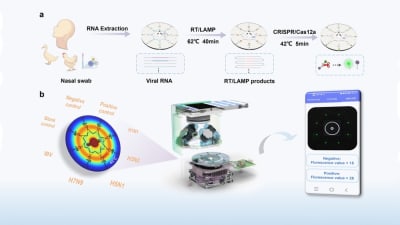
A spatial encoding of centrifugal microfluidic disc integrates a smartphone-controlled (SEDphone) platform for detecting influenza virus subtypes.
Videos of the Month: Medical
See the videos of the month, including one on research that pioneers transformative approaches to intuitively control prosthetic devices; one on how medical professionals can map the radiation dose within the body, giving them new data to guide treatments in real time; one on a new smart material that is activated by both heat and electricity; and one on what bats can teach us about co-existing with viruses and preventing severe disease.
Briefs: Imaging
Engineers have developed a wearable ultrasound patch that can offer continuous, noninvasive monitoring of blood flow in the brain. The soft and stretchy patch can be comfortably worn on the temple to provide three-dimensional data on cerebral blood flow — a first in wearable technology.
Briefs: Medical
The proposed novel approach holds promise for enhancing the thermoelectric performance of CNT materials from yarns to films and bulk structures.
R&D: Sensors/Data Acquisition
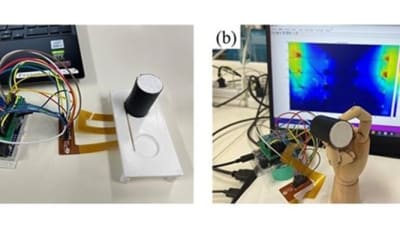
Using electrical impedance tomography (EIT), researchers have developed a system using a flexible tactile sensor for objective evaluation of fine finger movements. Demonstrating high accuracy in classifying diverse...
R&D: Wearables
A unique wristwatch contains multiple modules, including a sensor array, a microfluidic chip, signal processing, and a data display system to monitor chemicals in human sweat. It can...
R&D: Wearables
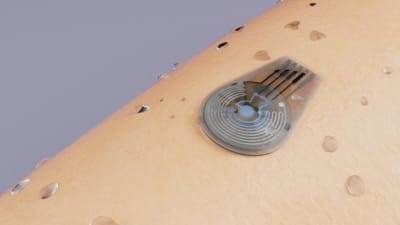
Researchers have developed a method for detecting malignant melanoma. A new type of patch equipped with microneedles can identify the biomarker tyrosinase directly in the skin.
Features: Medical
Keeping an eye on emerging trends and innovations in telemedicine and remote monitoring allows manufacturers to stay ahead of the curve and develop products that align with future healthcare needs, such as devices for early cancer detection. Read on to learn more.
Blog: Manufacturing & Prototyping
Researchers have developed a method to make adaptive and eco-friendly sensors that can be directly and imperceptibly printed onto a wide range of biological surfaces.
INSIDER: Imaging
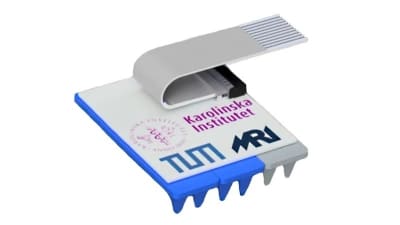
MRI scans are commonly used to diagnose a variety of conditions, anything from liver disease to brain tumors. But, as anyone who has been through one knows, patients must remain completely...
INSIDER: Sensors/Data Acquisition
Biologists have found a way to piggyback on the glucose monitoring technology used in automated insulin dosing systems and make it universally applicable for the monitoring and...
INSIDER: Sensors/Data Acquisition
Skin can send certain health-related signals, such as dry skin feeling tighter to indicate the need for moisture. But what if skin could be smarter, capable of monitoring and sharing...
Features: Data Acquisition
Industry innovation is helping pharmaceutical manufacturers gain key insights into their products and processes by enabling them to effectively interpret data from every test given, even at mass volumes.
Global Innovations: Sensors/Data Acquisition
A team has discovered new aspects of glucose’s infrared signature and have used this information to develop a miniaturized optical sensor only 5mm in diameter that could one day be used to provide continuous non-invasive glucose monitoring in diabetes management.













 INSIDER: Medical
 Features: Medical
 Podcasts: Design
 From the Editor: Medical
 Features: Materials
 Podcasts: Medical

 Podcasts: Medical
 Podcasts: Design
 On-Demand Webinars: Medical
 Podcasts: Manufacturing & Prototyping