INSIDER: Robotics, Automation & Control
Researchers from the National University of Singapore have created an endoscopic probe that delivers adjustable-focus capabilities in a slimmer package. The miniature and solid tunable-lens technology enables compact optical zoom with autofocus capability. The device switches from a wide field-of-view...
INSIDER: Medical
The Research Foundation for the State University of New York (RF SUNY) will lead a new Manufacturing Innovation Institute to secure US leadership in manufacturing integrated photonics. The new institute, announced by Vice President Biden, will focus on emerging technologies, including “needleless” tests for...
Briefs: Medical
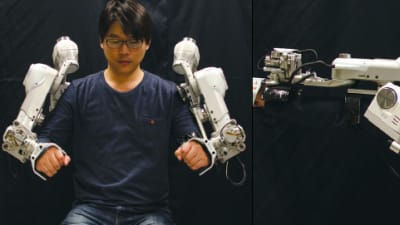
Exoskeleton provides precise therapy while tracking data.
A team of engineers at The University of Texas at Austin have developed a first-of-its kind, two-armed, robotic rehabilitation exoskeleton that,...
R&D: Medical
To provide a better tool for therapeutics, regenerative medicine, and biosensing, Tufts University bioengineers have created inkjet-printable silks containing enzymes, antibiotics, antibodies, nanoparticles, and growth factors. The purified silk protein, or fibroin, offers intrinsic strength and protective...
R&D: Robotics, Automation & Control
Researchers at the University of Pennsylvania have developed a gecko-inspired gripper. Like the gecko, the device has the ability to grip and release smooth surfaces like glass. The effective stickiness can also be tuned from strong to week.
R&D: Robotics, Automation & Control
Researchers at the Massachusetts Institute of Technology have produced samples of strong, resilient spider silk. The spun samples could lead to a variety of biomedical materials, including sutures and scaffolding for organ replacements.
INSIDER: Robotics, Automation & Control
Using sound waves, researchers from the National Institute of Biomedical Imaging and Bioengineering gently culled circulating tumor cells (CTCs) from blood samples. The contact-free nature of the method assures that original cell characteristics are maintained.
INSIDER: Medical
A sterile medical device preserved the health of a deceased donor liver and allowed the organ to repair itself. The liver was then successfully transplanted to a 43-year-old patient in Ontario. The device, which mimics human physiological functions, is part of a Phase 1 clinical trial at UHN's...
INSIDER: Medical
Using a "photo-doping" process, Michigan State University scientists changed the electronic properties of materials in a way that more easily allows an electrical current to pass through. By shooting an ultrafast laser pulse into the material, the properties change and appear chemically...
Technology Leaders: Medical
Brushless motors are used worldwide for their basic benefit of optimizing performance per package size. No other technology can match it. In addition, brushless brings tremendous advantages to many...
INSIDER: Robotics, Automation & Control
By integrating two common imaging techniques, experts from Spectrum Health Helen DeVos Children’s Hospital have produced a three-dimensional anatomic model of a patient’s heart. The hybrid prototype could provide better diagnostic capability and improved interventional and surgical...
INSIDER: Medical
Using a 3D printer and detailed computer simulations, researchers from the Massachusetts Institute of Technology produced soft material with controllable surface textures that can be varied by squeezing. By creating smooth, ridged, or custom-patterned surfaces at will, the technique will allow...
INSIDER: Robotics, Automation & Control
Through a clinical collaboration between Caltech, Keck Medicine of USC, and Rancho Los Amigos National Rehabilitation Center, a man paralyzed from the neck down can use a robotic arm to perform a fluid hand-shaking gesture, drink a beverage, and even play "rock, paper, scissors." The...
INSIDER: Medical
A microfluidic device called the Cluster-Chip, developed by a team of scientists at Massachusetts General Hospital, is the first designed specifically to capture clusters of two or more rare circulating tumor cells (CTCs), rather than single cells. The ability to isolate intact clusters, they say, can enable...
INSIDER: Medical
Researchers at Michigan Technological University, Houghton, recently acquired a 3D bioprinter with which they plan to “print” synthesized nerve tissue. The key, they say, is developing the right “bioink” or printable tissue. One of the team member’s research on cellulose nanocrystals as...
R&D: Medical
A Massachusetts Institute of Technology team has developed a new, ultrasensitive magnetic-field detector. The device could lead to miniaturized, battery-powered devices for medical imaging.
R&D: Medical
Rice University graduate students and researchers have made nanowires between 6 and 16 nanometers wide. The wires are made from a variety of materials, including silicon, silicon dioxide, gold, chromium, tungsten, titanium, titanium dioxide, and aluminum. The development of sub-10-nanometer sizes shows...
R&D: Medical
An adhesive technology helps to bond human tissue in wet or moist conditions. The chemistry is based on the environmentally-friendly adhesive qualities of mussels and other shellfish.
INSIDER: Medical
A group of researchers from Italy's Sant'Anna School of Advanced Studies created a robotic arm that bends, stretches, and squeezes through cluttered environments. Inspired by the eight arms of an octopus, the device allows surgeons to easily access remote, confined regions of the body and, once there,...
INSIDER: Robotics, Automation & Control
University of Washington engineers hacked a teleoperated surgical robot to test how easily a malicious attack could hijack remotely controlled operations. Incorporating security measures will be critical to the safe adoption and use of the robotic technology.
INSIDER: Robotics, Automation & Control
Using a compact synchrotron source, researchers at the Technische Universität München (TUM) have developed a technology that measures X-ray absorption, phase shifts, and radiation scattering. The technology will help doctors and scientists distinguish between healthy tissue and tumors.
Products: Mechanical & Fluid Systems
Coto Technology Inc., North Kingstown, RI, has released the RedRock™ RR100 Micro-Electro- Mechanical Systems (MEMS)-based magnetic reed sensor that is ideally suited to the needs of medical,...
R&D: Robotics, Automation & Control
Vanderbilt University researchers have created magnetically-driven laparoscopic instruments.
INSIDER: Robotics, Automation & Control
A University of Illinois research team developed a new method of soldering gaps in atomically small wires. The more flexible transistor technology, carbon nanotube wires, shows promise in replacing silicon devices.
INSIDER: Robotics, Automation & Control
A new potential manufacturing approach from Purdue University researchers harnesses inkjet printing to create devices made of liquid alloys. The resulting stretchable electronics are compatible with soft machines, such as robots that must squeeze through small spaces, or wearable electronics.
INSIDER: Medical
Using MRI, Johns Hopkins researchers developed a cancer detection method that does not rely on injected contrast dyes. The technique noninvasively finds telltale sugar molecules shed by the outer membranes of cancerous cells.
Mission Accomplished: Manufacturing & Prototyping
Anyone who remembers the Micro Machines line of toys might be surprised to learn that the tiny model vehicles are positively gargantuan compared with actual micromachine...
Products: Medical
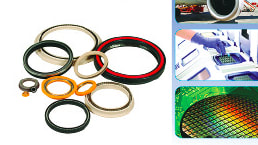
Saint-Gobain Seals, Garden Grove, CA, releases two new product handbooks: OmniSeal® spring-energized seals (US or EU) and Meldin® HT thermoplastic materials, which have been formatted and designed for...
Products: Medical
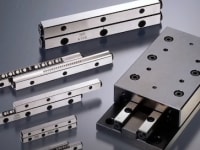
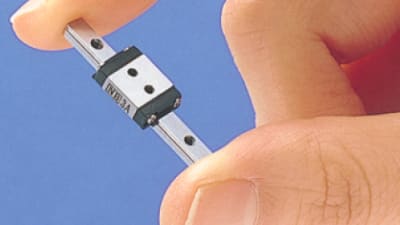
NB Corporation of America, Hanover Park, IL, announces the widest selection of miniature linear slide guides. All-stainless models are ideal for high temperature applications. Choose from retained-ball (whose elements...



 INSIDER: Medical
 Features: Medical
 Features: Materials
 From the Editor: Medical
 INSIDER: Medical
 Features: AR/AI

 Podcasts: Medical
 Podcasts: Medical
 Podcasts: Design
 On-Demand Webinars: Manufacturing & Prototyping
 Podcasts: AR/AI
 Podcasts: Green Design & Manufacturing