R&D: Manufacturing & Prototyping
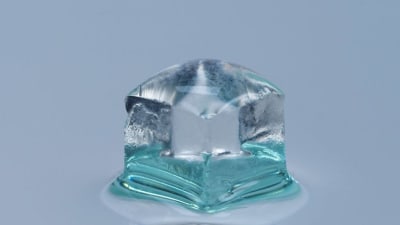
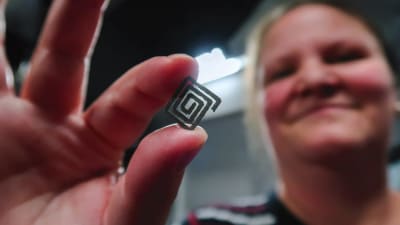
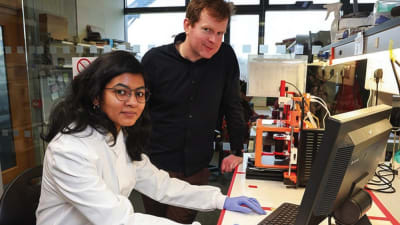
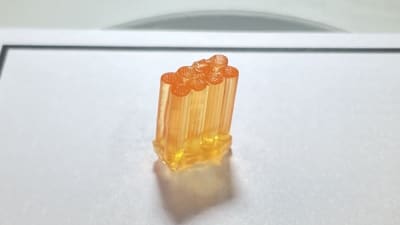
Researchers have pioneered a 3D printing method that grows metals and ceramics inside a water-based gel, resulting in exceptionally dense, yet intricate constructions for next-generation biomedical technologies. Read on to learn more about it.
R&D: Manufacturing & Prototyping
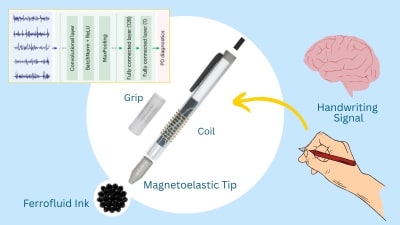
Researchers have developed a smart, self-powered magnetoelastic pen that could help detect early signs of Parkinson’s by analyzing a person’s handwriting. The highly sensitive diagnostic pen features a soft, silicon magnetoelastic tip and ferrofluid ink — a special liquid containing tiny magnetic particles. Read on to learn more about it.
Products: Manufacturing & Prototyping
See the product of the month: Evonik's clinical-grade version of its recombinant collagen-like protein platform for medical device development. Read on to learn more about it.
Global Innovations: Medical
RMIT researchers have created an experimental 3D printed diamond–titanium device that generates electricity from flowing liquid and receives wireless power through tissue making it possible to remotely sense changes in flow. Read on to learn more about it.
INSIDER: Manufacturing & Prototyping
In their keynote, Drew Davis and Eric Nickel explore how the rise of 3D printing and scanning technologies have transformed healthcare. They will talk about how and...
Podcasts: Medical
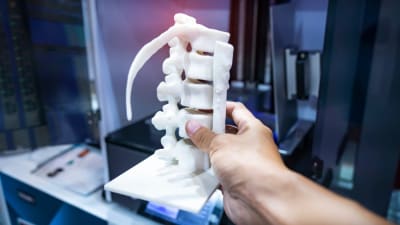
3D printing is transforming the design and production of medical devices. Benefits include creating custom implants, prosthetics, and surgical tools tailored to individual patients, as well as the ability to quickly prototype new devices for testing and development.
Briefs: Manufacturing & Prototyping
A research team at RCSI University of Medicine and Health Sciences has developed a 3D printed implant to deliver electrical stimulation to injured areas of the spinal cord offering a potential new route to repair nerve damage. Read on to learn the details of the 3D-printed implant and how it performs in lab experiments.
Global Innovations: Manufacturing & Prototyping
An interdisciplinary research team from ETH Zurich and the University Hospital of Zurich has developed a novel three-dimensional heart patch for intraventricular implantation. Read on to learn more about it.
INSIDER: Manufacturing & Prototyping
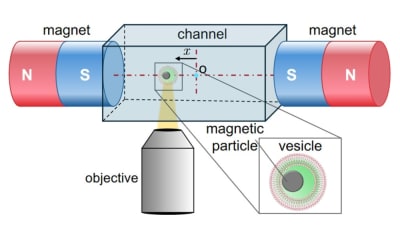
Researchers have demonstrated that microscopic drug-delivery containers can be magnetically steered to their targets, advancing the development of precision medicine...
INSIDER: Manufacturing & Prototyping
A new technology incorporates a shape memory material for clear plastic dental aligners, an alternative to traditional metal braces.
R&D: Wearables
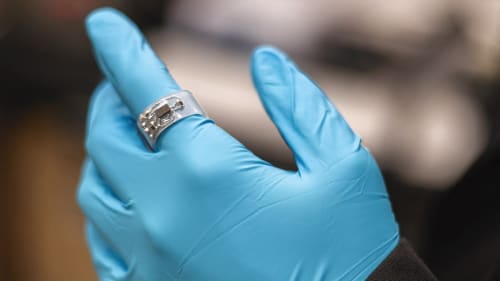
A long-lasting, 3D-printed, adhesive-free wearable provides a more comprehensive picture of a user’s physiological state. The device, which measures water vapor and skin emissions of gases, continuously tracks and logs physiological data associated with dehydration, metabolic shifts, and stress levels. Read on to learn more.
INSIDER: Materials
Researchers have demonstrated a 3D ink printing method for so-called smart fabrics that continues to perform well after repeated washings and abrasion tests. The research...
Features: Medical
The global medical device manufacturing industry is undergoing a rapid transformation driven by technological innovation, automation, and increasing demands for customized, high-quality care. This article provides an overview of key technological advancements reshaping the medical device manufacturing landscape, including additive manufacturing, robotics, laser welding, and more.
Features: Connectivity
Medical device contract manufacturing is poised for robust and sustained growth, with the global market projected to surpass $150 billion by 2030. This expansion is being driven by technological innovations, shifting healthcare demands, and increasing reliance on outsourcing to improve efficiency and cost-effectiveness. Read on to learn more.
Features: Manufacturing & Prototyping
The promise of additive manufacturing (AM) in the medical device industry has always been clear, the ability to create intricate geometries, patient-specific implants, and previously impossible structures. The reality, however, is far less inspiring. Read on to learn more.
From the Editor: Manufacturing & Prototyping
As an industry, AM is experiencing advancements at a rapid pace. Innovation is enabling enhanced capabilities across the entire workflow from software and materials through 3D printing technologies. Additionally, we see 3D printers with much smaller footprints enabling the technology to be used in smaller spaces such as hospitals, ambulatory surgery centers, and dental laboratories and clinics. Read on to learn more.
Videos of the Month: Robotics, Automation & Control
See the videos of the month, including one on 3D printing complex, more durable robots from a variety of high-quality materials in one go; one on a fully digital design-to-manufacturing process that has the potential to revolutionize lower limb socket production; one on commercial and open-source electronic circuit boards that can be embedded into soft robots; and one on scalable methods of developing battery- and solar-powered fibers, making it theoretically possible for electrical energy to be harvested from, and stored in the clothing.
Briefs: Materials
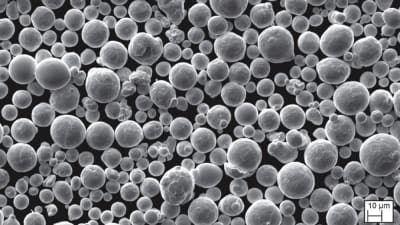
Biomedical metal implant materials are widely used in clinical applications, including dental implants, hip replacement, bone plates, and screws. However, traditional manufacturing processes face limitations in meeting customized medical needs, internal structural control, and efficient material utilization. Read on to learn more.
Briefs: Manufacturing & Prototyping
A system has been developed to optimize the electrical, thermal, and mechanical behavior of 3D-printed materials. A team has developed an innovative computational model that makes it possible to predict and improve the behavior of multifunctional structures manufactured using 3D printers. Read on to learn more.
Briefs: Materials
An industry-academia collaboration to advance sustainable bioprocessing through innovative materials for additive manufacturing, also known as 3D printing, has been announced by Innovate UK (IUK), as part of the “Sustainable Medicines Manufacturing Innovation: Collaborative R&D Fund.” Read on to learn more.
Products: Materials
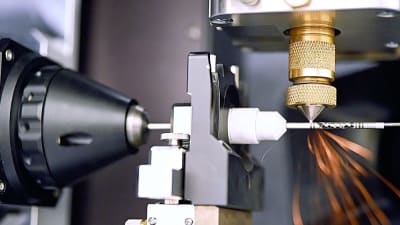
See where the video spotlight is this month: on CNC machining; micro linear actuators; a lab tube cutting machine; the 601 series Air Turbine Spindle® mills at 90,000 RPM; MD® multipurpose adhesives; and much more.
R&D: Manufacturing & Prototyping
Researchers have significantly improved a new joining technology, interlocking metasurfaces, designed to increase the strength and stability of a structure in comparison to traditional techniques like bolts and adhesives, using shape memory alloys. Read on to learn more.
Briefs: Medical
Georgia Tech researchers have created a 3D-printed heart valve made of bioresorbable materials and designed to fit an individual patient’s unique anatomy. Once implanted, the valves will be absorbed by the body and replaced by new tissue that will perform the function that the device once served. Read on to learn more.
Products: Electronics & Computers
See the new products and services, including precision metering pumps from Circor International; a high-performance gantry robot with an integrated slip roller conveyor system from Dispense Works; XP Power's range of compact, low-profile AC-DC power supplies with flexible cooling options; Festo's updated mass flow controller; and much more.
News: Manufacturing & Prototyping
Recent successes in cultivating human heart tissue, knee cartilage, and pharmaceutical crystals in space have relied on technology that was initially developed decades ago with support from NASA.
Briefs: Medical
Researchers at University of Galway have developed a way of bioprinting tissues that change shape as a result of cell-generated forces, in the same way that it happens in biological tissues during organ development. The breakthrough science focused on replicating heart tissues, bringing research closer to generating functional, bioprinted organs. Read on to learn more.
Blog: Manufacturing & Prototyping
Auxilium Biotechnologies has successfully deployed its 3D bioprinter aboard the ISS. The platform is the first of its kind, making history by printing eight implantable medical devices simultaneously in just two hours.
Briefs: Materials
The use of platinum-iridium (PtIr) alloys for pins and electrodes in medical devices is growing substantially in applications such as cardio and neuromodulation devices. This article focuses on PtIr applications. Read on to learn more.
R&D: Medical
Researchers have helped create a new 3D printing approach for shape-changing materials that are likened to muscles, opening the door for improved applications in robotics as well as biomedical and energy devices. Read on to learn more.