Features

Articles

-1
0
30
Features: Electronics & Computers
Medical device manufacturing is undergoing a structural shift. As devices become smaller with broader...
Feature Image
Features: Medical
Pharmaceutical and life sciences manufacturers are under growing pressure to compress development timelines, from discovery to...
Feature Image
Features: Medical
Ultimately, the transformation of IV disposables reflects a broader shift in healthcare — toward connected, patient-centered, and value-driven care. OEMs that align with this vision will not only capture market share but also play a critical role in shaping the future of infusion therapy. Read on to learn more.
Feature Image
Features: Mechanical & Fluid Systems
Fluid management and tubing have long been treated as foundational elements of medical device design — necessary, heavily specified, and often invisible once integrated into a finished system. That status is changing. Read on to learn how and why.
Feature Image
Features: Manufacturing & Prototyping

Read on to learn Mark Dinges', technical product manager at Bosch Rexroth, insights into how conveyance systems are adapting to shifting industry needs and influencing the way end users visualize and implement their processes.
Feature Image
Features: Medical
Designing the next generation of wireless wearables, implantables, and real-time external or in-body monitoring devices is a complex challenge that requires highly reliable electronic components that greatly exceed the performance of standard commercial alternatives. Read on to learn more.
Feature Image
Features: Medical
In this Q&A, Jeremy Schaffer, director of research and development at Fort Wayne Metals, discusses how advances in titanium, nickel-titanium, surface engineering, and smart materials are helping device developers improve performance, miniaturization, durability, and patient outcomes. Read now!
Feature Image
Features: Test & Measurement
This article explores common sensor testing methodologies, reveals where test plans often break, and outlines what medical device manufacturers and OEMs must do to ensure their sensors perform as expected to achieve desired patient outcomes and commercial success. Read on!
Feature Image
Features: Imaging
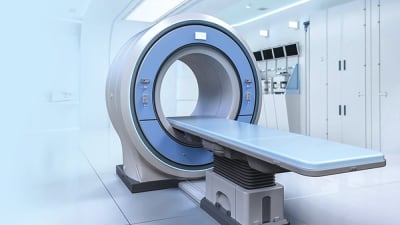
Point-of-care imaging is just one example of how motion innovation is shaping the future of medical imaging. While many systems remain centralized in hospitals and imaging centers, advancements in motion technology continue to improve performance, reliability and integration across all imaging environments. Read on to learn more.
Feature Image
Features: Manufacturing & Prototyping
Read on for practical strategies that consistently improve precision, yield, and unit economics, while also widening the design space — particularly for medical and high-tech applications.
Feature Image
Features: Tubing & Extrusion
There’s a quiet revolution happening deep in the anatomy that doesn’t start with robotics or AI-assisted navigation, but with something far more fundamental: materials. The push toward miniaturized medical devices, especially in vascular intervention, isn’t just about making things smaller but also making devices that can be efficacious in the small anatomy. This is the frontier: the convergence of polymer innovation, extrusion engineering and micron-level quality assurance. Read on to learn more.
Feature Image
Features: Medical
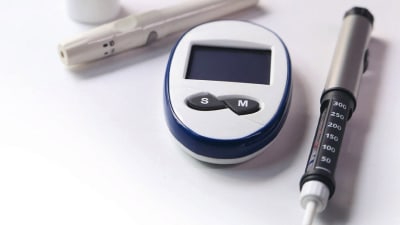
Continuous glucose monitors have reshaped diabetes management by delivering real-time glucose readings, freeing patients from frequent finger-stick testing. This article examines how properly selected sensing, protection, and activation components — including miniature magnetic switches and thermistors — help engineers design CGMs that meet demanding performance, safety, and regulatory requirements.
Feature Image
Features: Robotics, Automation & Control
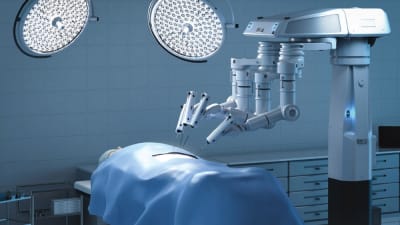
For more than 30 years, Intuitive has helped define robotic-assisted surgery. Go inside the OEM to learn more about Intuitive and its next chapter.
Feature Image
Features: Medical
This article explores how engineering and innovation are becoming the primary tools for building a more resilient and reliable medical device supply chain. Read on to learn more.
Feature Image
Features: Photonics/Optics
Tunable optical parametric oscillators (OPO) lasers can be tuned to a wide spectrum of specific wavelengths across the UV, visible, and infrared. The laser light can then be directed, or transmitted over fiber, to physically interact with matter by depositing short, intense bursts of energy into a sample. Read on to learn more about them.
Feature Image
Features: Manufacturing & Prototyping
Medical devices are shrinking rapidly while becoming more complex. Sensors, processors, optics, and connectivity are now routinely packed into form factors that would have been impractical just a decade ago. While this miniaturization unlocks new clinical value, it also exposes a persistent design challenge: many of the materials still being specified were developed for an earlier era of electronics. Read on to learn more.
Feature Image
Features: Materials
For many years, the medical industry has used additive manufacturing to develop low-volume parts, such as medical prototypes, bespoke implants, and surgical implants and aids. Global engineering technologies company, Renishaw, has collaborated with medical devices specialist, Permedica, to develop AM processes for the mass production of medical components in the healthcare industry. Read on to learn more.
Feature Image
Features: Design
With multiple co-located expos, a dense education schedule, and a show floor spanning the entire medical device lifecycle, success at MD&M West depends less on seeing everything than on seeing the right things. Read on for a guide that takes a tactical view of the event — highlighting role-based education paths, newly emphasized features, and practical strategies for navigating the show efficiently.
Feature Image
Features: Design
While a breakthrough may someday arrive, betting everything on a single answer overlooks what is already within reach. The real opportunity lies at the intersection of biology, technology, artificial intelligence, and drugs working synergistically together, not as isolated components. Read on to learn more.
Feature Image
Features: Medical
Product features alone no longer command premium prices or defend against commoditization. The path to differentiation and margin protection now runs through service quality and customer relationships. Read on to learn more.
Feature Image
Features: Design
This article explores the essential ingredients of pharmaceutical success, from research and design to development, production and ultimately, the patient. Read on to learn more.
Feature Image
Features: Medical
Success in 2026 will favor organizations that address these shifts directly: designing for interoperability, validating at the individual level, building security to keep pace with threats, and engineering for real-world clinical use. The innovations that define this year will not only improve device capabilities but reshape how healthcare itself is delivered. Read on to learn more.
Feature Image
Features: Medical
Returning to Anaheim this February, MD&M West 2026 brings the global medical device community together for three days of engineering insight, manufacturing expertise, and technology breakthroughs. As one of the largest gatherings of medtech professionals in North America, the event showcases the full spectrum of product development. Read on to learn all about it.
Feature Image
Features: Design
When Thierry Piéton stepped into the role of executive vice president and chief financial officer of Medtronic earlier this year, he entered one of the largest and most complex organizations in the medical technology industry. Read on to go inside the OEM.
Feature Image
Features: Medical
The design of electronic drug-delivery pens requires precise control, compact form factors, and exceptionally low power consumption — requirements that can only be met by thoughtful component selection and close collaboration with experienced suppliers. Read on to learn more.
Feature Image
Features: Medical
For medical-device original equipment manufacturers (OEMs), the intravenous (IV) disposables market continues to present a fast-expanding frontier — driven by clinical necessity, the increasing burden of chronic disease, heightened infection-control awareness and new care-delivery models. Read on to learn more.
Feature Image
Features: Materials
Minimally invasive and interventional platforms increasingly demand smaller profiles, tighter tolerances, and components that maintain performance under thermal, chemical, and mechanical stress. Polyimide (PI) has emerged as a workhorse within these parameters. Read on to learn why.
Feature Image
Features: Manufacturing & Prototyping
In this Q&A, Brian Semcer, president of MICRO, talks to Medical Design Briefs about how the next generation of contract manufacturers is redefining agility, quality, and partnership in the medical device ecosystem. Read now!
Feature Image
Features: Materials
There are two main product ranges: Surface-active therapeutics and surface-active materials. Read on to learn more about them.
Feature Image

Ask the Expert

John Chandler on Achieving Quality Motion Control
Feature Image

FAULHABER MICROMO brings together the highest quality motion technologies and value-added services, together with global engineering, sourcing, and manufacturing, to deliver top quality micro motion solutions. With 34 years’ experience, John Chandler injects a key engineering perspective into all new projects and enjoys working closely with OEM customers to bring exciting new technologies to market.

Inside Story

Inside Story: Trends in Packaging and Sterilization

Feature Image

Eurofins Medical Device Testing (MDT) provides a full scope of testing services. In this interview, Eurofins’ experts, Sunny Modi, PhD, Director of Package Testing; and Elizabeth Sydnor, Director of Microbiology; answer common questions on medical device packaging and sterilization.


Videos