Features: Wearables
MD&M West features products and insights across medical specialties such as medical devices, digital health, hospital equipment and supplies, cardiovascular solutions, pharmaceuticals, and much more. In her keynote, Jennifer Samproni will share her vision for the growing role that human machine interfaces (HMI) will play in the future of medical device innovation.
NASA Spinoff: Software
Red Canyon Software Inc. is building apps using core Flight System (cFS) to help commercial space companies get into low-Earth orbit and beyond as quickly as possible.
Briefs: Test & Measurement
Optical parametric oscillator (OPO) lasers test optical fibers and components to characterize the spectral response of optical components. Now, these tunable pulsed lasers are being used to facilitate a range of tests at different wavelengths to qualify and quantify the performance of optical components such as fiber optic strands, filters, lenses, and coated mirrors.
Briefs: Mechanical & Fluid Systems
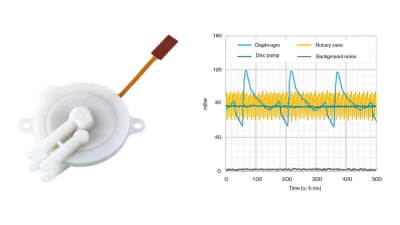
As the demand for smaller, less intrusive — sometimes even wearable — products grow, engineers must meet these expectations without compromising on pump system performance.
Briefs: Materials
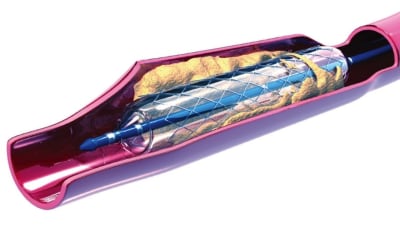
The process of manufacturing high-quality and reliable balloon catheters is critical to a number of advanced medical treatments for patients including balloon angioplasty, stent and drug delivery, transcatheter aortic valve implantation, atherectomy, renal denervation, and laser balloon angioplasty.
Briefs: Materials
A beating heart makes for a formidable surgical arena, but a new robotic catheter could someday equip surgeons to operate in the cardiac environment with greater ease.
Briefs: Medical
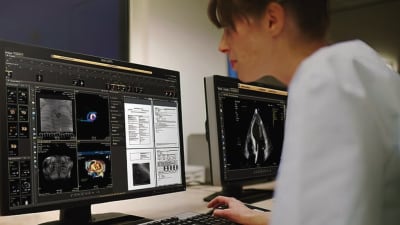
Royal Philips is integrating AI in its cardiac ultrasound devices and across cardiac care to help improve clinical confidence and increase efficiency. The portable Philips Ultrasound Compact System 5500 CV includes an AI-powered automation tool (the automated strain quantification) to assess the function of the heart’s left ventricle, a key indicator of heart health.
Briefs: Medical
An international team of researchers has developed a handheld, noninvasive device that can detect biomarkers for Alzheimer’s and Parkinson’s diseases. The biosensor can also transmit the results wirelessly to a laptop or smartphone.
Briefs: Medical
Parag Chitnis, PhD, of George Mason University led a team that developed a wearable ultrasound system that can produce clinically relevant information about muscle function during dynamic physical activity.
From the Editor: Medical
There is sparce evidence in the health research literature to link health technology assessment (HTA) processes and outcomes (at a national, regional, or hospital level) with device purchasing decisions, according to ISPOR. Read on to learn new findings and more.
Applications: Materials
Medical devices are becoming smaller and smaller, and the need for advanced material solutions keeps growing. Through our deep understanding and application of fundamental chemistry, Chemours materials have emerged as effective alternatives — helping innovators in the medical industry achieve continued success across medical device design.
Products: Mechanical & Fluid Systems
See the new products and services, including precision injection molding from Medbio; Covestro's Makrolon 3638 polycarbonate; laser processing systems from Amada Weld Tech; biocompatible adhesives, sealants, and potting materials from EpoxySet; brushless ECX speed motors from maxon; and more.
Products: Electronics & Computers
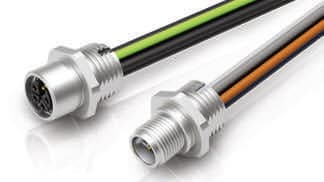
See where the product focus is this month: power supplies, including power entry modules from Schurter, XP Power's AC-DC power modules, highly compact power supplies from Cosel Co. Ltd., and binder USA's coded panel-mount parts.
Global Innovations: Medical
A new collaboration between The University of Manchester and CICECO-Aveiro Institute of Materials could transform the field of biomedical implants.
Videos of the Month: Medical
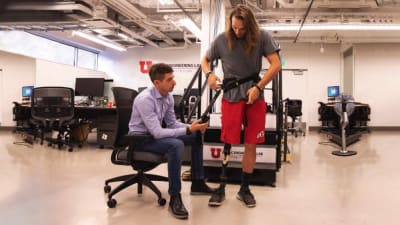
See the videos of the month, including one on a lightweight, motorized exoskeleton that can restore much of the sensation of walking with two healthy legs; one on a new method of brain stimulation that does not call for an implant; one on a device that combines wearable biosensors with AI software to help recognize what hand gesture a person intends to make; and more.
Features: Wearables
As industry navigates technological frontiers, the collective goal is to enhance patient experiences, streamline processes, and make healthcare more accessible and equitable. This article explores key emerging trends that are not only improving patient engagement but are also set to redefine the future of healthcare.
Videos of the Month: Robotics, Automation & Control
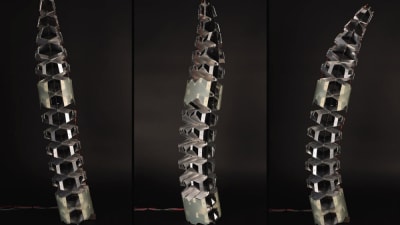
See the videos of the month, including one on Purdue University researchers teaching robots how to navigate the swaying deck of a boat, one on a Carnegie Mellon-led team developing a soft robot to better understand an organism — the pleurocystitid — that existed 450 million years ago, and more.
Articles: Electronics & Computers
What are the opportunities and risks AI offers in manufacturing? How can manufacturers successfully implement AI and prepare their workforce to integrate it into their processes? What’s its future outlook? Tech Briefs asked four industry experts in this roundtable.
Articles: Test & Measurement
NASA’s Artemis program consists of a series of missions designed to land humans on the Moon and establish a sustainable, continuing presence. A long-term foothold on the Moon’s surface enables invaluable research and testing opportunities that will set the stage for future groundbreaking missions, including the first human mission to Mars.
Briefs: Materials
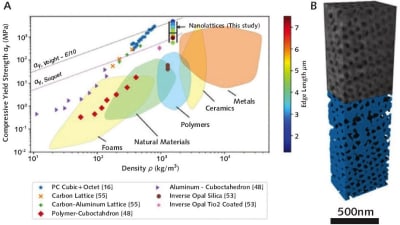
Using kirigami, the ancient Japanese art of folding and cutting paper, MIT researchers have now manufactured a type of high-performance architected material known as a plate lattice, on a much larger scale than scientists have previously been able to achieve by additive fabrication.
Briefs: Manufacturing & Prototyping
Recent experiments by a team from the West Virginia University focused on how a weightless microgravity environment affects 3D printing using titania foam, a material with potential applications ranging from UV blocking to water purification. ACS Applied Materials and Interfaces published their findings.
Briefs: Manufacturing & Prototyping
A new method for metal 3D printing aims to make more efficient use of resources by allowing structural modifications to be “programmed” into metal alloys during 3D printing, fine-tuning their properties without the “heating and beating” process that’s been in use for thousands of years.
Briefs: Electronics & Computers
Harvard researchers have realized a key milestone in the quest for stable, scalable quantum computing, an ultra-high-speed technology that will enable game-changing advances in a variety of fields, including medicine, science, and finance.
Briefs: Aerospace
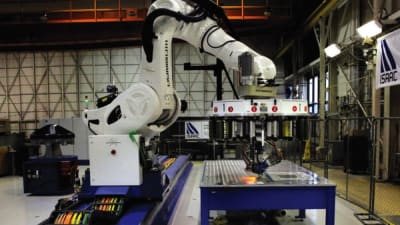
NASA’s Langley Research Center has developed a simplified, tool-less automated tow/tape placement (ATP) system. This invention enables several benefits that mitigate limitations associated with conventional ATP systems. Read on to learn more.
Briefs: Materials
Scientists at the Columbia University, University of Connecticut, and the U.S. Department of Energy’s (DOE) Brookhaven National Laboratory were able to fabricate a pure form of glass and coat specialized pieces of DNA with it to create a material that was not only stronger than steel, but incredibly lightweight.
Briefs: Physical Sciences
A series of buzzing “loop-currents” could explain a recently discovered, never-before-seen phenomenon in a type of quantum material. The quantum material is known by the chemical formula Mn 3Si2Te6, but it’s safe to call it “honeycomb.” Read on to learn more.
Briefs: Nanotechnology
Developed by a team led by Lawrence Berkeley National Laboratory, a self-assembling nanosheet could significantly extend the shelf life of consumer products. And because the new material is recyclable, it could also enable a sustainable manufacturing approach that keeps single-use packaging and electronics out of landfills.
Briefs: Manufacturing & Prototyping
Researchers have unveiled a remarkable new material with potential to impact the world of material science: amorphous silicon carbide (a-SiC). Beyond its exceptional strength, this material demonstrates mechanical properties crucial for vibration isolation on a microchip. It is therefore particularly suitable for making ultra-sensitive microchip sensors.
Briefs: Energy
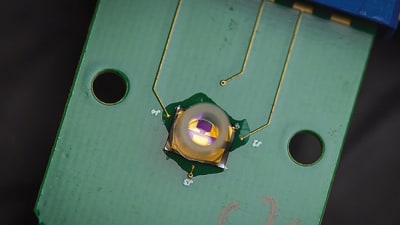
The NIST camera is made up of grids of ultrathin electrical wires, cooled to near absolute zero, in which current moves with no resistance until a wire is struck by a photon. In these superconducting-nanowire cameras, the energy imparted by even a single photon can be detected because it shuts down the superconductivity at a particular location (pixel) on the grid. Combining all the locations and intensities of all the photons makes up an image.















 INSIDER: Medical
 Features: Medical
 Features: Materials
 From the Editor: Medical
 INSIDER: Medical
 Features: AR/AI

 Podcasts: Medical
 Podcasts: Medical
 Podcasts: Design
 On-Demand Webinars: Manufacturing & Prototyping
 Podcasts: AR/AI
 Podcasts: Green Design & Manufacturing
