Briefs: Mechanical & Fluid Systems
A plasma igniter has been developed for initiating combustion in liquid-propellant rocket engines. The device propels a hot, dense plasma jet, consisting of elemental fluorine and fluorine compounds, into the combustion chamber to ignite the cold propellant mixture. The igniter...
Briefs: Mechanical & Fluid Systems
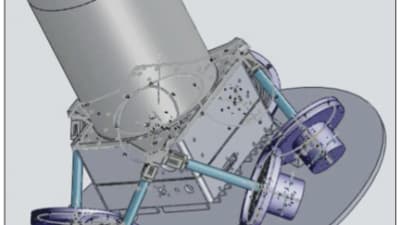
One of the major technical problems deep-space optical communication (DSOC) systems need to solve is the isolation of the optical terminal from vibrations produced by the spacecraft...
Briefs: Mechanical & Fluid Systems
Wire-testing issues, such as the gripping strains imposed on the wire, play a critical role in obtaining clean data. In a standard test frame fitted with flat wedge grips, the gripping action alone creates stresses on the wire specimen that cause the wire to fail at the grip location. When conventional wire grip fixtures are...
Briefs: Materials
A plasma-enhanced chemical vapor deposition (PECVD) growth technique has been developed where the choice of starting substrate was found to...
Briefs: Materials
This innovation addresses the problem of coatings (meant to reduce gas permeation) applied to polymer matrix composites spalling off in service due to incompatibility with the polymer matrix. A bond coat/coating has been created that uses chemically functionalized nanoparticles (either clay or...
Briefs: Physical Sciences
A method has been developed for caging science instrumentation to protect from pyro-shock and EDL (entry, descent, and landing) acceleration damage. Caging can be achieved by immersing the instrument (or its critical parts) in a liquid and solidifying the liquid by cooling. After the launch shock and/or...
Briefs: Physical Sciences
A digital, wide-range, neutron detection (WRND) system in a compact, VME form factor monitors neutron activity within the core of a nuclear reactor across the reactor’s entire operating range, from 1.0 n/cm2/s up to 1010 n/cm2/s. This allows for a reduction in the complexity of...
Briefs: Physical Sciences
Aircraft engine rotating equipment operates at high temperatures and stresses. Noninvasive inspection of microcracks in those components poses a challenge for nondestructive evaluation. A low-cost, low-profile, high-temperature ultrasonic guided wave sensor was developed that detects cracks in...
Briefs: Physical Sciences
A multiplexing antenna assembly can efficiently couple AC signal/energy into, or out of, rotating equipment. The unit only passes AC energy while blocking DC energy. Concentric tubes that are sliced into multiple pieces are assembled together so that, when a piece from an outer tube aligns well with...
Briefs: Physical Sciences
An attitude estimation was examined in fractioned free-flying spacecraft. Instead of a single, monolithic spacecraft, a fractionated free-flying spacecraft uses multiple spacecraft modules. These modules are connected only through wireless communication links and, potentially, wireless...
Briefs: Physical Sciences
Three related innovations combine improved non-linear motion estimation, video coding, and video compression. The first system comprises a method in which side information is generated using an adaptive, non-linear motion model. This method enables extrapolating and interpolating...
Briefs: Physical Sciences
An apparatus was developed for measuring total emissivity of small, lightweight, low-emissivity samples at low temperatures. The entire apparatus fits inside a small laboratory cryostat. Sample installation and removal are relatively quick, allowing for faster testing.
Briefs: Physical Sciences
New flow effector technology for separation control and enhanced mixing is based upon shape memory alloy hybrid composite (SMAHC) technology. The technology allows for variable shape control of aircraft structures through actively deformable surfaces. The flow effectors are made by embedding...
Briefs: Physical Sciences
A broad-range vacuum gauge has been created by suspending a single-walled carbon nanotube (SWNT) (metallic or semiconducting) in a Schottky diode format or in a bridge conductor format, between two electrically charged mesas. SWNTs are highly sensitive to...
Briefs: Physical Sciences
The Stacked HYBATS (Hybrid Actuation/Transduction system) demonstrates significantly enhanced electromechanical performance by using the cooperative contributions of the electromechanical responses of multilayer, stacked negative strain components and positive strain...
Briefs: Photonics/Optics
The technical innovation involves refinement of the classic optical technique of averaging surface measurements made in different orientations with respect to gravity, so the effects of gravity cancel in the averaged image. Particularly for large, thin mirrors subject to substantial deformation,...
Briefs: Information Technology
An algorithm denoted “Gamma-SLAM” performs further processing, in real time, of preprocessed digitized images acquired by a stereoscopic pair of electronic cameras aboard an off-road robotic ground vehicle to build accurate maps of the terrain and determine the location of the vehicle with respect to the...
Briefs: Information Technology
This software innovation is designed to develop a mathematical formulation to estimate the electromagnetic scattering characteristics of complex, inhomogeneous objects using the finite-element-method (FEM) and method-of-moments (MoM) concepts, as well as to develop a FORTRAN...
Briefs: Information Technology
A method has been created to automatically build an algorithm off-line, using computer-aided design (CAD) models, and to apply this at runtime. The object type is discriminated, and the position and orientation are identified. This system can work with a single image and can provide improved...
Briefs: Information Technology
A combination of methods is proposed of predicting spacecraft trajectories that possibly include multiple maneuvers and/or perturbing accelerations, with greater speed, accuracy, and repeatability than were heretofore achievable. The combination is denoted the WeavEncke method because it is...
Briefs: Information Technology
The original G-Guidance algorithm provided an autonomous guidance and control policy for small-body proximity operations that took into account uncertainty and dynamics disturbances. However, there was a lack of robustness in regards to object proximity while in autonomous mode. The modified G-Guidance...
Briefs: Information Technology
A variable-order, variable-step Taylor series integration algorithm was implemented in NASA Glenn’s SNAP (Spacecraft N-body Analysis Program) code. SNAP is a high-fidelity trajectory propagation program that can propagate the trajectory of a spacecraft about...
Briefs: Information Technology
A research project is underway to produce computer software that can accurately predict ice growth under any meteorological conditions for any aircraft surface. An extensive comparison of the results in a quantifiable manner against the database of ice shapes that have been generated in the...
Briefs: Information Technology
More efficient versions of an interpolation method, called kriging, have been introduced in order to reduce its traditionally high computational cost. Written in C++, these approaches were tested on both synthetic and real data.
Briefs: Information Technology
A document describes work on the origin of Coriolis force and estimating Coriolis force and torque applied to the Ares-1 vehicle during its ascent, based on an internal ballistics model for a multi-segmented solid rocket booster (SRB).
Briefs: Physical Sciences
A document discusses a null lens assembly that allows laser interferometry of 60° slumped glass mirror segments used in x-ray mirrors. The assembly consists of four lenses in precise alignment to each other, with incorporated piezoelectric nanometer stepping actuators to position the lenses in six...
Briefs: Electronics & Computers
A document discusses a pulse generator with subnanosecond resolution implemented with a low-cost field-programmable gate array (FPGA) at low power levels. The method used exploits the fast carry chains of certain FPGAs. Prototypes have been built and tested in both Actel AX and Xilinx Virtex 4 technologies. In-flight...
Briefs: Electronics & Computers
A group at UCLA, in collaboration with the Jet Propulsion Laboratory, has designed a voltage-controlled oscillator (VCO) created specifically for a compact, integrated, electronically tunable frequency generator useable for submillimeter-wave science instruments operating in extreme cold...
Application Briefs: Aerospace
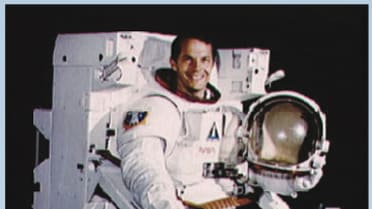
Extra-Vehicular Activity Space Suit Simulator (S3)Aurora Flight SciencesCambridge, MA703-396-6304 www.aurora.aero
Aurora Flight Sciences has teamed up with professors Dana Newman and...



 INSIDER: Medical
 Features: Medical
 Features: Materials
 From the Editor: Medical
 INSIDER: Medical
 Features: AR/AI

 Podcasts: Medical
 Podcasts: Medical
 Podcasts: Design
 On-Demand Webinars: Manufacturing & Prototyping
 Podcasts: AR/AI
 Podcasts: Green Design & Manufacturing
