Briefs: RF & Microwave Electronics
Researchers have created a device that enables them to electronically steer and focus a beam of terahertz electromagnetic energy with extreme precision. This opens the door to high-resolution, real-time imaging devices that are hundredths the size of other radar systems and more robust than other optical systems.
Briefs: Photonics/Optics
Researchers at SEAS have uncovered hidden potential in metasurfaces and demonstrated optical devices that manipulate light’s polarization state with an unprecedented degree of control. Read on to learn more.
Briefs: Photonics/Optics
Researchers at the U.S. Department of Energy’s (DOE) Argonne National Laboratory have developed an autonomous, or self-driving, microscopy technique. It uses AI to selectively target points of interest for scanning. Read on to learn more.
Briefs: Materials
A research team from the Department of Energy’s Pacific Northwest National Laboratory reports that the flow battery, a design optimized for electrical grid energy storage, maintained its capacity to store and release energy for more than a year of continuous charge and discharge.
Briefs: Physical Sciences
A team from Chalmers University of Technology has succeeded in observing how the lithium metal in the cell behaves as it charges and discharges. The new method may contribute to batteries with higher capacity and increased safety in our future cars and devices.
Briefs: Energy
Wireless power transfer was recently demonstrated by MAPLE — Microwave Array for Power-transfer Low-orbit Experiment — one of three key technologies being tested by the Space Solar Power Demonstrator (SSPD-1), the first space-borne prototype from Caltech’s Space Solar Power Project (SSPP), which aims to harvest solar power in space and transmit it to the Earth’s surface.
Briefs: Energy
Scientists at the U.S. Department of Energy’s (DOE) Argonne National Laboratory are researching solutions to these Li-ion battery issues by testing new materials in battery construction. One such material is sulfur.
Briefs: Medical
The research team from the National Eye Institute printed a combination of cells that form the outer blood-retina barrier — eye tissue that supports the retina’s light-sensing photoreceptors. The technique provides a theoretically unlimited supply of patient-derived tissue to study degenerative retinal diseases such as age-related macular degeneration.
Briefs: Materials
A stretchable system that can harvest energy from human breathing and motion for use in wearable health-monitoring devices may be possible, according to an international team of researchers.
Briefs: Design
The ventilators are simpler and cheaper to make than those currently available.
Briefs: Design
MIT researchers have engineered both the nanoparticles used to deliver the COVID-19 antigen and the antigen itself, to boost the immune response, without the need for a separate adjuvant. If further developed for use in humans, this type of RNA vaccine could help to reduce costs, the dosage needed, and potentially lead to longer-lasting immunity.
Products: Manufacturing & Prototyping
See what's new on the market, including a new feature for RJG's CoPilot process control system, Renishaw's expanded RenAM 500, AIRMAR's three medium ultra-wide transducers, Coilcraft's molded power inductors, VP810 vapor phase soldering systems from ASSCON, and more.
Articles: Sensors/Data Acquisition
See the products of tomorrow, including the University of Maryland's "cooling glass"; the Reconfigurable Robotics Lab's sensor that can perceive combinations of bending, stretching, compression, and temperature changes using color; Tufts' tiny biological robots; and more.
Products: Materials
See the product of the month: Advanced silicone molding services offered by AMETEK EMC.
Products: Power
See the product of the month: Advanced Energy Industries' new configurable power supply that delivers optimized, application-specific power conversion in a small form factor with up to four times higher power density than conventional solutions.
Articles: Electronics & Computers
In the ever-evolving landscape of electronic warfare (EW), the imperative for technological prowess has never been more pronounced. At the vanguard of this evolution stands a technological marvel — high-performance software defined radios (SDRs).
Articles: Electronics & Computers
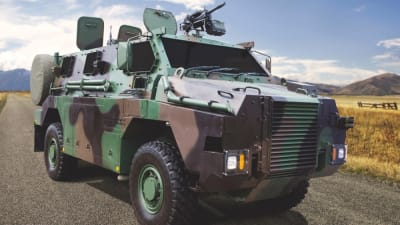
The next generation of Army ground vehicle systems aim to provide the warfighter with advanced capabilities while ensuring cyber resiliency. One key technology, Ethernet, has enabled the modernization of military ground vehicles by providing a broad range of beneficial features. Read on to learn more.
Articles: Mechanical & Fluid Systems
The challenges associated with hypersonic flight are significant in that the drag forces, temperatures, and heat flux put large demands on materials. First and foremost is managing the exposure to high temperatures that will be in excess of 1,000 °C.
Articles: RF & Microwave Electronics
Traditionally, heterodyne architectures have been the preferred choice for radio frequency (RF) and millimeter-wave (mmWave) receiver architectures, excelling in noise performance, dynamic range, frequency coverage, selectivity, and reduction of EMI. However, recent advancements in high sample rate analog to digital converters (ADCs) and embedded signal processing have prompted a reassessment of both architectures.
Articles: Sensors/Data Acquisition
Rydberg Technologies demonstrated the use of an atomic receiver for long-range RF applications during the NetModX23 event. Shortly after the completion of the NetModX event, Aerospace & Defense Technology caught up with Rydberg CEO David Anderson to discuss the demonstration of their atomic receiver prototype and the future potential of quantum sensing in real-world military RF applications.
Briefs: Unmanned Systems
Dr. Marc Compere, associate professor of Mechanical Engineering at Embry-Riddle’s Daytona Beach Campus, recently described a new approach to measuring wind effects.
Briefs: Manned Systems
Air-Launched Effects (ALEs) are a concept for operating small, inexpensive, attritable, and highly autonomous unmanned aerial systems that can be tube launched from aircraft.
Briefs: Communications
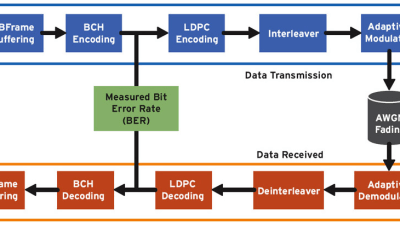
New algorithm strategies and diverse communication techniques are constantly emerging in the telecommunications realm that consumers, commercial, government, and military demand in order to push the boundaries of data throughput to receive information as quickly as possible.
Briefs: Electronics & Computers
They utilize a relatively new type of superconducting qubit, known as fluxonium, which can have a lifespan that is much longer than more commonly used superconducting qubits.
Briefs: Electronics & Computers
The U.S. Army Combat Capabilities Development Command (DEVCOM) Ground Vehicle Systems Center (GVSC) has been developing next generation crew stations over the last several decades. In this research, the problem space that impacts design development and decisions is discussed.
Application Briefs: Design
AFWERX is partnering with NASA to develop a digital operations center for future Advanced Air Mobility (AAM) efforts through the Civilian Commercialization Readiness Pilot Program, or CCRPP, awardee, ResilienX.
Application Briefs: Green Design & Manufacturing
The Army has designed the T901 Improved Turbine Engine to be compliant with Prognostic and Predictive Maintenance (PPMx) technologies. PPMx, a predictive maintenance strategy based on relevant data, helps to increase operational readiness by identifying potential maintenance issues and part failures before they occur.
Application Briefs: Defense
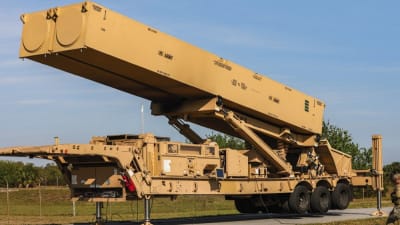
Raytheon recently completed another successful live-fire demonstration of the advanced, 360-degree Lower Tier Air and Missile Defense Sensor (LTAMDS).




















 INSIDER: Medical
 Features: Medical
 Features: Materials
 From the Editor: Medical
 INSIDER: Medical
 Features: AR/AI

 Podcasts: Medical
 Podcasts: Medical
 Podcasts: Design
 On-Demand Webinars: Manufacturing & Prototyping
 Podcasts: AR/AI
 Podcasts: Green Design & Manufacturing
