Materials, Adhesives & Coatings

Materials/​Biomaterials

See how metals, ceramics, polymers, composites, and biomaterials are supporting applications in medical device manufacturing.

Stories

38
49
0
0
30
INSIDER: Medical
By rethinking how thin metal threads are woven into a flexible textile, researchers have created a lightweight fabric capable of lifting over 400 times its own weight. The work advances the...
Feature Image
Briefs: Materials
Wearable or implantable devices to monitor biological activities, such as heart rate, are useful, but they are typically made of metals, silicon, plastic, and glass and must be surgically implanted. A research team in the McKelvey School of Engineering at Washington University in St. Louis is developing bioelectronic hydrogels that could one day replace existing devices and have much more flexibility. Read on to learn more.
Feature Image
Briefs: Materials
This article presents a practical way to think about materials for molded optics and photonics parts, and what an OEM should expect from a micro molding partner, not only in terms of material range, but in terms of the process command required to turn a material choice into dependable end-use performance. Read on to learn more.
Feature Image
Features: Materials
There’s a quiet revolution happening deep in the anatomy that doesn’t start with robotics or AI-assisted navigation, but with something far more fundamental: materials. The push toward miniaturized medical devices, especially in vascular intervention, isn’t just about making things smaller but also making devices that can be efficacious in the small anatomy. This is the frontier: the convergence of polymer innovation, extrusion engineering and micron-level quality assurance. Read on to learn more.
Feature Image
Briefs: AR/AI
A team of researchers at Penn State have devised a new, streamlined approach to design metasurfaces, a class of engineered materials that can manipulate light and other forms of electromagnetic radiation with just their structures. This rapid optimization process could help manufacture advanced optical systems like camera lenses, virtual reality headsets, holographic imagers and more, the team said. Read on to learn more.
Feature Image
Briefs: Materials
Electronic waste is piling up around the world at a rate that far outpaces recycling efforts, partly because it’s so costly and time-consuming to recover useful materials from discarded gadgets. Read on to see what this conundrum inspired a team at the University of Washington to create.
Feature Image
Briefs: Materials
As medical devices continue to evolve, the durability of polymer welds will remain a critical factor in product performance. Early assessment of fatigue resistance using methods like HACS analysis, combined with an understanding of materials and processes, will allow manufacturers to create more robust, reliable devices. Read on to learn more.
Feature Image
Features: Materials
For many years, the medical industry has used additive manufacturing to develop low-volume parts, such as medical prototypes, bespoke implants, and surgical implants and aids. Global engineering technologies company, Renishaw, has collaborated with medical devices specialist, Permedica, to develop AM processes for the mass production of medical components in the healthcare industry. Read on to learn more.
Feature Image
Features: Materials
Medical devices are shrinking rapidly while becoming more complex. Sensors, processors, optics, and connectivity are now routinely packed into form factors that would have been impractical just a decade ago. While this miniaturization unlocks new clinical value, it also exposes a persistent design challenge: many of the materials still being specified were developed for an earlier era of electronics. Read on to learn more.
Feature Image
From the Editor: Medical
In December, we asked Medical Design Briefs’ readers to cast their ballot to choose from our eight Products of the Month the technology they felt was the most significant new introduction to the design engineering community in 2025. This year, our winner reflects the industry’s need to lower costs and minimize material usage. Read on to learn the winner of the 2025 Medical Design Briefs’ Readers’ Choice Products of the Year.
Feature Image
White Papers: Automotive
Document cover
Your Guide to Sourcing Precision Metals for Bellows Manufacturing
From medical devices to automotive, aerospace, and cryogenic systems, bellows demand material that performs under pressure. Ulbrich supplies precision rolled strip and foil...

INSIDER: Medical
Avient Corporation, an innovator of materials solutions, returns to MD&M West this week as both an exhibitor and presenter. The company will highlight its...
Feature Image
INSIDER: Medical
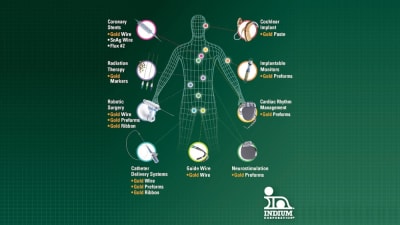
Indium Corporation is featuring its high-reliability AuLTRA® MediPro gold solder solutions at MD&M West. The MediPro is a family of...
Feature Image
Products: Materials
See the product of the month: SABIC's LNP™ and EXTEM™ thermoplastic resin grades engineered for compact medical components requiring high thermal and electrical performance.
Feature Image
Briefs: Materials
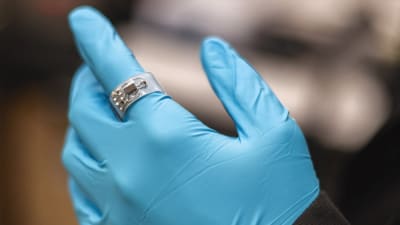
Wearable electronics could be more wearable, according to a research team at Penn State. The researchers developed a scalable, versatile approach to designing and fabricating wireless, Internet-enabled electronic systems that can better adapt to 3D surfaces. Read on to learn more.
Feature Image
Briefs: Sensors/Data Acquisition
This bioinspired design marks a significant step toward development of eco-friendly and highly sensitive wearable sensors, with broad potential in sports analytics and biomedical monitoring. Read on to learn more.
Feature Image
Briefs: Medical
Ensuring accuracy by force measurement and material testing is a necessary requirement in most every industry, especially orthopedic and medical parts manufacturing where the highest quality control is crucial. Read on to learn more.
Feature Image
Briefs: Tubing & Extrusion
Two promising options are polyetherimide resins and PEI-siloxane copolymers. These specialty thermoplastic materials not only are formulated without fluorine but also deliver desirable properties such as high heat and chemical resistance and low friction. Read on to learn more about them.
Feature Image
R&D: RF & Microwave Electronics
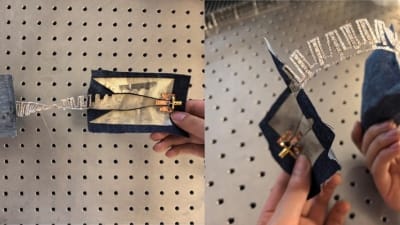
Stretchable waveguides maintain efficient, stable signal transmission of surface plasmon polaritons even when bent, twisted, or stretched. These plasmonic waveguides could make...
Feature Image
Products: Regulations/Standards
See the new products and services, including Syensqo's medical-grade polyphthalamide; non-PFAS low-retention additives for pipette tips from Avient; Binder's expanded M8 connector portfolio; fiber laser marking systems for UDI and traceability codes from FOBA; and more.
Feature Image
Briefs: Medical
EPFL researchers have engineered a fiber-based electronic sensor that remains functional even when stretched to over 10 times its original length. The device holds promise for smart textiles, physical rehabilitation devices, and soft robotics. Read on to learn more about it.
Feature Image
Videos of the Month: Robotics, Automation & Control
See the videos of the month, including one on using microfluidic devices for gene therapy; one on resisting antibiotic resistance; one on a humanoid robot surgeon; and more.
Feature Image
Briefs: Materials
Researchers from Harbin Institute of Technology and their collaborators have developed a multifunctional polyelectrolyte hydrogel reinforced with aramid nanofibers (ANFs) and MXene nanosheets, achieving outstanding performance in absorption-dominated electromagnetic interference (EMI) shielding and wearable sensing. Read on to learn more.
Feature Image
R&D: Medical
A team of scientists has developed a soft polymer hydrogel that can conduct electricity as well as metal can. Read on to learn more.
Feature Image
Features: Materials
Toll processing (or toll manufacturing) involves a manufacturer processing customer-supplied materials or parts for a predetermined fee. The customer retains ownership of the materials, while the toll provider applies specialized technologies, equipment, and expertise to deliver the finished components. Read on to learn more about it.
Feature Image
Features: Materials
Minimally invasive and interventional platforms increasingly demand smaller profiles, tighter tolerances, and components that maintain performance under thermal, chemical, and mechanical stress. Polyimide (PI) has emerged as a workhorse within these parameters. Read on to learn why.
Feature Image
White Papers: Medical
Document cover
How Parylene Crushes Sterilization, Friction & FDA Hurdles
Discover how thin-film Parylene conformal coatings safeguard medical devices with unmatched biocompatibility, reliability, and performance under extreme conditions. In this insightful...

White Papers: Materials
Document cover
Strategies to Prevent Costly Medical Device Recalls
Medical device recalls are increasing, creating serious risks for patients and manufacturers.

INSIDER: Medical
A pioneering liquid metal combination is shaping up as a potential secret weapon in the global fight against antimicrobial resistance and promises to outlast existing implant materials.
Feature Image

Ask the Expert

John Chandler on Achieving Quality Motion Control
Feature Image

FAULHABER MICROMO brings together the highest quality motion technologies and value-added services, together with global engineering, sourcing, and manufacturing, to deliver top quality micro motion solutions. With 34 years’ experience, John Chandler injects a key engineering perspective into all new projects and enjoys working closely with OEM customers to bring exciting new technologies to market.

Inside Story

Inside Story: Trends in Packaging and Sterilization

Feature Image

Eurofins Medical Device Testing (MDT) provides a full scope of testing services. In this interview, Eurofins’ experts, Sunny Modi, PhD, Director of Package Testing; and Elizabeth Sydnor, Director of Microbiology; answer common questions on medical device packaging and sterilization.

Videos