R&D: Sensors/Data Acquisition
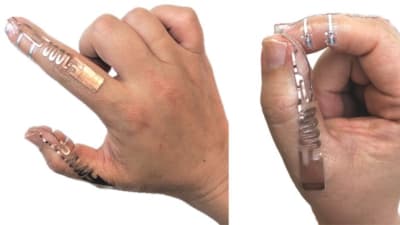
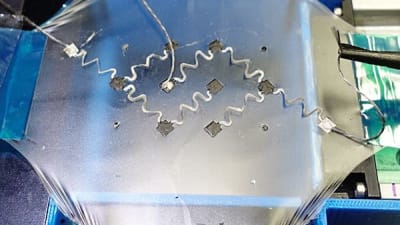
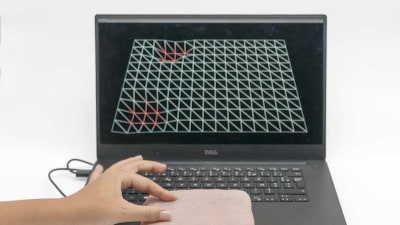
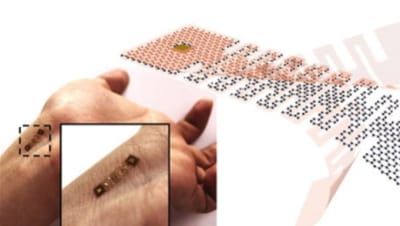
Artificial skin tactile sensors can feel the similar pressure and vibration felt by human skin. The new sensors can detect more sensitive tactile than the existing ones. The skin-based sensor detects...
Features: Robotics, Automation & Control
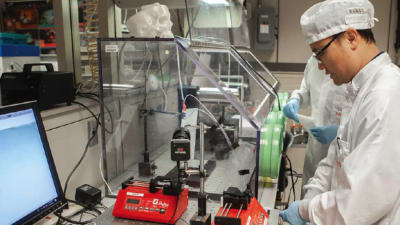
Peak Analysis and Automation (PAA), Farnborough, UK, has designed a budget-friendly plate handler that works in a tight laboratory footprint, developing an innovative product that could be a...
Briefs: Medical
Combining new classes of nanomembrane electrodes with flexible electronics and a deep learning algorithm could help disabled people wirelessly control an electric wheelchair,...
Features: Medical
The 17th annual Create the Future Design Contest for engineers, students, and entrepreneurs worldwide, sponsored by COMSOL, Inc., and...
Features: Medical
Learn more about ULISSES, an organ-preserving device that received top honors in the "Create the Future" Design Contest.
R&D: Medical
Researchers have developed a soft, flexible artificial skin made of silicone and electrodes. The skin’s system of soft sensors and actuators enable the artificial skin to conform to the exact shape...
R&D: Medical
Kanfit3D has entered into a joint research partnership with the University of Brescia (Italy). The project will develop unique implantable structures, using additive layer manufacturing (ALM)...
Features: RF & Microwave Electronics
One of the challenges of using commercial power supplies in medical instruments is electromagnetic interference (EMI). Commercial power supplies often list “meets Class B” for EMI, but...
R&D: Sensors/Data Acquisition
A new technique could allow expectant parents to hear their baby’s heartbeat continuously at home with a noninvasive and safe device that is potentially more accurate than any fetal heart rate monitor...
Briefs: Regulations/Standards
In 2018, an update on regulations for respiratory medical devices meant that volatile organic compounds (VOCs) emitted from the devices...
R&D: Electronics & Computers
Thin nylon films are several 100 times thinner than human hair and could thus be attractive for applications in bendable electronic devices or for electronics in clothing. The researchers...
Articles: Wearables
Learn more about the how "CSD" offers a cost-effective, non-invasive way of saving the lives of infants.
Briefs: Robotics, Automation & Control
EPFL scientists are developing new approaches for improved control of robotic hands — in particular for amputees — that combines individual finger control and automation...
Technology Leaders: Mechanical & Fluid Systems
Biologics and personalized medicine are increasingly becoming more popular — causing the biomanufacturing industry to change. Instead of sticking to large-scale production...
Products: Medical
Additive Manufacturing
Felix Partners, IJsselstein, the Netherlands, has launched several additive manufacturing platforms for industrial production applications. The Pro 3 integrates seamlessly...
Products: Medical
Proportional Pressure Controls
Microcontrollers from Clippard, Cincinnati, OH, utilize the company’s EVP and DVP proportional valves allowing for steady, repeatable downstream pressure as demand or processes change. The...
INSIDER: Medical
Wearable biosensors that non-invasively monitor health and fitness are growing in popularity among adults. But adapting this technology for use with babies is difficult because the...
INSIDER: Wearables
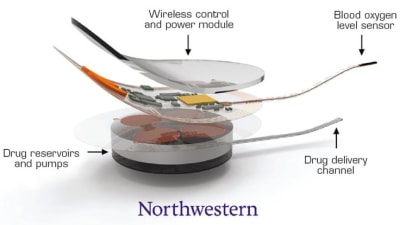
The sheer size of the external equipment required for controlling microfluidics has limited their use in portable, wearable technologies. Now have discovered how...
INSIDER: Wearables
Researchers have created a miniature robot that can crawl with inchworm-like motion. The underlying technology could one day transform smart wearables.
Blog: Manufacturing & Prototyping
Staying relevant in the medical device industry requires operating “with real-time information, comprehensive capabilities, and a global physical infrastructure to deliver speed, scope, and scale to keep pace in this rapidly changing market.”
From the Editor: Medical
With increasing investments in R&D to develop self-healing, comfortable monitoring systems, a recent report indicates that electronic skin is gaining...
INSIDER: Manufacturing & Prototyping
A fully print-in-place technique for electronics that is gentle enough to work on delicate surfaces, including human skin. The advance could enable technologies such as high-adhesion,...
INSIDER: Medical
Artificial intelligence can improve quality of images recorded by a relatively new biomedical imaging method. This paves the way towards more accurate diagnosis and cost-effective devices.
INSIDER: Medical
A smart shirt that measures lung function by sensing movements in the chest and abdomen has proved to be accurate when compared to traditional testing equipment. Researchers have used the smart...
Features: Packaging & Sterilization
Although the Food and Drug Administration (FDA) has reported progress on reducing overall infection rates with enhanced safety measures and better disinfection...
R&D: Medical
Researchers have a developed a double-duty hydrogel that both attacks the bacteria and encourages bone regrowth with a single application containing two active components.
Briefs: Materials
Chemical engineering researchers at Oregon State University have developed a vegetable-oil-based adhesive that could provide an eco-friendly option in making items such as bandages,...
From the Editor: Design
Manufacturers are focused on improving their design processes far more than on improving their design tools, according to a recent study.