Topic

Stories

0
1980
30
Briefs: Photonics/Optics
Researchers have designed a way to levitate and propel objects using only light by creating specific nanoscale patterning on the objects' surfaces. The work could be a step toward developing a spacecraft that could reach the nearest planet outside of our solar system in 20 years, powered and accelerated only by light. Read on to learn more.
Feature Image
Briefs: Electronics & Computers
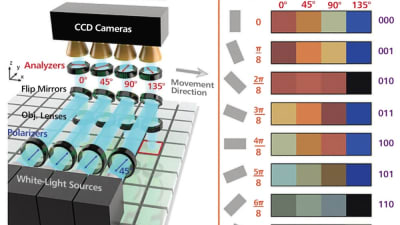
Purdue researchers have created technology aimed at replacing Morse code with colored “digital characters” to modernize optical storage. They are confident the advancement will help with the explosion of remote data storage during and after the COVID-19 pandemic. Read on to learn more.
Feature Image
Briefs: Manufacturing & Prototyping
A recent study demonstrates that soft skin pads doubling as sensors made from thermoplastic urethane can be efficiently manufactured using 3D printers. Read on to learn more.
Feature Image
Briefs: Manufacturing & Prototyping
A research team led by Associate Professor Tao Sun has made new discoveries that can expand additive manufacturing in aerospace and other industries that rely on strong metal parts. Read on to learn more.
Feature Image
Briefs: Photonics/Optics
Researchers in the emerging field of spatial computing have developed a prototype augmented reality headset that uses holographic imaging to overlay full-color, 3D moving images on the lenses of what would appear to be an ordinary pair of glasses. Read on to learn more about it.
Feature Image
Briefs: Software
This advance could enable quantum computers that use programmable optical qubits or “spin-photon qubits” to connect quantum nodes across a remote network. It could also advance a quantum internet that is not only more secure but could also transmit more data than current optical-fiber information technologies. Read on to learn more.
Feature Image
Briefs: Design
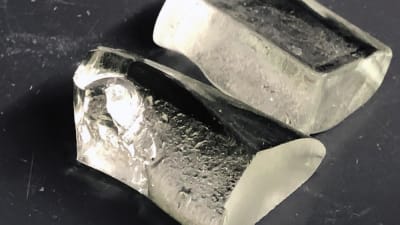
Worldwide, glass manufacturing produces at least 86 million tons of carbon dioxide every year. A new type of glass aims to cut this carbon footprint in half. Read on to learn more about the invention: LionGlass, engineered at Penn State.
Feature Image
Briefs: Electronics & Computers
Researchers have demonstrated the ability to engineer materials that are both stiff and capable of insulating against heat. This combination of properties is extremely unusual and holds promise for a range of applications, such as the development of new thermal insulation coatings for electronic devices. Read on to learn more.
Feature Image
Briefs: Materials
A future quantum network may become less of a stretch thanks to researchers at the Argonne National Laboratory, the University of Chicago, and Cambridge University. By “stretching” thin films of diamond, they created quantum bits that can operate with significantly reduced equipment and expense. Read on to learn more.
Feature Image
Briefs: Nanotechnology
MIT engineers have shown they can prevent cracks from spreading between composite’s layers, using an approach they developed called “nanostitching,” in which they deposit chemically grown microscopic forests of carbon nanotubes between composite layers. Read on to learn more about it.
Feature Image
Articles: Software
Read on to learn about the factors that go into driving zero defects in today’s intelligent vehicles.
Feature Image
Articles: Aerospace
A renewed focus on space sustainability has led to the emergence of several new space startups that are thinking out of the box to find novel technology solutions to tackle space junk. Read on to take a look at seven such startups.
Feature Image
Features: Wearables
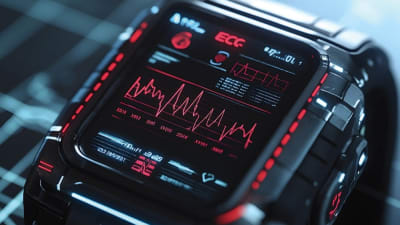
The healthcare landscape in 2025 will be reshaped by advancements in data analytics, AI, IoT, and wearable technologies, which together promise predictive, personalized, and accessible care. Read on to learn more about Editor and Director of Medical Content Sherrie Trigg's, as well as other industry professionals', thoughts on the matter.
Feature Image
Products: Sensors/Data Acquisition
Listen to MDB's medical podcasts, including one on the rise of advanced sensor technologies; one on the advancements that allow for continuous, real-time data collection from within the human body; one on the exploration of devices from fitness trackers to smartwatches; and one on the transformative role of microfabrication and MEMS technology in advancing sensor integration for medical devices. Listen now!
Feature Image
From the Editor: Medical
ECRI’s top 10 health technology hazards for 2025, in rank order, are... Read on to find out who made the list.
Feature Image
Products: Electronics & Computers
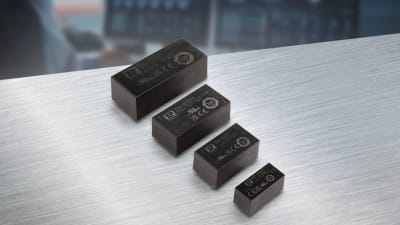
See where the product focus is this month: power supplies, including XP Power's family of single-output, PCB-mounting AC-DC power modules; a 3W medical DC-DC converter in a compact DIP case available from Micropower Direct; Advanced Energy Industries' 4 KJ capacitor charging unit with an integrated configurable 800 W AC-DC power supply designed to power medical laser applications; and more.
Feature Image
Products: Tubing & Extrusion
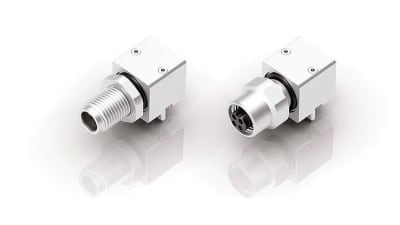
See the new products and services, including an auto-zero valve from Superior Sensor Technology; binder's angled panel-mount connectors; AMADA WELD TECH's integration of blue laser technology into its suite of micro welding technologies; maxon's high-efficiency joint drive; and more.
Feature Image
Briefs: Medical
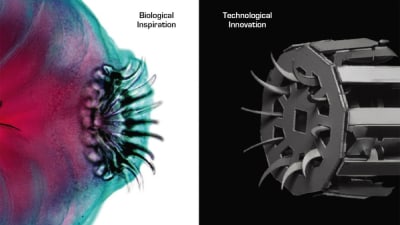
A new interdisciplinary effort led by Robert Wood, the Harry Lewis and Marlyn McGrath Professor of Engineering and Applied Sciences in the Harvard John A. Paulson School of Engineering and Applied Sciences, and James Weaver, of Harvard’s Wyss Institute, has drawn inspiration from an unexpected source: the world of parasites. Read on to learn more.
Feature Image
Briefs: Medical
A team at the Nanostructured and Novel Materials Laboratory at the University of Tabriz has created organic materials for brain and heart pacemakers that rely on uninterrupted signal delivery to be effective. Read on to learn more.
Feature Image
Briefs: Manufacturing & Prototyping
A team has reported that they used a class of widely available polymers called thermoplastic elastomers to create soft 3D printed structures with tunable stiffness. Engineers can design the print path used by the 3D printer to program the plastic’s physical properties so that a device can stretch and flex repeatedly in one direction while remaining rigid in another. Read on to learn more.
Feature Image
Briefs: Electronics & Computers
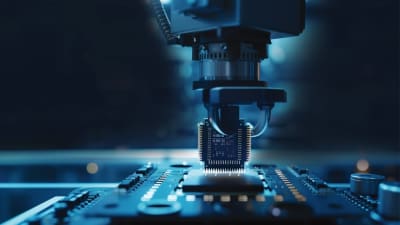
New research from NYU shows it’s possible to develop and build microchips that can not only identify multiple diseases from a single cough or air sample, but can also be produced at scale. Read on to learn more.
Feature Image
Briefs: Medical
Published in the journal Scientific Reports, researchers have created realistic, skin-like replicas made of Ecoflex, a type of silicone rubber that can potentially serve as a platform to evaluate risks of bacterial infections from intravenous catheters and test wearable sensors, among other biomedical applications. Read on to learn what the study found.
Feature Image
Briefs: Manufacturing & Prototyping
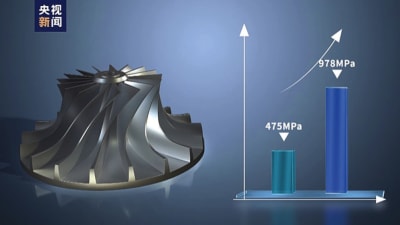
Researchers at The Institute of Metal Research of the Chinese Academy of Sciences have made significant strides in the development and manufacturing of near-void-free titanium alloys using 3D printing. This achievement could lead to the production of titanium alloy materials with exceptional fatigue resistance, paving the way for broader applications of metal 3D printing materials. Read on to learn more.
Feature Image
Briefs: Medical
The use of platinum-iridium (PtIr) alloys for pins and electrodes in medical devices is growing substantially in applications such as cardio and neuromodulation devices. This article focuses on PtIr applications. Read on to learn more.
Feature Image
R&D: Materials
Researchers have helped create a new 3D printing approach for shape-changing materials that are likened to muscles, opening the door for improved applications in robotics as well as biomedical and energy devices. Read on to learn more.
Feature Image
R&D: Wearables
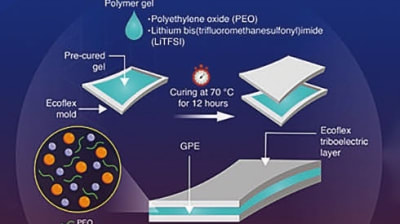
Researchers have developed a gel polymer-based triboelectric nanogenerator that generates electrical signals from body movement to power electronics like LEDs and functions as a self-powered touch panel for user identification. The device can stretch up to 375 percent of its original size and withstand rigorous mechanical deformations, making it suitable for wearable applications. Read on to learn more.
Feature Image
R&D: Medical
A team has developed new biosensors with which the ratio of NADPH to NADP+ can be measured in living cells in real time for the first time. The team’s observations provide new insights into the evolution of the most important protective function of cells, cellular detoxification. Read on to learn more.
Feature Image
R&D: Wearables
Researchers have developed a three-dimensional stretchable piezoelectric energy harvester that can harvest electrical energy using body movements. The device is to be used as a wearable energy harvester as it can be attached to the skin or clothes. Read on to learn more.
Feature Image
Features: Regulations/Standards
Read on to learn more about a significant step forward in the rapidly evolving field of digital therapeutics (DTx).
Feature Image

Ask the Expert

Eric Dietsch on the Benefits of Nitinol Wire
Feature Image

In collaboration with the Fort Wayne Metals Engineering team, Eric Dietsch focuses on supporting customers with material recommendations, product development, and education. Eric is available to help you and your company with any Nitinol-related questions or needs that you may have.

Inside Story

Inside Story: Trends in Packaging and Sterilization
Feature Image

Eurofins Medical Device Testing (MDT) provides a full scope of testing services. In this interview, Eurofins’ experts, Sunny Modi, PhD, Director of Package Testing; and Elizabeth Sydnor, Director of Microbiology; answer common questions on medical device packaging and sterilization.