

Inside this issue
Overview
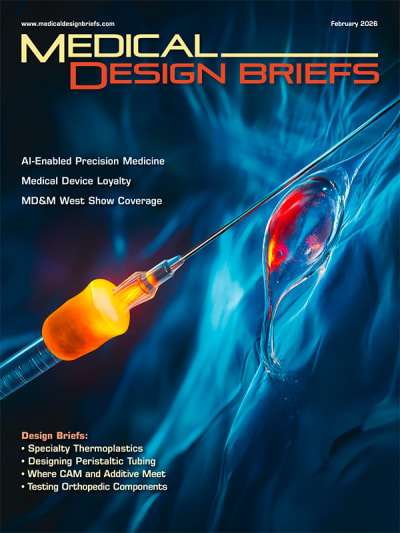
The April 2011 issue of Medical Design Briefs offers a comprehensive look at the latest advancements and innovations in the medical design field. This edition is particularly focused on enhancing medical technology through engineering solutions, rapid prototyping, and improved safety measures in surgical procedures.
Key Highlights:
-
Rapid Prototyping for High-Performance Medical Imaging Systems: This article discusses the importance of rapid prototyping in the development of medical imaging systems. It emphasizes how rapid prototyping allows for quicker iterations and testing of designs, leading to more efficient and effective imaging technologies. The article outlines various techniques and materials used in prototyping, showcasing case studies where rapid prototyping has significantly reduced development time and costs while improving the performance of imaging systems.
-
Reducing the Risk of Stray Energy Burns in Laparoscopic Surgery: A critical concern in laparoscopic surgery is the risk of stray energy burns, which can lead to serious complications. This piece explores innovative design solutions aimed at minimizing these risks. It discusses the engineering challenges faced in creating safer surgical instruments and highlights new technologies that enhance the precision and control of energy delivery during procedures. The article also reviews regulatory considerations and the importance of adhering to safety standards in the design process.
-
Concurrent Engineering Accelerates Surgical Instrument Solutions: This article delves into the concept of concurrent engineering, which integrates various engineering disciplines to streamline the design and manufacturing processes of surgical instruments. By fostering collaboration among design engineers, manufacturers, and healthcare professionals, concurrent engineering can lead to faster development cycles and improved product quality. The article provides examples of successful implementations of this approach, illustrating how it has led to innovative solutions that meet the evolving needs of the medical community.
Advancements in LED and Solid-State Lighting: The issue also features a section on the latest advances in LED and solid-state lighting technologies. With a focus on energy efficiency, this segment discusses how these lighting solutions are being integrated into medical environments to enhance visibility and reduce energy consumption. The article includes design tutorials and application notes that provide insights into the practical implementation of these technologies in medical settings.
-
Fluid Metering Technologies: Another highlight is the introduction of Fluid Metering’s new OEM catalog, which details the capabilities of their ultra-precise fluid control systems. This section emphasizes the importance of accurate fluid delivery in medical applications, such as in drug delivery systems and diagnostic equipment. The catalog showcases various products designed to meet the demanding needs of the medical, analytical, and industrial markets.
-
Graphic Overlays and Design Options: The magazine also covers innovative design options for graphic overlays, nameplates, and decals. This section highlights how aesthetic and functional design elements can enhance the usability and appearance of medical devices. It discusses the role of graphic design in improving user interaction and compliance with regulatory standards.
Conclusion:
The April 2011 issue of Medical Design Briefs serves as a valuable resource for design engineers, medical professionals, and industry stakeholders. It not only highlights the latest technological advancements but also addresses critical challenges in the medical design field. By focusing on rapid prototyping, safety in surgical procedures, and innovative engineering practices, this edition provides insights that can lead to improved patient outcomes and more efficient medical technologies.
Overall, the magazine encourages readers to embrace creativity and collaboration in their design processes, ultimately contributing to the advancement of healthcare solutions.
Features
-
Applications
Solving a Complicated Medical Design Problem With a Single Metal Stamping
Concurrent Engineering Accelerates Surgical Instrument Solutions
-
Mission Accomplished
System Uses Electrical Trickery on the Brain to Induce Realistic Spaceflight Effects
Tech Briefs
-
Design Considerations for Battery Connectors
Method of Reducing Stray Energy Burns in Laparoscopic Surgery
Motion Artifact Extraction Technology for Non-Invasive Blood Pressure Measurement
Corneal Endothelium Delivery Instrument
Software for Image Contrast Enhancement
Highly Sensitive Micro Fluorescence Detector for Bioanalytical Devices
Products
-
Submillimeter Optical Apertures
Custom Force Sensors for Infusion Pumps
Antimicrobial Multipolymer Compound
Multilayer Ceramic Capacitor Arrays
Portable Measurement Instrument
Miniature, Metric PCB Screw Terminals
Quiet-Operation Solenoid Valve
Closed-Loop Linear Motion Module