
Inside this issue
Overview
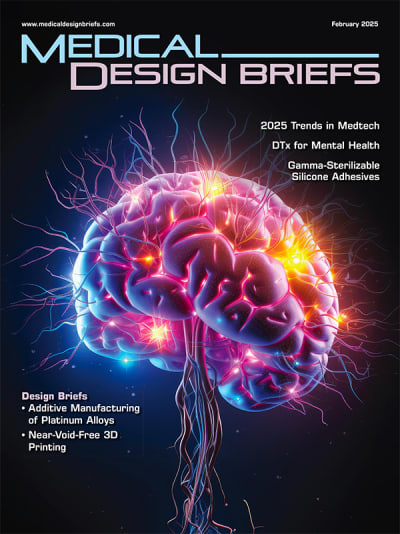
The February 2025 issue of Medical Design Briefs presents a comprehensive overview of the latest advancements and trends in medical technology, focusing on innovation, accessibility, and personalization in healthcare. This edition is particularly notable for its exploration of digital therapeutics, materials science, and manufacturing techniques that are shaping the future of medical devices and treatments.
Key Features
-
2025 Trends in Healthcare: Bridging Technology, Personalization, and Accessibility The issue opens with an insightful column discussing the significant trends expected to influence healthcare in 2025. It emphasizes the integration of technology with personalized care, aiming to enhance accessibility for patients. The article highlights how advancements in digital health tools are making healthcare more responsive to individual needs, ultimately improving patient outcomes.
-
Innovative Materials and Manufacturing Techniques The magazine features several articles on cutting-edge materials and manufacturing processes that are revolutionizing the medical field:
- Silicones: A Skin-Friendly Gamma-Sterilizable Pressure-Sensitive Adhesive: This article discusses the development of a new silicone adhesive that is not only skin-friendly but also capable of withstanding gamma sterilization. This innovation is crucial for medical devices that require both adhesion and sterility.
- Additive Manufacturing for Platinum Alloys: The issue explores the use of additive manufacturing techniques to create components from platinum alloys, which are known for their biocompatibility and resistance to corrosion. This advancement could lead to more durable and effective medical implants.
- Near-Void-Free 3D Printing: Another feature delves into a new 3D printing technique that minimizes voids in printed materials, enhancing the structural integrity of medical devices. This technology is expected to improve the reliability and performance of various healthcare products.
-
Digital Therapeutics and FDA Clearance A landmark article discusses a recent FDA clearance for a novel software designed to treat mental health conditions. This software can be integrated into existing media, such as video games and mobile applications, providing a new avenue for delivering therapeutic interventions. The article highlights the potential of digital therapeutics to reach a broader audience, particularly for those who may not have access to traditional mental health services.
Research and Development Highlights The issue includes a roundup of significant research developments:
- Prosthetic Material to Reduce Infections: Researchers have developed a new prosthetic material that aims to reduce the risk of infections associated with intravenous catheters. This innovation could significantly improve patient safety and comfort.
- Microchips for Disease Detection: Another exciting development is the creation of microchips capable of detecting and diagnosing diseases. This technology promises to enhance diagnostic accuracy and speed, potentially transforming how healthcare providers approach patient care.
- Scalable 3D Printing Techniques: The magazine discusses scalable 3D printing methods that produce stretchable and flexible soft plastics, which could be used in a variety of medical applications, from prosthetics to wearable devices.
-
Managing Side Effects of Brain Pacemakers An article highlights materials designed to help manage the side effects of brain pacemakers. This research is particularly relevant for patients with neurological conditions, as it addresses the challenges associated with long-term device implantation.
-
Innovative Mechanisms for Medical Devices The issue also features a unique design brief on a tapeworm-inspired tissue-anchoring mechanism for medical devices. This innovative approach could improve the stability and effectiveness of various implants, enhancing patient outcomes.
Departments and Additional Content
The magazine includes various departments that provide additional insights and resources:
- Podcasts: A section dedicated to podcasts that discuss current topics in medical design and technology.
- R&D Roundup: A summary of recent research and development activities in the medical field.
- New Products: An overview of the latest products entering the market, showcasing innovations that could impact patient care.
Advertisers Index
The issue concludes with an advertisers index, providing readers with information on companies and products relevant to the medical design industry.
Conclusion
Overall, the February 2025 issue of Medical Design Briefs serves as a vital resource for professionals in the medical technology field. It highlights the ongoing innovations that are shaping the future of healthcare, emphasizing the importance of integrating technology with personalized care to improve patient outcomes. With a focus on digital therapeutics, advanced materials, and manufacturing techniques, this edition provides a comprehensive look at the trends and developments that are set to define the medical landscape in the coming years.
Features
-
Articles
7 2025 Trends in Healthcare: Bridging Technology, Personalization, and Accessibility
12 Silicones A Skin-Friendly Gamma-Sterilizable Pressure-Sensitive Adhesive
16 Landmark FDA Clearance May Accelerate Compelling Digital Therapeutics
-
R & D
20 Efficient Wearable Energy Harvester
20 Sensors Charge Biological Cells
-
From the Editor
4 From the Editor - AI Tops ECRI’s 2025 Health Tech Hazards List
Tech Briefs
-
21 Additive Manufacturing for Platinum Alloys
25 Prosthetic Material Could Help Reduce Infections from Intravenous Catheters
26 Researchers Develop Microchips That Detect and Diagnose Diseases
27 Scalable 3D Printing Technique Produces Stretchable, Flexible Soft Plastics
29 Materials Help Manage Side Effects of Brain Pacemakers
30 A Tapeworm-Inspired, Tissue-Anchoring Mechanism for Medical Devices