Stories

0
5280
30
INSIDER: Electronics & Computers
Treating PTSD with Removable Brain Implant
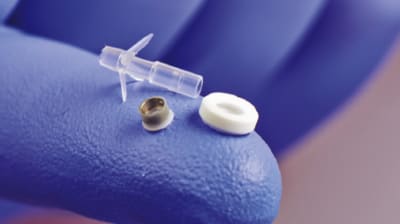
Scientists at Lawrence Livermore National Laboratory (LLNL) recently received $5.6 million from the Department of Defense's Defense Advanced Research Projects Agency (DARPA) to develop an implantable neural interface that can record and stimulate neurons within the brain to treat neuropsychiatric...
INSIDER: Software
Medical Imaging Software Helps Diagnose Lung Cancer
Scientists at the Rochester Institute of Technology, Rochester, NY, are developing imaging software that, they say, could give radiologists a tool to measure the growth of nodules in patients at risk of lung cancer. In a two-year study, Nathan Cahill, an associate professor in RIT’s School of...
News: Medical
FDA Issues Draft Guidance on Cybersecurity
Recognizing that the need for effective cybersecurity to ensure medical device functionality has become more important with the increasing use of wireless, Internet- and network-connected devices, and the frequent electronic exchange of medical device-related health information, the FDA has issued a draft...
INSIDER: Medical
Improving MRI with Nanoscale Composites
A team of researchers from Rice University, Houston, TX, and The Methodist Hospital Research Institute say that submicroscopic particles containing even smaller particles of iron oxide could make magnetic resonance imaging (MRI) a far more powerful tool to detect and fight disease. They created composite...
INSIDER: Medical
Bionic Pancreas Provides Dramatic Results in Clinical Trials with Type 1 Diabetics
A team of researchers from Boston University and Massachusetts General Hospital report their study results in a paper published in the New England Journal of Medicine, that reveals that the latest version of a bionic pancreas device was successfully tested in type 1...
News: Regulations/Standards
FDA Issues First Phase of GUDID Guidance
The U.S. Food & Drug Administration (FDA) has issued the first phase of its Global Unique Device Identification Database (GUDID): Guidance for Industry on June 11, 2014. To quickly provide industry with information critical to successful use of the GUDID, the FDA is issuing the GUDID Guidance in two...
Industry News: Medical
June 2014 Mid-Month Industry News
Here is the latest batch of news from the medical products community. Please click the link for more.
INSIDER: Electronics & Computers
Printing Electronic Circuits and Sensors Directly onto 3D Surfaces
Digital printing technologies play an important role in microelectronics, microsystems engineering, and sensor systems. Recently, scientists at the Fraunhofer Institute for Manufacturing Technology and Advanced Materials IFAM in Bremen, Germany, have discovered that they can use...
INSIDER: Imaging
Detecting Ultrahigh Frequency Sound Waves for Unprecedented Clarity
Researchers with the U.S. Department of Energy (DOE)’s Lawrence Berkeley National Laboratory, Berkeley, CA, say that they have demonstrated a technique for producing, detecting, and controlling ultrahigh frequency sound waves at the nanometer scale. Through a combination of...
INSIDER: Medical
Improving Retinal Prostheses and Artificial Vision
Researchers at Stanford University say that they used electrical stimulation of retinal cells to produce the same patterns of activity that occur when the retina sees a moving object. They say that this is a step toward restoring natural, high-fidelity vision to blind people.
INSIDER: Medical
Making Laser-Like Beams with 250x Less Power
Using precarious particles called polaritons that straddle the worlds of light and matter, University of Michigan, Ann Arbor, researchers have demonstrated a new, practical and potentially more efficient way to make a coherent laser-like beam. They say that their first-time polariton laser is fueled by...
INSIDER: Electronics & Computers
Students Design Defibrillator Vest
A team of biomedical engineering students at Johns Hopkins University, Baltimore, MD, designed a lightweight, easy-to-conceal shirt-like garment to deliver life-saving shocks to patients experiencing serious heart problems. The students say their design improves upon a wearable defibrillator system that is...
INSIDER: Materials
Nature-Inspired Model for Low-Friction Bearings
The natural mechanical properties of natural joints are considered unrivalled. Cartilage is coated with a special layer of lubrication that allows joints to move virtually friction-free, even under high pressure. Using simulations on supercomputers, scientists from Forschungszentrum Jülich in Germany...
INSIDER: Medical
Further Progress Toward Detecting Glucose Levels in Saliva
A team of engineers at Brown University, Providence, RI, say that they have developed a new biochip sensor that that can selectively measure glucose concentrations in a complex fluid like saliva. This an important step toward a device that could enable diabetics to test their glucose levels...
INSIDER: Materials
Wormlike Motion Lets Hydrogels Swim
Inspired by earthworms, which use peristaltic locomotion to wriggle, an engineering student at the University of Cincinnati's College of Engineering and Applied Science used a worm’s contracting and expanding motion to provide a way for gels to freely swim in liquids.
INSIDER: Medical
Introducing the Bionic Man
The NIH’s Bionic Man site helps viewers visually explore some of the latest bioengineering creations from research funded by the National Institute of Biomedical Imaging and Bioengineering. From prosthetics to artificial kidneys, these technologies are changing lives now and in the future.
INSIDER: Medical
World’s Smallest, Fastest Nanomotor Created
A team of engineers at The University of Texas at Austin say that they have built the smallest, fastest, and longest-running synthetic motor to date. This nanomotor, which could fit inside a human cell, is an important step toward developing miniature machines that could one day move through the body to...
INSIDER: Imaging
Making Augmented Reality Easier on the Eyes
Augmented reality is quickly becoming more integrated into everyday usage, such as smartphone apps that can identify landmarks, constellations, and more. Head-worn goggles, like Google Glass can superimpose computer-generated images onto your direct view of the physical world. But, moving your eyes back...
INSIDER: Imaging
Chip Could Eliminate Need for Magnets in Imaging
Researchers at the National Institute of Standards and Technology (NIST), Gaithersburg, MD, say that they have built and demonstrated a chip-scale device that both produces and detects a specialized gas used in biomedical analysis and medical imaging. The new microfluidic chip produces polarized (or...
R&D: Medical
A team of engineers from the University of Illinois at Urbana-Champaign and Northwestern University, Evanston, IL, have demonstrated thin, soft stick-on patches that stretch and move with the skin...
Feature Image
R&D: Electronics & Computers
An interdisciplinary research team from Northwestern University, Evanston, IL, the University of Illinois, Urbana-Champaign, and the University of Arizona, Tucson, has developed a flexible medical implant that...
Feature Image
R&D: Medical
A team of mechanical and materials engineers at Duke University, Durham, NC, have devised a way to improve the efficiency of lithotripsy—the crushing of kidney stones using focused shock...
Feature Image
R&D: Medical
Scientists at the University of Buffalo, NY, are exploring the use of PoP-liposomes or nanoballoons to get chemotherapy drugs where they need to go. They then blast the balloons with red...
Feature Image
R&D: Medical
Exciting news was reported by an international team of life scientists at the University of Louisville, KY; UCLA, Los Angeles, CA; and the Pavlov Institute of Physiology, Saint Petersburg, Russia; who...
Feature Image
R&D: Sensors/Data Acquisition
Researchers at North Carolina State University, Raleigh, say that they have developed a new, stretchable antenna that can be incorporated into wearable technologies, such as health monitoring...
Feature Image
From the Editor: Medical
From the Editor — But Will We Wear Them?
Speaking at a plenary panel session on Innovations Shaping the Future of Patient Care at Medical World Americas in Houston in April, Dr. Stephen N. Oesterle, Senior Vice President for Medicine and Technology at Medtronic, Minneapolis, MN, predicted that implantable and wearable sensor technology will be...
Features: Materials
The plasticizers used to render PVC flexible constitute about a third of the vinyl compound by weight and have a significant effect on overall properties and performance. The most widely used...
Feature Image
Features: Tubing & Extrusion
In the US, many high-volume tubing suppliers have moved production facilities overseas to low-cost producers like China or Mexico. Minimum buys are now the rule, leaving many US...
Feature Image
Applications: Electronics & Computers
Component manufacturers are continually developing new and smaller packages for components that are mere fractions of a millimeter and have board to component clearances of less than a...
Feature Image

Ask the Expert

John Chandler on Achieving Quality Motion Control
Feature Image

FAULHABER MICROMO brings together the highest quality motion technologies and value-added services, together with global engineering, sourcing, and manufacturing, to deliver top quality micro motion solutions. With 34 years’ experience, John Chandler injects a key engineering perspective into all new projects and enjoys working closely with OEM customers to bring exciting new technologies to market.

Inside Story

Inside Story: Trends in Packaging and Sterilization
Feature Image

Eurofins Medical Device Testing (MDT) provides a full scope of testing services. In this interview, Eurofins’ experts, Sunny Modi, PhD, Director of Package Testing; and Elizabeth Sydnor, Director of Microbiology; answer common questions on medical device packaging and sterilization.

Videos