Features: Manufacturing & Prototyping
As regulatory demands intensify and product complexity grows, automation and robotics provide medtech engineers with a powerful set of tools. From high-speed motion control to cleanroom-certified cobots and predictive maintenance, the technologies now available can transform the entire device manufacturing life cycle. Read on to learn more.
Features: Medical
Medical device contract manufacturing is poised for robust and sustained growth, with the global market projected to surpass $150 billion by 2030. This expansion is being driven by technological innovations, shifting healthcare demands, and increasing reliance on outsourcing to improve efficiency and cost-effectiveness. Read on to learn more.
From the Editor: Materials
In 2024, Plastics Ingenuity interviewed a share of the stakeholders in the healthcare packaging sector. These organizations include medical device manufacturers, pharmaceutical companies, biotech products, and life science applications. Read on to learn more.
Videos of the Month: Electronics & Computers
Best Practices for Securing Medical Devices
In this season, we are taking an in-depth look at addressing cyber threats and safety in medical devices, and this episode...
Features: Manufacturing & Prototyping
The global medical device manufacturing industry is undergoing a rapid transformation driven by technological innovation, automation, and increasing demands for customized, high-quality care. This article provides an overview of key technological advancements reshaping the medical device manufacturing landscape, including additive manufacturing, robotics, laser welding, and more.
From the Editor: Design
As the pace of innovation accelerates across the medical device industry, staying informed on core technologies and market trends is more important than ever. With that in mind, we are proud to introduce the 2025 summer edition of the Medical Design Briefs Resource Guide — a new, semi-annual issue designed to deliver essential insights into the components, materials, and services that power medical device development and manufacturing. Read on to learn more.
Features: Manufacturing & Prototyping
This article explores how the film cast process manufactures micro tubing products from liquid polymer coatings, then defines three important test methods and specifications that are needed to optimize film cast PTFE’s quality and material strength properties. Read on to learn more.
Features: Design
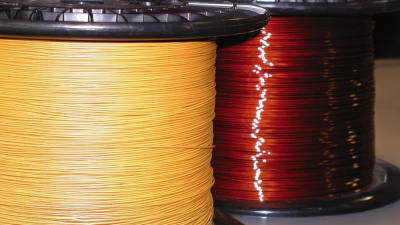
The lack of compatibility between high electrical and highly dynamic requirements in cable design is not solved but taken to a new level with medical megatrends such as AI, robotics, and miniaturization together with indispensable sustainability and safety demands. Read on to learn more.
Products: Software
See the new products, including Microchip's BR235 and BR235D series of 25A QPL hermetically sealed electromechanical power relays; PIC Wire & Cable’s new Single Pair Ethernet; Galleon Embedded Computing's high performance recorder (HPR); Pixus Technologies' new SOSA aligned ATR enclosures utilizing the 3U OpenVPX form factor; and more.
Articles: RF & Microwave Electronics
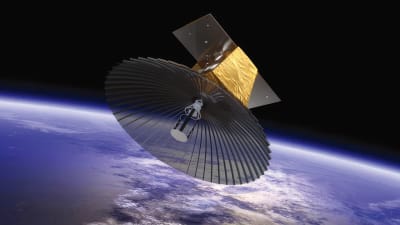
Aitech introduced its new AI-enabled picosatellite constellation platform, IQSat, at the 40th annual Space Symposium in April. The platform is designed to bring ready to use COTS embedded computing to data heavy earth imaging and pattern recognition applications. Read on to learn more.
Application Briefs: Manned Systems
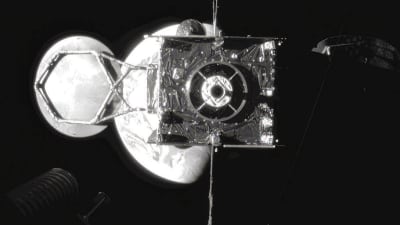
A Mission Extension Vehicle developed by Northrop Grumman’s Space Logistics LLC has successfully undocked with Intelsat’s IS-901 satellite, completing its life extension service. This marks the first undocking between two commercial spacecraft in the geosynchronous earth orbit graveyard. Read on to learn more.
Application Briefs: Aerospace
Embraer has finalized an agreement with Intelsat to install its high-speed in-flight connectivity system on their E-Jet E2s during aircraft production. The system, with transmission speeds up to 275 Mbps, gives passengers a similar in-flight streaming and surfing experience to their home networks. Read on to learn more.
Application Briefs: Photonics/Optics
BlueHalo announced the successful milestone demonstration of its two-terminal long-haul, multi-orbit laser communication system. The achievement marks a significant breakthrough in the development of space-based laser communication technology with far-reaching implications for national security and commercial sectors. Read on to learn more.
Application Briefs: Defense
Airbus has been awarded the U.K. Ministry of Defense’s Oberon contract to design and build two Synthetic Aperture Radar satellites with day-and-night, all-weather, space-based ‘Intelligence, Surveillance and Reconnaissance’ (ISR) capability. Read on to learn more.
Briefs: Aerospace
The MP42 satellite, which launched into low Earth orbit two and a half years ago aboard the SpaceX Transporter-4 mission, recently took an unexpected hit from a small piece of space debris or micrometeoroid. The impact created a 6 mm hole, roughly the size of a chickpea, in one of its solar panels. Read on to learn more.
Briefs: Test & Measurement
Someday, instead of large, expensive individual space satellites, teams of smaller satellites – known by scientists as a “swarm” – will work in collaboration, enabling greater accuracy, agility, and autonomy. Among the scientists working to make these teams a reality are researchers at Stanford University’s Space Rendezvous Lab, who recently completed the first-ever in-orbit test of a prototype system. Read on to learn more.
Briefs: Manned Systems
The U.S. Naval Research Laboratory (NRL), in partnership with NASA’s Marshall Space Flight Center (MSFC), has developed StarBurst, a small satellite (SmallSat) instrument for NASA’s StarBurst Multimessenger Pioneer mission, which will detect the emission of short gamma-ray bursts (GRBs), a key electromagnetic (EM) signature that will contribute to the understanding of neutron star (NS) mergers. Read on to learn more.
Briefs: Propulsion
Go faster, farther, more efficiently. That’s the goal driving spacecraft propulsion engineers like Chen Cui, a new assistant professor at the University of Virginia School of Engineering and Applied Science. Cui is exploring ways to improve electric propulsion thrusters — a key technology for future space missions. Read on to learn more.
Briefs: Energy
Thermoelectric generators that can convert waste heat to clean energy could soon be as efficient as other renewable energy sources, like solar, according to a team led by Penn State scientists. Using high-entropy materials, the researchers created more efficient thermoelectric materials than previously possible, an advancement that they said could even help make long-distance space exploration possible. Read on to learn more.
Articles: Photonics/Optics
The optical atomic clocks that exist today are bulky and require complex laboratories with specific laser settings and optical components, making it difficult to use them outside lab environments, such as in satellites, remote research stations, or drones. Now, a research team has developed a technology that makes optical atomic clocks significantly smaller and accessible for more widespread use in society. Read on to learn more.
Articles: RF & Microwave Electronics
The Department of Defense is developing technology for satellites to communicate via lasers. Laser communications could transmit data faster and more securely than traditional radio frequency communications. Read on to learn more.
Articles: Design
In an industry where failure is not an option, the enduring strength of MIL-STD-1553B — and the innovations keeping it relevant — serve as a powerful reminder that sometimes, the best way forward is to build on the foundations that have already proven their worth. Read on to learn more.
Articles: RF & Microwave Electronics
The global satellite communications sector is undergoing profound transformation. Read on to learn more about it.
Articles: Manufacturing & Prototyping
NearSpace Launch is actively redefining the boundaries of responsive spaceflight through its development and deployment of the Train Rapid on Orbit Payload (TROOP) and ThinSat platforms. Read on to learn more.
Products: Electronics & Computers
See the product of the month: Lanner Electronics' ICS-P770 rugged industrial-grade computer with ICS/SCADA security. It is designed to power mission-critical substation automation, virtualization, and network security.
Articles: Energy
See the products of tomorrow, including a new type of optical receiver able to restore chaotic signals in free-space optical communication links distorted by atmospheric turbulence; a battery that can take any shape; and a new technology for an aircraft configuration that utilizes a strut/truss-braced oblique variable-sweep wing mounted on a constant cross-section geometry fuselage.
Products: Semiconductors & ICs
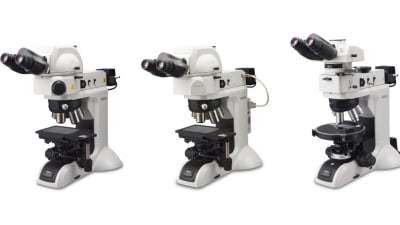
See what's new on the market, including the ZE2531 Isolation Transformer from Coilcraft; Nikon Metrology's three new ECLIPSE microscope models, the LV100NDA LED, LV100ND LED, and LV100N POL LED; Würth Elektronik's expanded STAR-TEC and STAR-TEC LFS snap ferrite families; Walter's new milling grade, PVD-coated Tiger·tec® Gold WSM36G; and more.
Briefs: Design
In a new study, researchers from the University of Illinois Urbana-Champaign reported that automated high-resolution electron imaging can capture the nanoscale deformation events that lead to metal failure and breakage at the origin of metal failure. Read on to learn more.
Briefs: Manufacturing & Prototyping
Innovators at the NASA Glenn Research Center have developed a toughened hybrid reinforcement material made from carbon fiber and carbon nanotube (CNT) yarn for use in polymer matrix composites (PMCs). The new material improves toughness and damping properties of PMCs, enhancing impact resistance, fatigue life, as well as structural longevity. Read on to learn more.























 INSIDER: Medical
 Features: Medical
 Features: Materials
 From the Editor: Medical
 INSIDER: Medical
 Features: AR/AI

 Podcasts: Medical
 Podcasts: Medical
 Podcasts: Design
 On-Demand Webinars: Manufacturing & Prototyping
 Podcasts: AR/AI
 Podcasts: Green Design & Manufacturing
