Design & Testing

Markets

What are the major medical device markets? Find out here. Our news and videos focus on essential sectors, including prosthetics, drug delivery, and rehabilitation.

Stories

43,108
108,115,156
0
870
30
INSIDER: Materials
Designing Better, Longer-Lasting Medical Implants
Implanted biomedical devices used for drug delivery, tissue engineering, or sensing can help improve disease treatment. But, often these devices are susceptible to attack by the immune system. To help reduce that immune-system rejection, a team of scientists at Massachusetts Institute of Technology,...
Mission Accomplished: Medical
A stay on the International Space Station is no vacation. During a visit to the orbiting National Laboratory, astronauts divide their time among a variety of tasks. For one, they look after a...
Feature Image
Applications: Medical
An important movement within the medical device industry is poised to revolutionize the point-of-care (POC) drug delivery market. The goal at hand—making drug delivery devices more...
Feature Image
R&D: Medical
PolySTAT Polymer Strengthens Blood Clots
University of Washington researchers have created PolySTAT, a new injectable polymer that strengthens blood clots. The polymer, administered in a single shot, addresses internal injuries and reduces blood loss.
R&D: Medical
Hearing-Loss Treatment Offers Precise Drug Delivery
Current hearing-loss treatments deliver drugs to the middle ear by requiring repeat injections. A device from The Charles Stark Draper Laboratory, Cambridge, MA, sends precise, automated, and timed quantities of one or more drugs directly into the fluid of the inner ear.
Briefs: Medical
Drug-Encapsulated Prosthetic Enhancement
This invention places a drug delivery system inside a prosthetic implant to circumvent the physical issues encountered after fitting the implant. Implants being relatively large in size would be able to house the drug-carrying device inside them without compromising the structural integrity or the...
INSIDER: Medical
Photovoltaic Retinal Implant Improves Functional Vision
New wireless retinal implants from Stanford University researchers convert light transmitted from special glasses into electrical current. The resulting current stimulates the retinal neurons known as bipolar cells.
INSIDER: Medical
Researchers Develop Artificial Blood Vessels
Vienna University of Technology and Vienna Medical University researchers have created artificial blood vessels from a special elastomer material. To produce the vascular prostheses, polymer solutions were spun in an electrical field to form very fine threads and wound onto a spool. The prostheses can...
INSIDER: Medical
NIST Team Identifies 3D-Printing Intricacies
Manufacturing researchers at the National Institute of Standards and Technology (NIST) have identified important challenges for powder bed fusion, the chief method for "printing" metal parts. By identifying the factors that influence the manufacturing process, professionals will improve the creation of...
INSIDER: Medical
Additive Manufacturing Improves Glucose Sensor
Engineers at Oregon State University have used additive manufacturing to create an improved glucose sensor for Type 1 diabetes patients. Matched with portable infusion pumps, the new system monitors blood glucose concentrations, delivers insulin, and maintains safe hormone levels.
INSIDER: Medical
New Microscopy Technique Zooms in on Organs
A biomedical engineer at UNSW Australia uses semiconductor technology to view organs of the human body, down to the level of a single cell. The imaging technology, developed by optical and industrial measurement manufacturer Zeiss, was originally created to scan silicon wafers for defects.
INSIDER: Medical
Implantable Micropacemaker Resides Entirely Within Fetus
A team of investigators at Children’s Hospital Los Angeles and the University of Southern California have developed an implantable micropacemaker designed for use in a fetus. The micropacemaker, designated a Humanitarian Use Device by the US Food & Drug Administration (FDA), will...
Applications: Medical
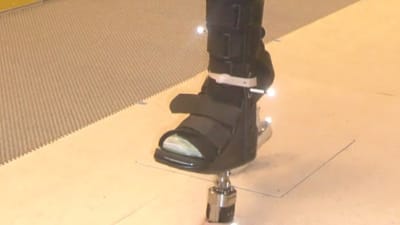
It’s not always easy to walk in someone else’s shoes. It’s even more difficult if those shoes belong to a person with an artificial leg. However, that’s exactly what...
Feature Image
Products: Medical
Qosina, Edgewood, NY, announces that its stopcocks are offered in 1-, 2-, 3-, and 4-way fluid direction and 2, 3, 4, 5, and 6 gang manifolds. Connections include male luer slip, male luer lock, male luer with spin lock,...
Feature Image
R&D: Medical
Auditory Implant Bypasses Inner Ear
A team of hearing and communication experts led by the Keck School of Medicine of USC successfully implanted an auditory brainstem implant (ABI) device in four children who previously could not hear.
Global Innovations: Medical
École Polytechnique Fédérale de Lausanne (EPFL), Lausanne, Switzerlandhttp://actu.epfl.ch Spinal cord injuries may no longer mean a lifetime of paralysis, say researchers at EPFL. They have developed a new...
Feature Image
Products: Materials
Zeus, Orangeburg, SC, announces the release of FluoroPEELZ™, a new optically clear peelable heat shrink, which offers catheter manufacturers a new method to increase yield and improve safety. Removing...
Feature Image
INSIDER: Medical
Bioplastics Demonstrate Antibacterial Properties
According to a recent study by the University of Georgia College of Family and Consumer Sciences, bioplastics made from protein sources have shown significant antibacterial properties. The materials could be used in medical applications, such as wound healing dressings, sutures, catheter tubes, and...
INSIDER: Medical
Artificial Hand Features Muscle-Like Wires
Inspired by nature, Saarland University researchers have equipped an artificial hand with muscles made from shape-memory wire. The new technology enables the fabrication of flexible and lightweight robot hands for industrial applications and novel prosthetic devices.
INSIDER: Medical
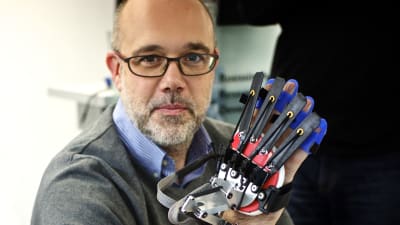
Researchers at the University of Hertfordshire have developed a robotic glove prototype for stroke sufferers. The device can be used in homes to support rehabilitation and personal independence.
Feature Image
INSIDER: Medical
University of Maryland researchers have developed a spray-on material that stretches and reliably conducts electricity. The process could be used in electronic fabrics or artificial skin.
Feature Image
News: Medical
2 New AAMI Standards to Prevent Tubing Misconnections
AAMI, the Association for the Advancement of Medical Instrumentation, is leading the small-bore connectors initiative, an international effort to decrease tubing misconnections and increase patient safety. Recently, AAMI has released two additional standards focusing on how to design connectors...
INSIDER: Medical
Researchers Use Magnetic Fields to Stimulate Brain Tissue
Researchers at MIT have developed a method to stimulate brain tissue using external magnetic fields and injected magnetic nanoparticles. The technique allows direct stimulation of neurons, which could be an effective treatment for a variety of neurological diseases, without the need for...
INSIDER: Robotics, Automation & Control
Researchers Developing Bionic Heart
Scientists at the Texas Heart Institute are working to create a permanent artificial heart.
INSIDER: Robotics, Automation & Control
Robotic Ankle Keeps an Eye on the Road
Mo Rastgaar, a Michigan Technological University mechanical engineer, and his team have developed a robotic ankle that "sees" where it is going.
INSIDER: Medical
Artificial 'Smart Skin' Detects Subtle Pressures
A Seoul National University professor developed a synthetic technology that reproduces the sense of touching real human skin. The artificial skin senses pressure, temperature, strain, and humidity. The soft material is also embedded with self-heating elements.
INSIDER: Medical
New Material Self-Stretches
A University of Rochester team has fabricated a material that self-stretches as it cools. The rubber-like polymer reverts back to its original shape when heated.
INSIDER: Medical
Hawking's ACAT Technology Now Open-Source
The Assistive Context Aware Toolkit (ACAT) technology, used by famous physicist Stephen Hawking, is now open-source.
R&D: Medical
Researchers Develop Self-Folding Origami Structures
While the Japanese art of origami has been “a rich source of inspiration” for scientists working to construct such 3D forms, the limitation to simple shapes has held up development of new applications in areas such as biomimetic systems, soft robotics and mechanical meta-materials, especially...

Ask the Expert

Eric Dietsch on the Benefits of Nitinol Wire

Feature Image

In collaboration with the Fort Wayne Metals Engineering team, Eric Dietsch focuses on supporting customers with material recommendations, product development, and education. Eric is available to help you and your company with any Nitinol-related questions or needs that you may have.

Inside Story

Inside Story: Trends in Packaging and Sterilization

Feature Image

Eurofins Medical Device Testing (MDT) provides a full scope of testing services. In this interview, Eurofins’ experts, Sunny Modi, PhD, Director of Package Testing; and Elizabeth Sydnor, Director of Microbiology; answer common questions on medical device packaging and sterilization.

Videos