Blog: Medical
Mohammad Habibur (Habib) Rahman, Director of the BioRobotics Laboratory at the University of Wisconsin-Milwaukee, and his team have been developing a portable, assistive robotic arm that therapists can use to assess and treat patients whether or not they are not in the same location.
Products: Medical
Voting for Medical Design Briefs’ 30th Annual Readers’ Choice Product of the Year Awards is now closed.
Blog: Medical
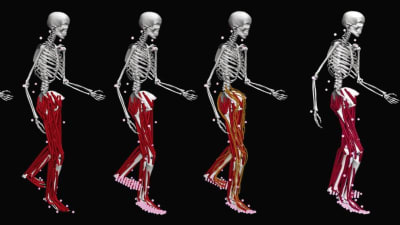
Researchers have demonstrated a new method that leverages artificial intelligence (AI) and computer simulations to train robotic exoskeletons to autonomously help users save energy while walking, running, and climbing stairs.
R&D: Electronics & Computers
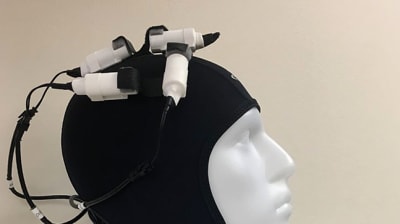
Researchers have implemented a novel technique called transcranial temporal interference electrical stimulation (tTIS) for noninvasive neuromodulation in humans to successfully target deep structures and enhance motor skill learning in healthy older subjects.
Videos of the Month: Medical
See the videos of the month, including one on a wearable, textile-based device that could compensate for deficiencies in visual and auditory inputs by tapping the sense of touch; one on a 3D-printed heart; one on the eradication of advanced-stage mesothelioma in mice; and more.
Briefs: Software
A team of Rice University engineers has launched a first-of-its-kind, open-source software that constructs and uses personalized computer models of how individual...
INSIDER: Robotics, Automation & Control
An intelligent suit could significantly improve rehabilitation after a serious spinal cord injury. The AI-supported solution combines electrical stimulation of muscles with support for movement...
Supplements: Connectivity
Learn about the medical manufacturers and cutting-edge applications that stood out in 2022.
Features: Medical
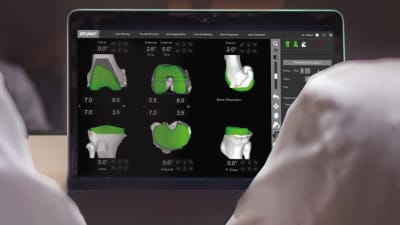
Stryker is one of the world’s leading medtech companies.
Features: Medical
Glaucoma is the second-leading cause of blindness, affecting 80 million patients globally, including 3 million patients in the U.S.
R&D: Medical
Using an office-based human-sized version of this non-invasive device, it may prove possible to cure Alzheimer’s by delivering drugs and genes to specified tracts in the brain under real-time imaging guidance.
R&D: Medical
The sensors have already been used to monitor the curvature of structures and robotic arms. But measuring both the magnitude and direction of the spine’s curvature presents an additional challenge.
R&D: Design
The electrode can be worn comfortably and stable for up to four weeks, without the potential need for any medical personnel to intervene to maintain it.
R&D: Motion Control
The garments will contain sealed, airtight regions that can inflate, making them temporarily rigid and providing the force for movement.
Briefs: Design
UC San Diego Health is the first hospital system in San Diego to offer a new, highly targeted, and precisely placed radiation therapy that delays tumor regrowth while protecting healthy tissue in patients with brain cancer.
Features: Medical
Minnesota is home to Medical Alley and the area is poised to transform healthcare with its combination of institutions and talent in one region.
Briefs: Medical
Mechanical engineers have built a handy extra limb able to grasp objects and go, powered only by compressed air. It’s one of several ideas the engineers at Rice University’s George...
INSIDER: Robotics, Automation & Control
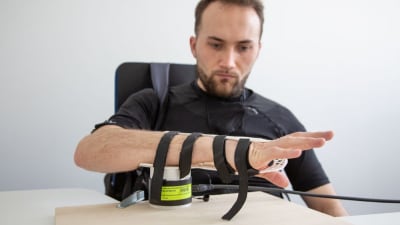
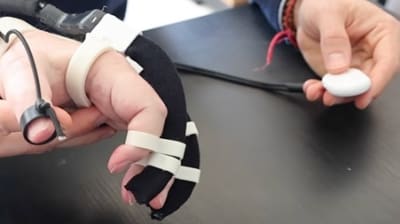
Working closely with users and therapists, researchers have developed a light and easy-to-attach hand exoskeleton for people unable to grasp objects following a stroke or...
Technology Leaders: Electronics & Computers
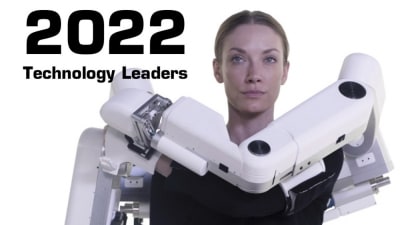
The primary aim for Harmonic Bionics is to empower patients and care providers by designing intelligent technology that facilitated a data-driven treatment protocol when...
Briefs: Medical
After a stroke, patients may lose feeling in an arm or experience weakness and reduced movement that limits their ability to complete basic daily activities. Traditional...
INSIDER: Imaging
Equipped with a color 3D camera, an inertial measurement sensor, and its own on-board computer, a newly improved robotic cane could offer blind and visually impaired users a...
INSIDER: Robotics, Automation & Control
A team of has demonstrated how adding brain stimulation evokes tactile sensations that make it easier for the operator to manipulate a brain-controlled robotic arm. In their experiment,...
R&D: Medical
Researchers have developed a handheld 3D bioprinter that could revolutionize the way musculoskeletal surgical procedures are performed.
INSIDER: Medical
A noninvasive, wearable, magnetic brain stimulation device could improve motor function in stroke patients. In an initial clinical trial of 30 chronic ischemic...
R&D: Medical
Researchers have developed a soft, flexible artificial skin made of silicone and electrodes. The skin’s system of soft sensors and actuators enable the artificial skin to conform to the exact shape...
INSIDER: Medical
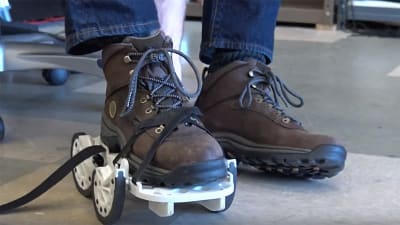
A therapeutic shoe engineered to improve stroke recovery is proving successful and expected to hit the market by the end of the year. Since patients are often disappointed in their progress after...
INSIDER: Robotics, Automation & Control
By adding electronics and computation technology to a simple cane that has been around since ancient times, Columbia Engineering researchers have created a robotic device that provides "light-touch" assistance to the elderly or people with impaired mobility.
Briefs: Medical
NOW Technologies is a close-knit, dedicated team of professionals working to help people with disabilities to live an independent life. Based in Budapest, Hungary, and...
INSIDER: Robotics, Automation & Control
An interface system that uses augmented reality technology could help individuals with profound motor impairments operate a humanoid robot to feed themselves and perform routine personal care tasks...