
Inside this issue
Overview
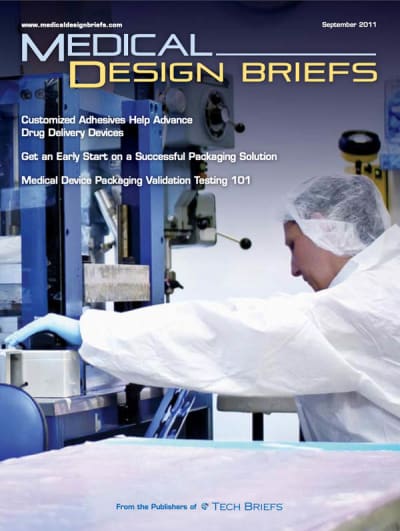
The September 2011 issue of Medical Design Briefs presents a comprehensive overview of advancements and innovations in the medical device industry, highlighting the intersection of technology and healthcare. This edition features a variety of articles that delve into critical topics such as drug delivery systems, packaging solutions, and the application of technologies developed by NASA and federal labs in medical contexts.
One of the key highlights of this issue is the focus on customized adhesives that are advancing drug delivery devices. These adhesives are crucial for ensuring that medications are delivered effectively and safely to patients. The article discusses how tailored adhesive solutions can enhance the performance of drug delivery systems, improving patient outcomes and compliance. The use of specialized adhesives can also facilitate the development of more sophisticated devices that meet the evolving needs of healthcare providers and patients alike.
In addition to drug delivery, the magazine emphasizes the importance of packaging solutions in the medical device sector. An article dedicated to packaging validation testing outlines the essential steps manufacturers must take to ensure that their products are packaged correctly to maintain sterility and integrity. This process is vital for compliance with regulatory standards and for ensuring that medical devices are safe for use. The article provides insights into best practices for packaging validation, including considerations for materials, design, and testing methodologies.
The issue also explores the role of technology in enhancing user experience in medical devices. A feature on medical-grade foot controls discusses how these devices are designed to meet the specific needs of original equipment manufacturers (OEMs). The article highlights the importance of ergonomics and usability in the design of foot controls, which are often used in surgical and diagnostic settings. By focusing on user-centered design, manufacturers can create devices that improve efficiency and reduce the risk of errors during medical procedures.
Furthermore, the magazine showcases various spin-off innovations from NASA and federal laboratories that have found applications in the medical field. These technologies, originally developed for aerospace and other industries, are being adapted to solve challenges in healthcare. The article highlights several examples of such innovations, illustrating how cross-industry collaboration can lead to breakthroughs that benefit patients and healthcare providers.
Throughout the issue, readers will find a wealth of information on the latest trends and technologies shaping the medical device landscape. The articles are written by industry experts and provide practical insights that can help professionals stay informed and competitive in a rapidly evolving market. The magazine also includes a table of contents for easy navigation, allowing readers to quickly find topics of interest.
In summary, the September 2011 issue of Medical Design Briefs serves as a valuable resource for professionals in the medical device industry. It covers a range of critical topics, from customized adhesives and packaging validation to user experience design and innovative technologies. By highlighting the latest advancements and best practices, this issue aims to equip readers with the knowledge they need to succeed in the dynamic field of medical device development and manufacturing.
Features
-
Articles
Customized Adhesives Help Advance Drug Delivery Devices
-
Mission Accomplished
Balance Tools Used for Return-to-Duty Assessment and Rehabilitation
NASA Light Technology Helps Reduce Painful Side Effects from Radiation and Chemotherapy
Tech Briefs
-
Pulse Oximeter for Mobile Phone Platforms
Bionanomatrix Coating Boosts Biocompatibility of Implants
Thermal Management Solutions for Medical Applications
High-Resolution Ophthalmic Ultrasound System for Ocular Structures