

Minimally invasive and interventional platforms increasingly demand smaller profiles, tighter tolerances, and components that maintain performance under thermal, chemical, and mechanical stress. Polyimide (PI) has emerged as a workhorse within these parameters because it combines high strength, thermal stability, chemical inertness, dielectric performance, and biocompatibility in thin-wall formats suitable for catheters, electrophysiology tools, and neurovascular systems. 1- 3

In addition to physical properties, medical device sterilization methodologies (such as ethylene oxide, gamma irradiation, e-beam) impose further material constraints. Contemporary studies and standards underscore the need to select polymers that retain properties post-sterilization and to validate material performance within a risk-management framework. 5- 7 These converging requirements — performance with miniaturization, regulatory rigor, and material reliability — provide rationale for why PI tubing has been established as and remains an ideal component of both current and next- generation device design.
Ideal Properties for Manufacturing and Device Needs
For OEMs, the key materials science properties for PI tubing map directly to the selection criteria for balancing device risk and performance needs: 1, 6
Mechanical strength and column integrity to support ultra-thin walls without collapse and while maintaining lumen size.
Dimensional precision (ID/OD and wall tolerances) essential for microcatheters and drug-delivery lumens.
Thermal stability across processing and sterilization cycles.
Chemical resistance to biological environments and cleaning agents.
Electrical insulation/dielectric robustness for electrophysiology and neuromodulation devices.
PTFE can be added to PI to make the ID or OD more lubricious if needed. This is referred to as Fluoropolymer Doped PI.
Regulatory readiness for verified materials biocompatibility per REACH, EU MDR, and EPA guidelines to simplify OEM adoption.
Supply reliability with consistent quality and assured continuity aligned to evolving regulatory expectations and a high-demand, globalized market.
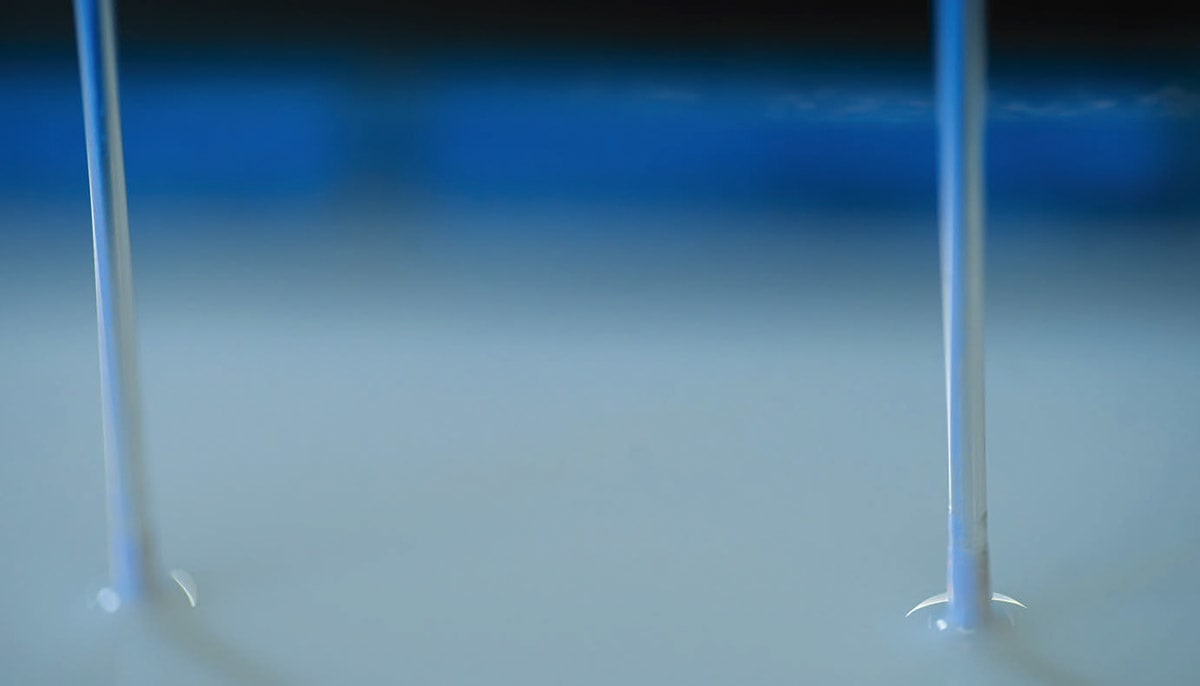
Peer-reviewed data substantiates PI’s high-temperature endurance and dielectric strength, 4 while long-term in-vitro studies of PI used in neural implants support its material stability and suitability for prolonged biomedical use. 2 Sterilization-focused investigations highlight that processing choice and dose can modulate polymer properties — reinforcing the need to confirm post-sterilization performance during development and scale-up. 7 Together, these qualities define the benchmark for PI tubing in modern minimally invasive systems.

Polyimide: Changing the Game
Filmcast Thermoplastic. Using filmcast thermoplastic strike layers (0.0001–0.00025 in.) and advanced layering over liners or external braid/coil reinforcement allows OEMs to balance flexibility, lubricity, and mechanical performance in ways older designs did not allow.
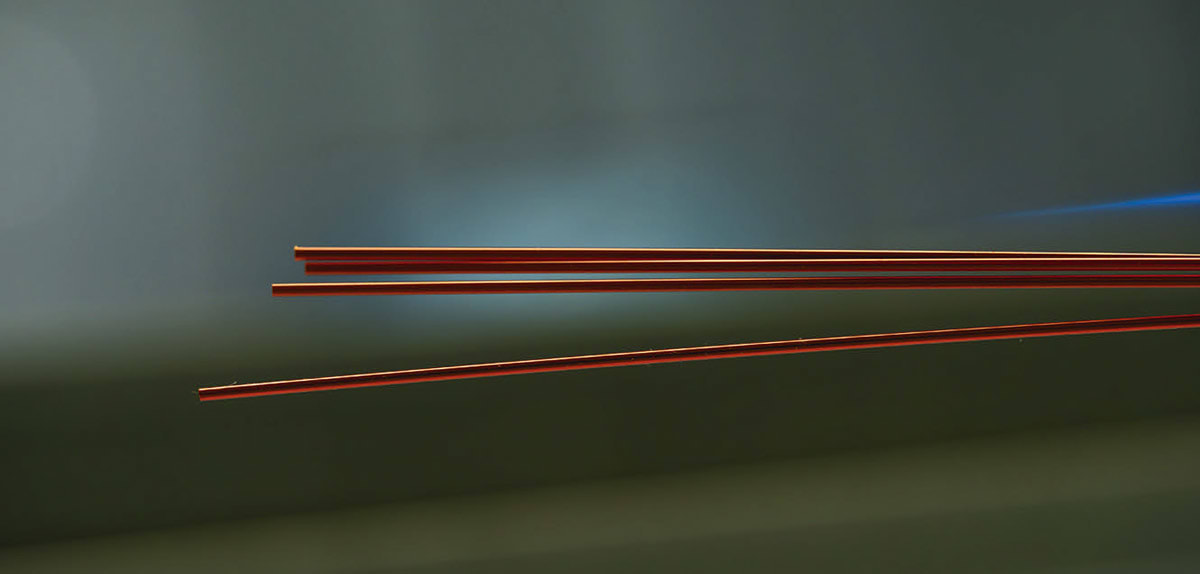
Tecoflex Strike Layers. REACH- and EU MDR-compliant polyimide tubing and Tecoflex strike layers manufactured without restricted solvents enables the tubing to perform like conventional polyimide but removes the burden of solvent cleanup and residual testing. For OEMs targeting European and global markets, this reduces regulatory risk and accelerates design validation.
NMP-Free Manufacturing. With N-Methyl-2-Pyrrolidone (NMP) being flagged by the U.S. EPA for risk, NMP-free formulations preserve material performance while avoiding regulatory and environmental hazards. This proactively addresses supply chain risk and regulatory cost.
Wider Polymer System Compliance. The same regulatory approaches extend beyond polyimide to Tecoflex strike layers and other related filmcast technologies, enabling composite or hybrid tubing designs that remain compliant.
Building Supply-Chain Resilience
Recognizing early that regulatory actions around NMP and other restricted solvents could impact global polyimide supply chains, Confluent has invested in alternative solvent systems and manufacturing chemistries to ensure continuity of supply. Even for more advanced or special-spec materials (REACH compliant, Ultra Polyimide), minimal lead times enable OEMs to iterate quickly and respond to market demands.
Consistent performance with new formulations is paramount. The REACH-compliant polyimide uses “industry standard chemistry” to deliver the same mechanical, thermal, and dielectric performance as traditional PI formulations, reducing redesign risk.
Ultra Polyimide: Innovation Crafted Through Expertise
Ultra Polyimide is designed to respond directly to OEM challenges around strength, compliance, design flexibility, and speed for tomorrow’s medical devices.
Strength performance: Ultra Polyimide delivers nearly double the tensile and column strength of traditional polyimide formulations, enabling thinner walls without compromising load-bearing capacity.
Maintained core benefits: Ultra Polyimide retains the dielectric properties, thermal resistance, chemical resistance, and the ability to integrate into discrete or reinforced composite tube constructions typical of earlier polyimide products.
Regulatory and environmental safety: Made without NMP or other solvents restricted under REACH or EU MDR, Ultra Polyimide ensures material safety and regulatory compliance and enables greater market access.
Design freedom: With improved strength margin, device designers can reduce wall thickness — freeing up internal lumen area for fluid flow, drug delivery, optical fibers, or guidewires — while maintaining required column strength and resistance to collapse. Also supports composite and reinforced constructions where needed.
Customer Success: Building Partnerships that Save Lives
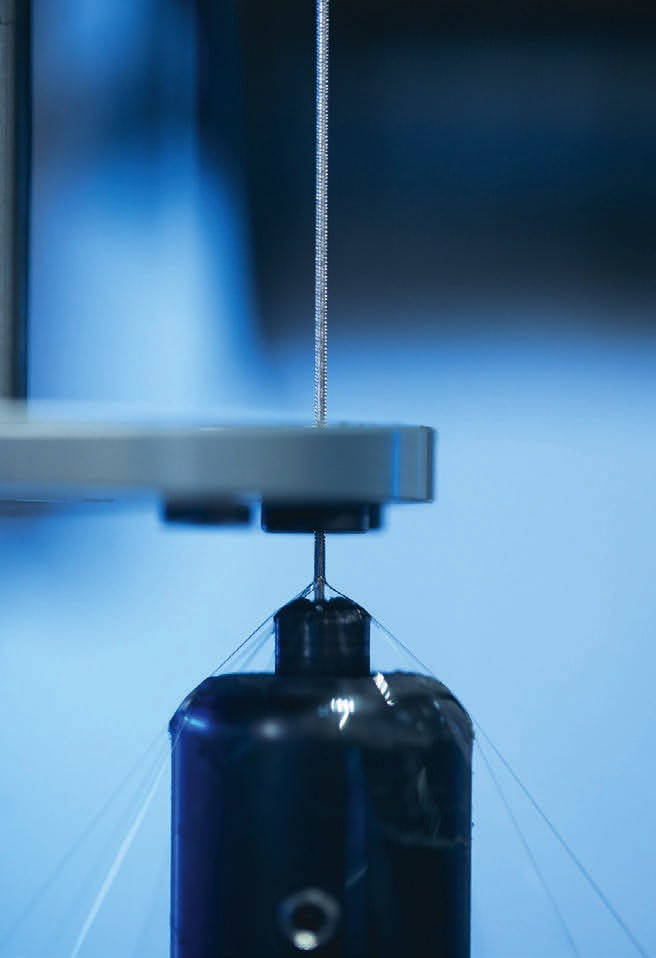
A leading medical device innovator dedicated to treating ischemic stroke first partnered with Confluent three years ago on a breakthrough product still in its early development stage. By 2025, that product successfully launched into the market, marking a significant milestone. The medical device company transitioned manufacturing to a specialized contract partner in overseas. That partnership led to a variety of additional prototyping projects.
What started with a single development program has now evolved into multiple product lines and numerous opportunities with other innovative companies in the space. This success highlights how delivering quality and service that exceeds expectations fosters lasting synergies, enabling customers to bring life-saving innovations to patients while driving growth and longterm success for our business.
Meeting the Needs of a High-Growth Market
The convergence of several recent market and regulatory trends makes these steps forward in polyimide innovation essential for OEM success. These include:
Increasing demand for minimally invasive, neuro/cardiovascular, and catheter-based procedures: As devices move through smaller, tortuous anatomy, there is an increased need for high pushability, small OD, with the balance of thin walls yet strong tubing.
Regulatory tightening globally: Regulations like REACH, EU MDR, and U.S. EPA action around solvents like NMP are forcing change. Materials that don’t comply may be excluded or heavily burdened in certain markets. Offerings such as Confluent’s help OEMs stay one step ahead.
Material cost and risk pressures: As raw material and solvent costs rise, OEMs benefit from tubing that avoids restricted substances, reduces testing overhead, and lessens the risk of supply disruption.
Competitive differentiation: OEMs who use Ultra Polyimide or other REACH-compliant materials can promote superior device performance (thinner walls, larger lumens, better strength), while also emphasizing regulatory responsibility.
Speed and responsiveness: Faster lead times, predictable supply, and materials built for compliance accelerate prototyping, verification, and scaling, giving OEMs a time-to-market advantage.
Partnering for the Future
It is essential that suppliers not only respond to the medical device industry’s evolving demands but also help define what’s possible in an increasingly competitive landscape. Through advanced filmcast technology, regulatory foresight, composite and reinforced design options, and highest-strength polyimide formulations like Ultra Polyimide, companies like Confluent empower OEMs to design smaller, stronger, safer, and more compliant devices with greater speed and confidence.
References
- Shu J, Zhou Z, Liang H, Yang X. “Polyimide as a biomedical material: advantages and applications.” Nanoscale Adv. 2024 Jul 4; 6 (17):4309-4324. doi: 10.1039/d4na00292j.
- Rubehn B, Stieglitz T. “In vitro evaluation of the long-term stability of polyimide as a material for neural implants.” Biomaterials. 2010 May 31 (13):3449-58. doi: 10.1016/j.biomaterials.2010.01.053.
- Lacour, S., Courtine, G., and Guck, J. “Materials and technologies for soft implantable neuroprostheses.” Nat Rev Mater 1, 16063 (2016).
- Won SM, Song E, Zhao J, Li J, Rivnay J, Rogers JA. “Recent Advances in Materials, Devices, and Systems for Neural Interfaces.” Adv Mater. 2018 Jul; 30 (30):e1800534. doi: 10.1002/adma.201800534
- U.S. FDA. Use of International Standard ISO 10993-1 , “Biological evaluation of medical devices — Part 1: Evaluation and testing within a risk management process.” Guidance for Industry and FDA Staff. 2020.
- Constantin CP, Aflori M, Damian RF , Rusu RD. Biocompatibility of Polyimides: A Mini-Review. Materials (Basel). 2019 Sep 27; 12 (19):3166. doi: 10.3390/ma12193166.
- Tipnis NP, Burgess DJ. “Sterilization of implantable polymer-based medical devices: A review.” Int J Pharm. 2018 Jun 15; 544 (2):455-460. doi: 10.1016/j.ijpharm.2017.12.003.
This article was written by Brittany Mai, Marketing Manager for Confluent Medical, Scottsdale, AZ. For more information, e-mail